European Tilt and Turn Windows
in the USA - for builders and architects
European tilt and turn windows are the window the rest of the world builds with - one handle, two opening modes, and a perimeter seal that leaves US casement and double-hung behind. I source them in uPVC, aluminum, and wood from certified European system providers and deliver them DDP to job sites anywhere in the USA, priced for US projects with duties, ocean freight, and customs already included.
How tilt and turn windows work
A single handle drives two modes. Rotate it 90 degrees and the sash swings inward like a door - full opening for cleaning, ventilation, and egress. Rotate it 180 degrees and the top of the sash tilts inward a few inches for secure trickle ventilation while the window stays locked against intruders and weather.
The mechanism that makes this work is an espagnolette that locks the sash at four to eight points around the full perimeter. A typical US casement latches at one or two points; a double-hung seals at the meeting rail. That difference in clamping is why tilt and turn windows post stronger air-infiltration, water, and acoustic numbers - and why they are the default for Passive House and high-performance European construction.
Because the sash opens inward, the insect screen mounts on the outside of the frame - the one detail US installers need to plan for. Everything else follows the same shimming, flashing, and rough-opening logic as any high-performance window.
Tilt-in, tilt window, tilt-turn - what people call it
The same window goes by half a dozen names in the US: tilt-in windows, tilting windows, tilt and turn, turn and tilt, dual-action windows, or simply German windows, after the hardware standard that made the mechanism universal across Europe. They all describe one unit - an inward-opening sash with a tilt position for ventilation and a turn position that opens it like a door. The only distinction worth making is against a hopper or awning window, which tilts but never turns. If your drawings say tilt-in or dual-action, I read them as tilt and turn and quote accordingly.
Tilt and turn windows with screens
Screens are a standard option, not a workaround: a fixed or hinged exterior frame screen, a roll-down cassette screen built into the head of the frame, or a pleated screen for large sashes. All three keep both opening modes working. I cover the options, the cost and the one thing to specify at order time in insect screens for tilt and turn windows. For bedroom windows, the turn mode also gives a full clear opening - see tilt and turn windows and US egress code.
Why specify tilt and turn over casement or double-hung
Perimeter sealing
4-8 locking points compress the sash against the full gasket - not one latch point.
Thermal performance
Deeper insulated frames and standard triple glazing deliver Passive-House-level U-factors.
Acoustics
The tight perimeter seal plus heavy glazing options cut noise far below typical US units.
Egress + cleaning
Turn mode swings the whole sash inward - easy egress and you clean the outside from inside.
Security
Multi-point locking and tilt-vent let you ventilate while the window stays secured.
Large sizes
European hardware carries heavier, larger sashes than most domestic casement systems.
Want the full breakdown? Read European tilt-turn vs American casement. Need the sash to swing out and the screen to stay inside? See European casement windows.
uPVC, aluminum, and wood tilt and turn windows
Tilt and turn is an operation type, not a material. uPVC tilt and turn windows are the value pick for most residential schedules, thermally broken aluminum carries large spans and the slimmest sightlines, and wood or aluclad suits historic and high-end interiors. I match the system to your project - not to one factory's house brand.
Aluminum
Slimmest sightlines, maximum strength, large spans. Thermally broken profiles from Reynaers, Aluprof, and Aliplast.
View systems →uPVC
Outstanding thermal value, low maintenance, best price-to-performance. German-engineered multi-chamber profiles.
View systems →Wood & Aluclad
Natural timber warmth inside, with an optional maintenance-free aluminum exterior for lifetime weather protection.
View systems →uPVC or aluminum tilt and turn?
For most residential schedules the answer is uPVC: multi-chamber German-engineered profiles, steel reinforcement where the sash gets large, and the lowest U-factor per dollar of anything I ship. Go to thermally broken aluminum when the design wants sightlines under two inches, sashes taller than about seven feet, a steel-look grid, or a dark color on a sun-facing elevation - aluminum holds its shape and its finish where a wide PVC frame would look heavy.
Both arrive on the same hardware, the same glazing options, and the same lead time - about 16 weeks from approved estimate to delivery. The prices below are typical supplied rates for the window category, before duty and freight; the estimator prices both materials and adds duties and a container allocation on top, so the number it shows is the landed number.
| Material | Typical supplied price | U-factor, double | U-factor, triple | Where it fits |
|---|---|---|---|---|
| uPVC | $26-30 / sq ft | 0.22 | 0.13 | Value pick for most residential schedules. Best U-factor per dollar; steel-reinforced for larger sashes. |
| Aluminum | $56-80 / sq ft | 0.22-0.26 | 0.15-0.16 | Thermally broken. Slimmest sightlines, largest spans, steel-look options. |
| Wood / aluclad | On request | On request | On request | Quoted from your schedule - not in the estimator. Historic and high-end interiors. |
Supplied price per square foot of frame area, sale price before US duty and freight, windows category, no bars to simulated divided lights. U-factors are whole-window, Btu/(h.ft2.F), typical for the systems in the estimator - the tested value for a specific size and glazing comes with the quote.
What it looks like on site
An inward-opening sash on a real US build - photographed during install, before the house was finished around it. The same handle that swings the sash inward also tilts it at the head for background ventilation.
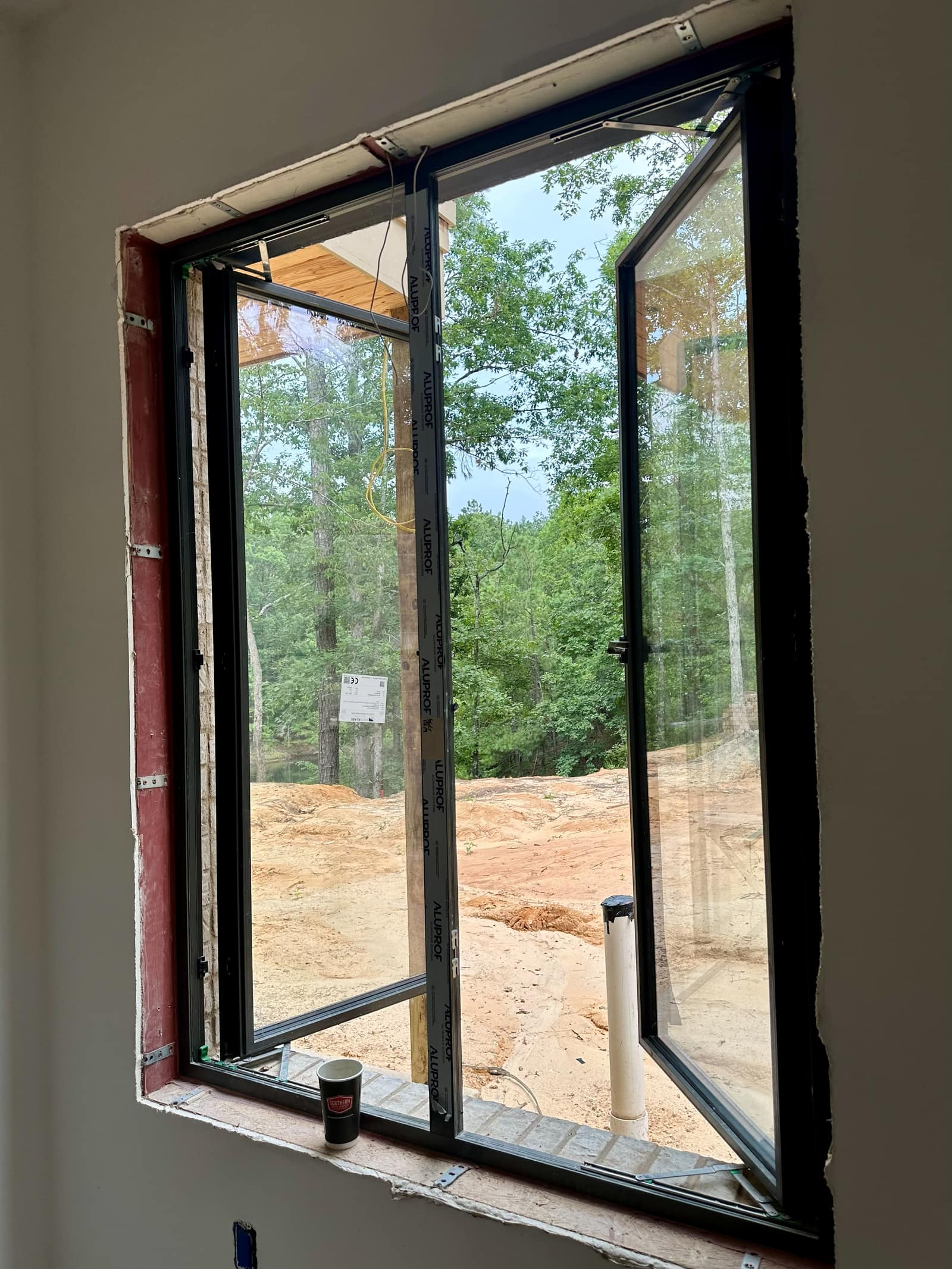
Custom Home in Mississippi
Oxford, MS - 10 site photos
What do tilt and turn windows cost?
They sit in the premium tier - above builder-grade domestic windows and competitive with US architectural brands, with better performance and slimmer sightlines. The honest number is the landed number: every estimate I send is DDP, with duties, ocean freight, and customs already included. No factory teaser price that balloons at the port.
Tilt and turn windows - common questions
Are tilt and turn windows available in the USA?+
Yes. European tilt and turn windows are made to order in Europe and shipped to US job sites - I deliver them DDP, so duties, ocean freight, and customs clearance are already in the price. They install into a standard rough opening with the same shimming and flashing logic as any high-performance window, and every quote I send carries full U-factor and SHGC data for the plan reviewer. The only things to plan for are the inward-opening sash and the exterior-side screen.
What is a tilt-in window?+
A tilt-in window is what many US buyers call a tilt and turn window: the top of the sash tilts inward a few inches for ventilation, and the same handle turns the sash fully inward like a door for cleaning and egress. It is not the same as a US double-hung with tilt-in sashes for cleaning - those tilt to wash, not to ventilate, and still seal at a single meeting rail. If your schedule says tilt-in, tilting, or dual-action, I read it as tilt and turn.
How do tilt and turn windows work?+
A single handle controls two modes. Turn it 90 degrees and the sash swings inward like a door for full-opening cleaning and egress. Turn it 180 degrees and the top tilts inward a few inches for secure ventilation. Multi-point hardware locks the sash at 4 to 8 points around the full perimeter, which is why the seal beats a single-latch casement or double-hung.
Are tilt and turn windows better than casement or double-hung?+
For air-tightness, thermal performance, sound, and security, yes - the perimeter locking and deeper insulated frames outperform typical US casement and double-hung units. Double-hung in particular gives up a lot of energy performance at the meeting rail. The trade-off is that tilt and turn opens inward, so it does not work behind interior screens the way US windows do - the screen mounts on the outside instead.
How much do European tilt and turn windows cost?+
It depends on material, glazing, and size. uPVC tilt and turn windows run roughly $26-30 per square foot supplied, thermally broken aluminum roughly $56-80 per square foot, before duty and freight - premium tier, above builder-grade domestic units and competitive with US architectural brands. Every estimate I send is DDP, so it already includes duties, freight, and customs. The estimator gives you a landed range in about two minutes; send me your window schedule for a budget number the same or next working day. Run the estimator.
Do tilt and turn windows come in uPVC?+
Yes, and uPVC is the value pick for most residential schedules. Tilt and turn is an operation type, not a material: I source it in uPVC, thermally broken aluminum, timber, and aluclad from European system providers, and match the material to your design, climate, and budget rather than to one factory's catalog. uPVC gives the best price-to-performance and the lowest U-factor per dollar; aluminum carries larger spans and the slimmest sightlines.
Can tilt and turn windows have screens?+
Yes. Because the sash opens inward, the insect screen mounts on the exterior side of the frame - a fixed or hinged frame screen, a roll-down cassette in the head, or a pleated screen for large sashes. It is a standard option on the European systems I supply - just flag it on your schedule and I will spec it in. If you would rather keep screens on the interior the way a US casement does, spec an outward-opening European casement instead - same frames and glazing, outswing sash. Read the screens guide.
How do you ship tilt and turn windows to a US job site?+
On DDP terms: factory production, crating, ocean freight, marine insurance, customs clearance, duties, and final-mile delivery to your site - one price, one point of contact. You prepare the openings and receive the truck. Typical timeline is about 16 weeks from approved estimate to delivery.
Speccing tilt and turn
for your next project?
Send me your window schedule and I'll have a budget estimate back to you the same or next working day. No obligation.