European Casement Windows
that install the American way
The European casement windows on this page are side-hinged, outward-opening windows built on European profile systems. Selected systems offer an integrated nailing fin for US rough openings, with screens matched to the configuration. Crank hardware, multi-point locking, and NFRC-rated units on selected systems where the permit needs one. Everything a US crew already knows how to install - wrapped around German, Belgian and Polish profile systems.
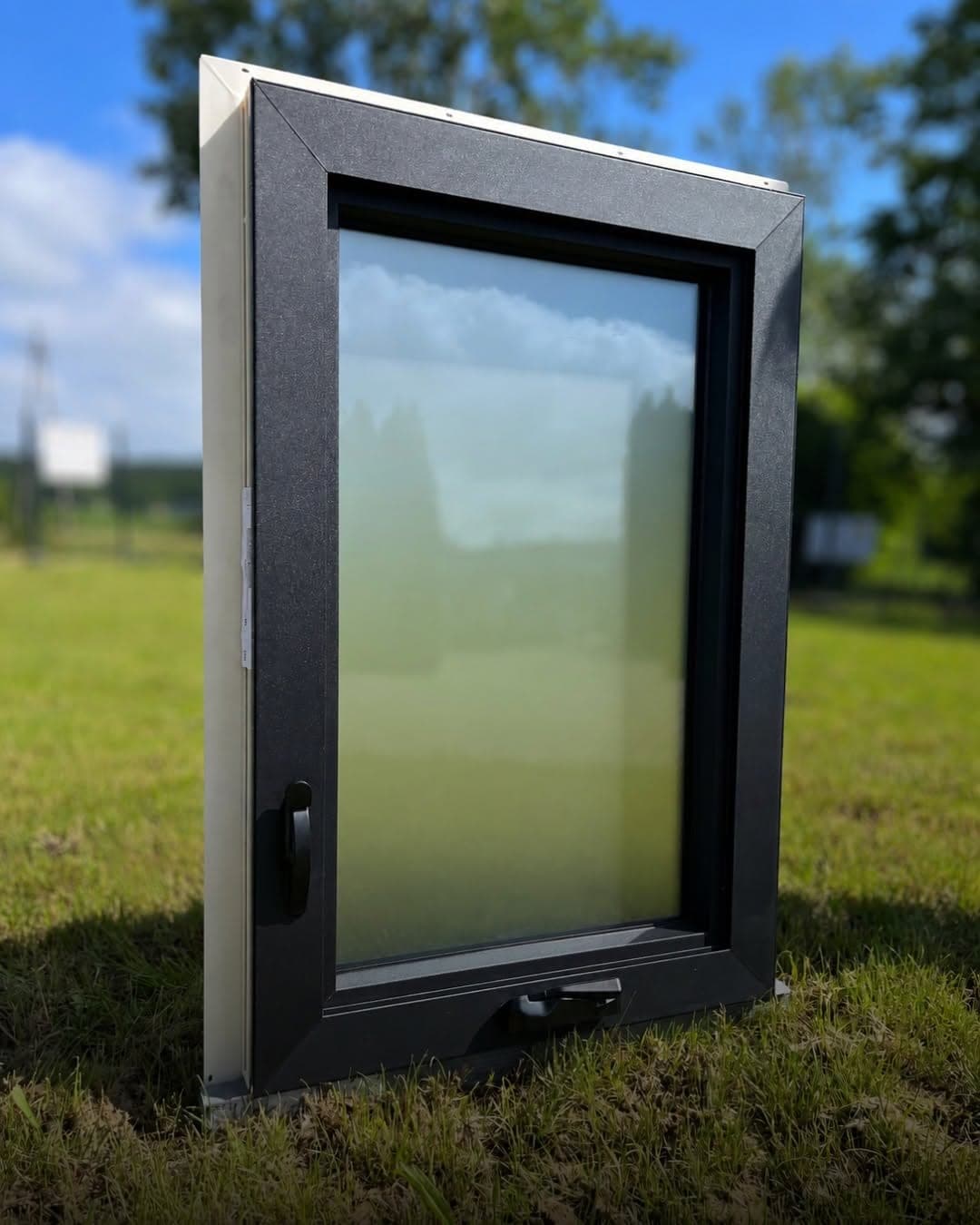
The four details that decide whether a European window fits a US job
Performance is rarely the objection. Every builder who looks at the numbers agrees the European frames win on U-factor, air infiltration, and acoustics. What stalls projects is the practical side: how the unit lands in the opening, where the screen goes, whether the handle makes sense to the homeowner, and whether the building department will accept the paperwork. Get those four right and the rest of the decision is easy.
Integrated nailing fin
A factory-applied fin, roughly 1/8 inch thick and set about 1 1/8 inch back from the exterior face, lets the unit land in a standard rough opening and tie straight into your WRB and flashing sequence.
Screens matched to the opening
Nothing swings into the room. Screen location varies by system, so I check interior or exterior mounting, access for cleaning, and clearance for the operator and window treatments before ordering.
US-standard hardware
A folding crank operator at the sill plus a perimeter locking lever. The window reads and operates like a domestic casement - no handle re-education for the homeowner.
NFRC-rated units available
Where the building department wants a certified number on the submittal, I quote only systems that can be supplied with NFRC-rated, labeled units.
How NFRC and NAFS work for imports →Outswing casement or tilt & turn?
Tilt & turn is the better window on paper. Two opening modes, four to eight locking points, and you clean the exterior glass from inside the room. That is why it dominates European construction and why most of my aluminum quotes are still tilt & turn.
The catch is that the sash swings into the room. Interior screens are out, roller shades and blinds need rethinking, and furniture placement suddenly matters. On a bedroom elevation with nightstands under the windows that is a real design constraint - and in most of the US, screens are not a preference, they are an expectation.
An outward-opening European casement gives up the tilt mode and keeps everything else: the deep multi-chamber frame, the perimeter locking, the triple glazing, the gasket lines. You trade one operating mode for full compatibility with American interiors and American installation practice. On a lot of projects that is the right trade.
Worth reading next: European tilt-turn vs American casement, why European windows open inward, and how insect screens work on European windows.
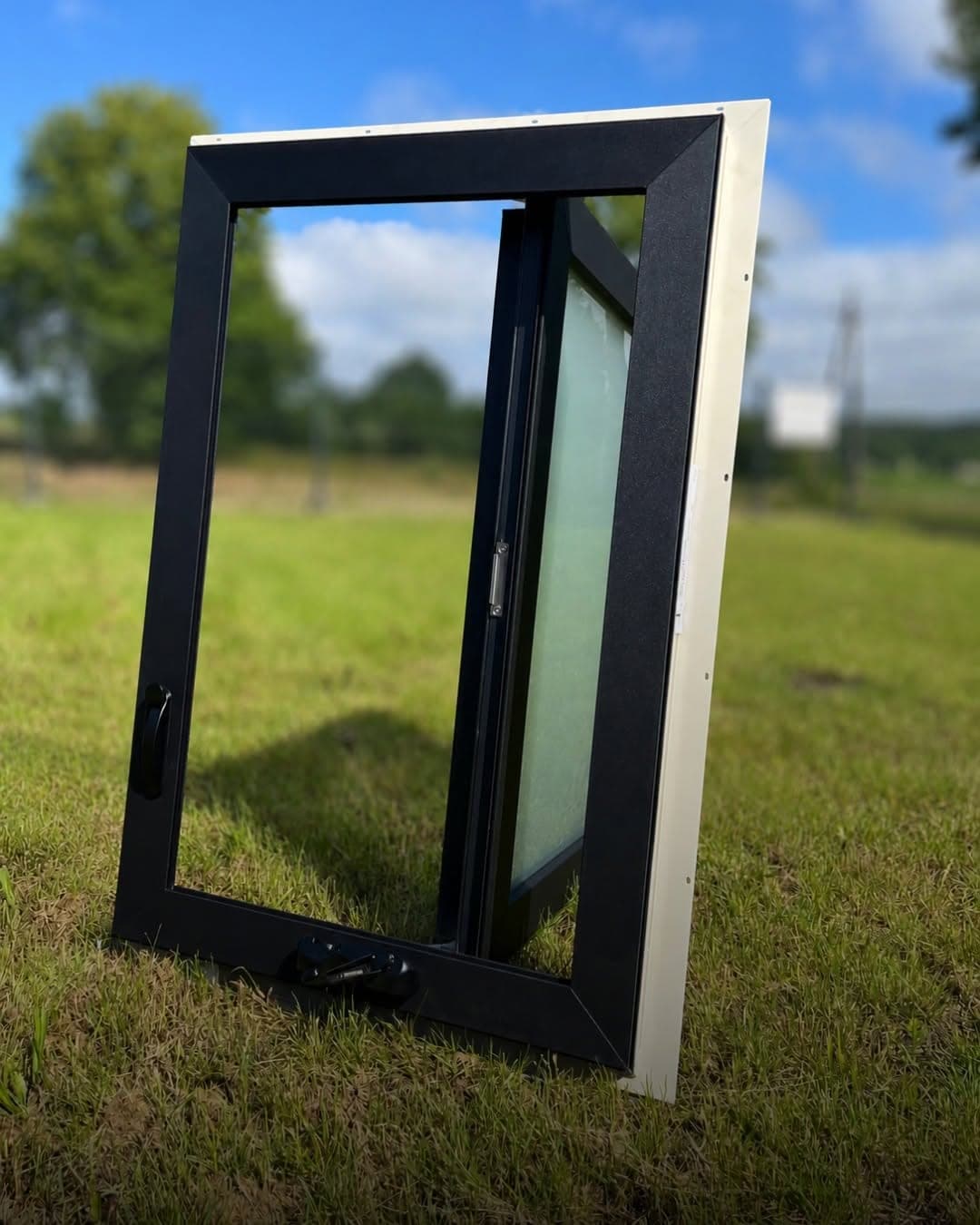
The outward-opening systems I quote
Four systems, two materials, one selection question: how slim does the frame need to be, and what does the permit set require. I am not tied to any of them.
uPVC - Germany
Aluplast Ideal Neo OUT
Outswing casement on the 85 mm Ideal Neo platform with an integrated nailing fin, interior glazing, steel reinforcement, and NFRC-rated units available. The most direct European answer to an American casement.
Aluminum - Poland
Aluprof MB-79N crank-out
American-spec aluminum crank-out casement with a bottom-rail operator, AAMA CW50 certification, and a nailing fin install. Built for permit sets that want US test data on paper.
Aluminum - Poland
Aluprof MB-79N CSF
Slim-frame push-out casement with multi-point espagnolette locking and an ultra-thin outer frame. Interior screen integration without giving up seal compression.
Aluminum - Belgium
Reynaers SlimLine 68 Casement
Premium outward-opening aluminum with Functional, Ferro, Classic, Heritage, and Cubic design lines. The 68 mm depth fits existing plaster lines, which makes it a renovation favorite.
How do you install a European casement window with a nailing fin?
This is what builders ask about first, and the answer is the least interesting thing on the page: it goes in like any other fin window. No buck system, no proprietary anchor clips, no specialist crew flown in from Europe.
- 1
Prep the opening
Frame and square the rough opening to the standard allowance, then flash the sill pan and turn the corners the way you would for any fin window.
- 2
Set and shim
Dry-set the unit, shim at the hinge points and the lock side, then check the sash reveal top to bottom before fastening.
- 3
Fasten through the fin
Nail or screw through the fin at the specified spacing. At 3-4 mm the fin takes fasteners without deforming or cracking.
- 4
Integrate with the WRB
Tape the jamb fins, then the head fin over the jambs, and lap the housewrap over the head. The sill stays untaped so the pan can drain.
- 5
Insulate and trim
Low-expansion foam or backer rod and sealant at the perimeter, then interior trim and exterior cladding as detailed.
More on the openings side: European window rough opening sizes and, for the systems that ship without a fin, how bracket-mounted installation works.
Profile Cross-Section
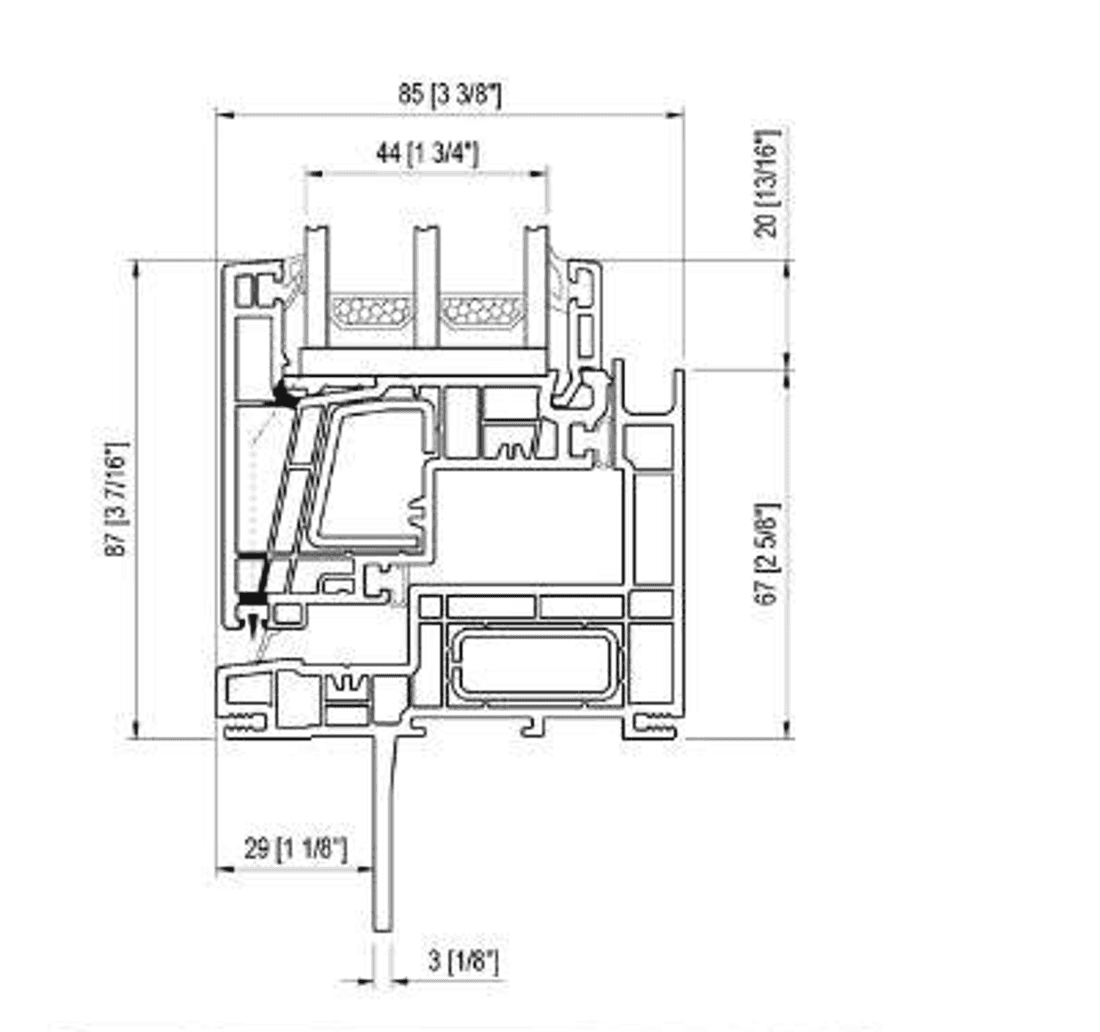
- Frame depth
- 3 3/8" (85 mm)
- Frame + sash
- 3 7/16" (87 mm)
- Glazing rebate
- up to 1 13/16" (46 mm)
- Fin thickness
- 1/8" (3-4 mm)
- Fin setback
- 1 1/8" (29 mm)
- U-factor
- 0.22 double / 0.13 triple
Dimensions shown for the Aluplast Ideal Neo OUT. Aluminum systems run shallower frames and different fin details - full spec sheet here.
What are the best casement windows for US projects?
The best casement windows for a US project are the ones that fit its installation, frame appearance, opening depth, and required test documentation. Among these four European systems, this is how I would shortlist the first option for each priority. These are use-case recommendations, not a universal performance ranking.
| Priority | First system to review | Why it fits and what to confirm |
|---|---|---|
| Best for a uPVC nailing-fin install | Aluplast Ideal Neo OUT | Integrated nailing fin, interior glazing, and an outward-opening sash. Confirm the rough opening and flashing detail with the installer. |
| Best for slim push-out aluminum | Aluprof MB-79N CSF | Slim outer frame, multi-point locking, and interior screen integration. Choose it when push-out operation suits the room; it is not the crank-out variant. |
| Best starting point for renovation depth | Reynaers SlimLine 68 Casement | A 2.68-inch (68 mm) depth gives a shallower starting point than the other frames listed here. Check existing plaster returns and trim against the section drawing. |
| First to review for US performance documentation | Aluprof MB-79N crank-out | The listed system carries an AAMA CW50 performance class and a nailing-fin installation option. I verify the applicable report, unit size, and configuration before treating it as a certified option for your project. NFRC labeling is a separate check. |
Send me your window schedule with the opening sizes, wall detail, screen preference, and required ratings. I can then compare the best-fitting systems on the same scope.
What do European casement windows cost?
European casement windows cost about $15 to $25 per square foot supplied in uPVC and about $45 to $95 in aluminum, before duty and freight. uPVC is genuinely competitive with mid-tier domestic windows once you compare like for like on glazing; aluminum sits in the same territory as US architectural brands. The number that matters is the landed number: every estimate I send is DDP, with ocean freight, duty, customs and delivery already inside it. Installation is priced separately by your local crew.
| Item | uPVC | Aluminum |
|---|---|---|
| Window, supplied (before duty and freight) | $15-25 / sq ft | $45-95 / sq ft |
| Insect screen, per window | about $111 | about $146 |
| Integrated nailing fin | +8% | +6% |
| NFRC-rated unit (selected systems) | +5% | +5% |
| Triple glazing instead of double | about +15% | about +11-14% |
Supplied rates from my estimator: fixed lights at the low end, small operable sashes at the top - casement, tilt and turn and fixed units share that category. The quote prices the exact outswing system, size and glass on your schedule. Wood and aluclad casements are quoted from drawings.
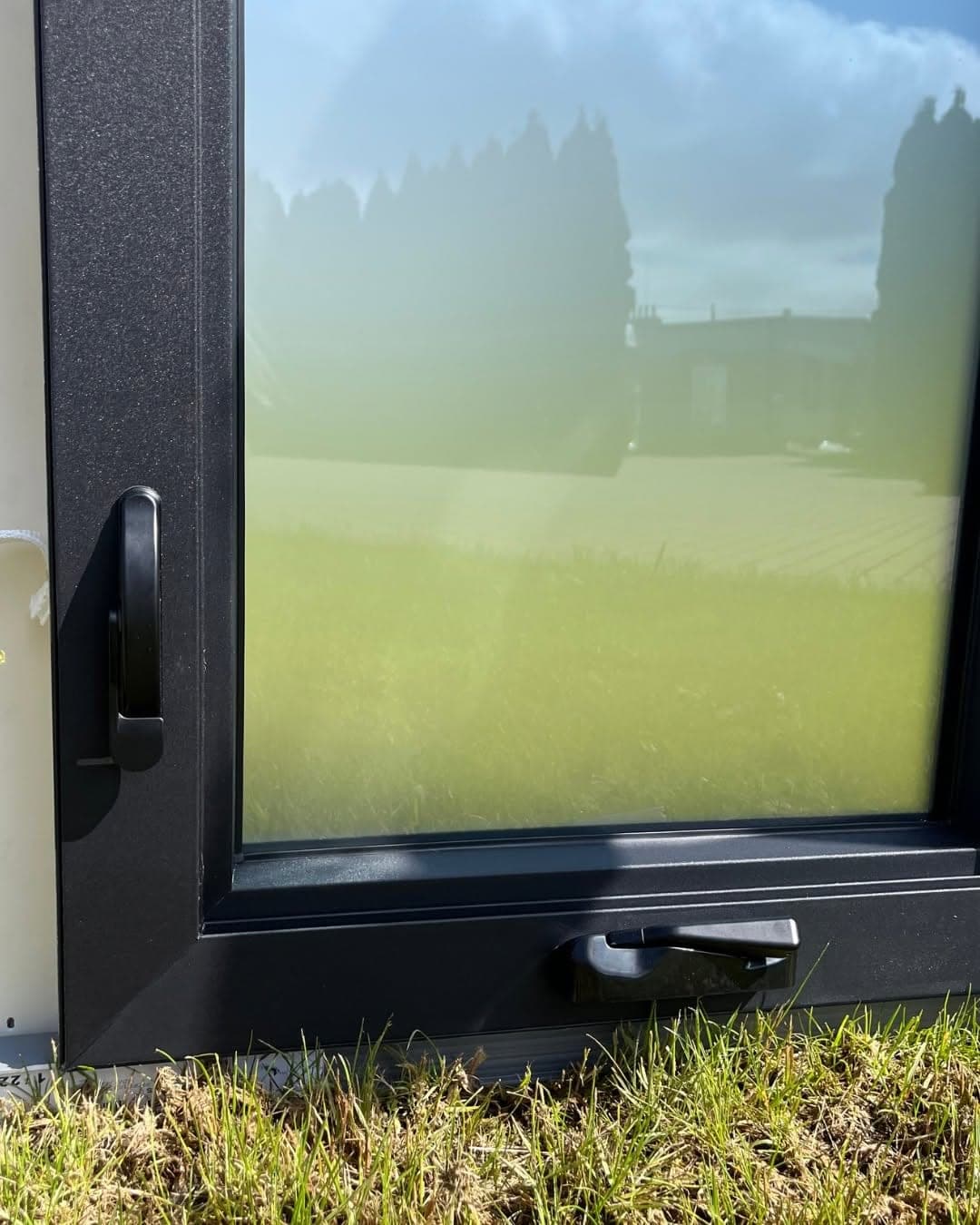
Hardware a homeowner recognizes
A folding crank operator sits at the sill and a locking lever runs the perimeter hardware - the same two motions an American casement uses. Nobody has to be taught a new handle position, and nobody calls you six months later asking why the window tilted instead of opening.
Underneath, the locking is still European: multiple points around the full perimeter compressing the sash into co-extruded thermoplastic gaskets, rather than a single latch pulling one edge. That is where the air-infiltration and acoustic numbers come from.
Finishes follow the rest of the range - white, the full RAL palette, and realistic woodgrain decors, with matching hardware. Browse the color and finish options.
European casement windows - common questions
What is a European casement window?+
A casement window with a side-hinged sash built on a European profile system - deep multi-chamber frames, steel or polyamide reinforcement, multi-point perimeter locking, and glazing rebates that take double or triple units up to about 1 13/16 inches. The difference from a standard US casement is what sits behind the sash: more frame depth, more chambers, more gasket lines, and hardware rated for far heavier glass.
Do European casement windows open outward or inward?+
Both exist. European tilt-and-turn windows open inward, while the four casement systems on this page open outward. I shortlist outswing versions where shades or furniture placement rule out an inward sash, then check the screen location and handle operation on the selected system.
Can European windows come with a nailing fin?+
Yes. Several systems carry an integrated nailing fin as a factory option, so the unit sets into a standard US rough opening and ties into your WRB and flashing sequence exactly like a domestic window. The Aluplast Ideal Neo OUT in uPVC and the Aluprof MB-79N crank-out in aluminum are the two I quote most often for fin installs.
How do screens work on outswing European windows?+
Screen position depends on the casement system. The MB-79N CSF supports interior screen integration; the listed MB-79N crank-out configuration uses a frame-mounted exterior screen. An outward-opening sash keeps the room clear, but I still check screen access, crank clearance, blinds, and shades against the selected shop drawing before ordering.
Are European casement windows NFRC certified?+
It depends on the system and the glazing package, not on the continent. Some European lines carry NFRC-rated, labeled units and can be supplied with the label your building department wants on the submittal - the Ideal Neo OUT is one of them. Others are tested to European standards only. Tell me early if your permit set requires an NFRC label and I will only quote systems that can produce one.
How much do European casement windows cost in the US?+
European casement windows cost about $15 to $25 per square foot supplied in uPVC and about $45 to $95 in aluminum, before duty and freight. A nailing fin adds about 8% on uPVC and 6% on aluminum, and an NFRC-rated unit about 5%. Every estimate I send is DDP, so ocean freight, duty, customs and delivery are already inside the landed number; installation is priced locally.
How do you install a European casement window with a nailing fin?+
Exactly like a domestic fin window. Prepare and flash the sill pan, set the unit in the rough opening, shim and level, fasten through the fin, then integrate the fin with the WRB using flashing tape at the jambs and head. No proprietary clips, no custom installation crew, no buck system - the whole sequence downstream of the window stays the same.
What is the lead time on European casement windows?+
Plan for about 9-16 weeks from approved drawings to delivery on site, with the schedule confirmed for your order. That includes production in Europe, crating, ocean freight, customs clearance, and final-mile trucking. I keep you posted at each stage - you prepare the openings and receive the truck.
Speccing outswing casement
for your next build?
Send me your window schedule and I'll have a budget estimate back to you the same or next working day. Tell me if you need a nailing fin or an NFRC label and I'll only quote systems that deliver both.