It's the question that stops a lot of American buyers cold when they first look at European windows: "If the window opens inward, where does the screen go?" It's a completely reasonable thing to ask. A US double-hung window puts the screen on the outside and slides the sash up behind it - simple. A tilt-turn window swings the sash into the room, which seems like it would knock the screen right off. It doesn't, and once you see how it's arranged, it's obvious. Here's how insect screens actually work on tilt-turn windows.
The key idea: the screen lives on the outside, you operate from the inside
The thing to understand is that the screen and the sash occupy different planes. The insect screen mounts on the exterior face of the window frame. The tilt-turn sash swings inward, into the room, on the interior side. Because they're on opposite sides of the frame, they never collide - the sash has the entire interior to swing into, and the screen stays put on the outside doing its job.
So you operate the window from inside the room, reaching past nothing, while the screen quietly covers the opening from outside. When the window is tilted or fully open, air (but not bugs) passes through the exterior screen. It's the reverse of the American arrangement, and it works just as well once you stop expecting the screen to be where a double-hung puts it. If the inward-opening action itself is new to you, our post on why European windows open inward covers the mechanism.
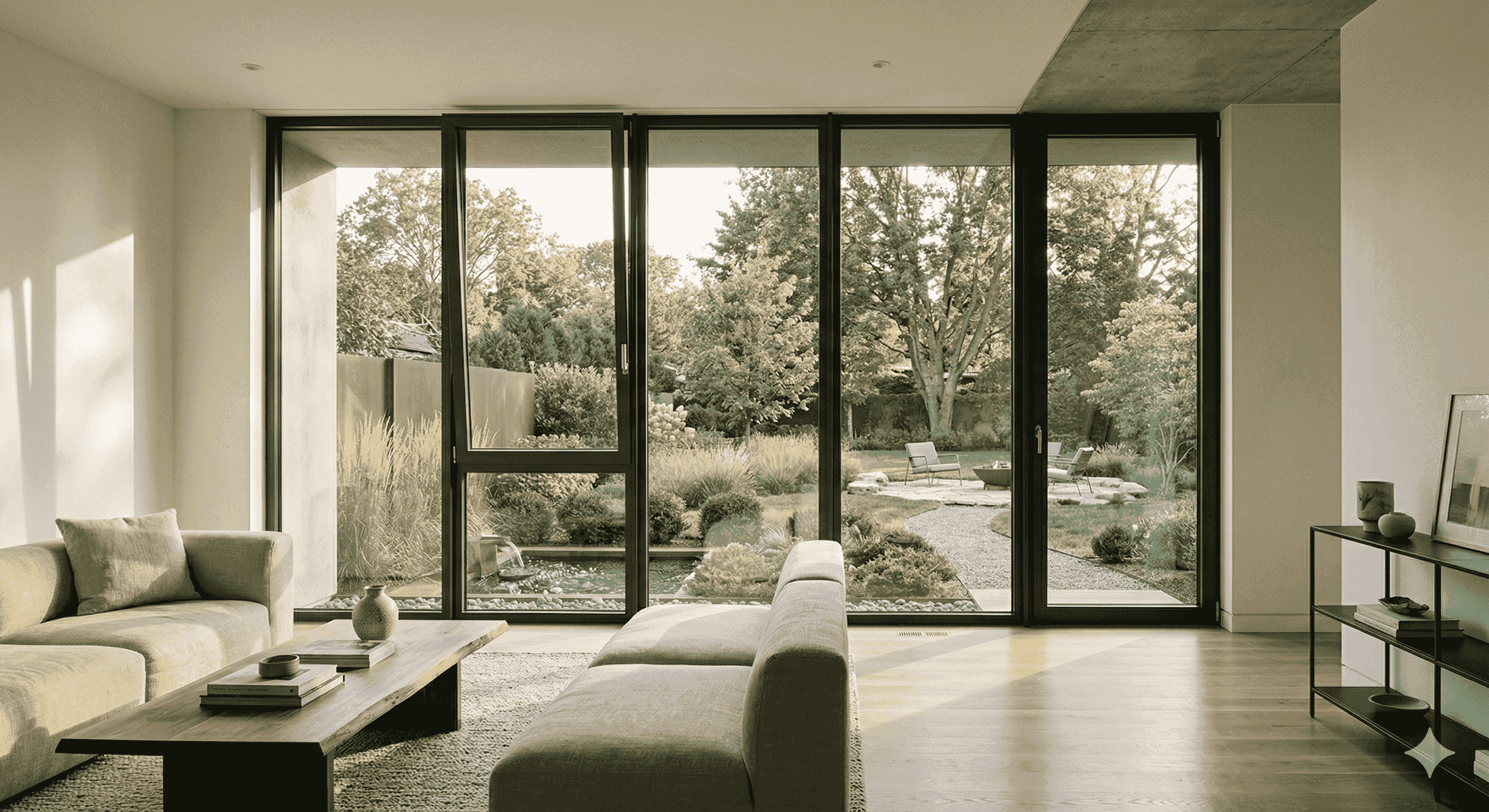
The two positions, with the screen in place
A tilt-turn window has two ways to open, and the screen works with both:
Tilt (top tips inward). This is the everyday ventilation position - the top of the sash leans into the room a few inches while the bottom stays anchored. The exterior screen covers the gap that opens at the top, so you get secure trickle ventilation with no insects, which is exactly the position most people leave a window in on a mild evening.
Turn (full inward swing). This is the wide-open, egress-and-cleaning position - the sash swings fully into the room like a door. The screen stays fixed on the outside, so even with the window wide open, the opening is screened. You can also reach the exterior face of the glass to clean it, which the inward swing makes easy from inside. Turn mode is also the position U.S. egress code is calculated against - see my tilt-turn egress code guide for the clear-opening numbers.
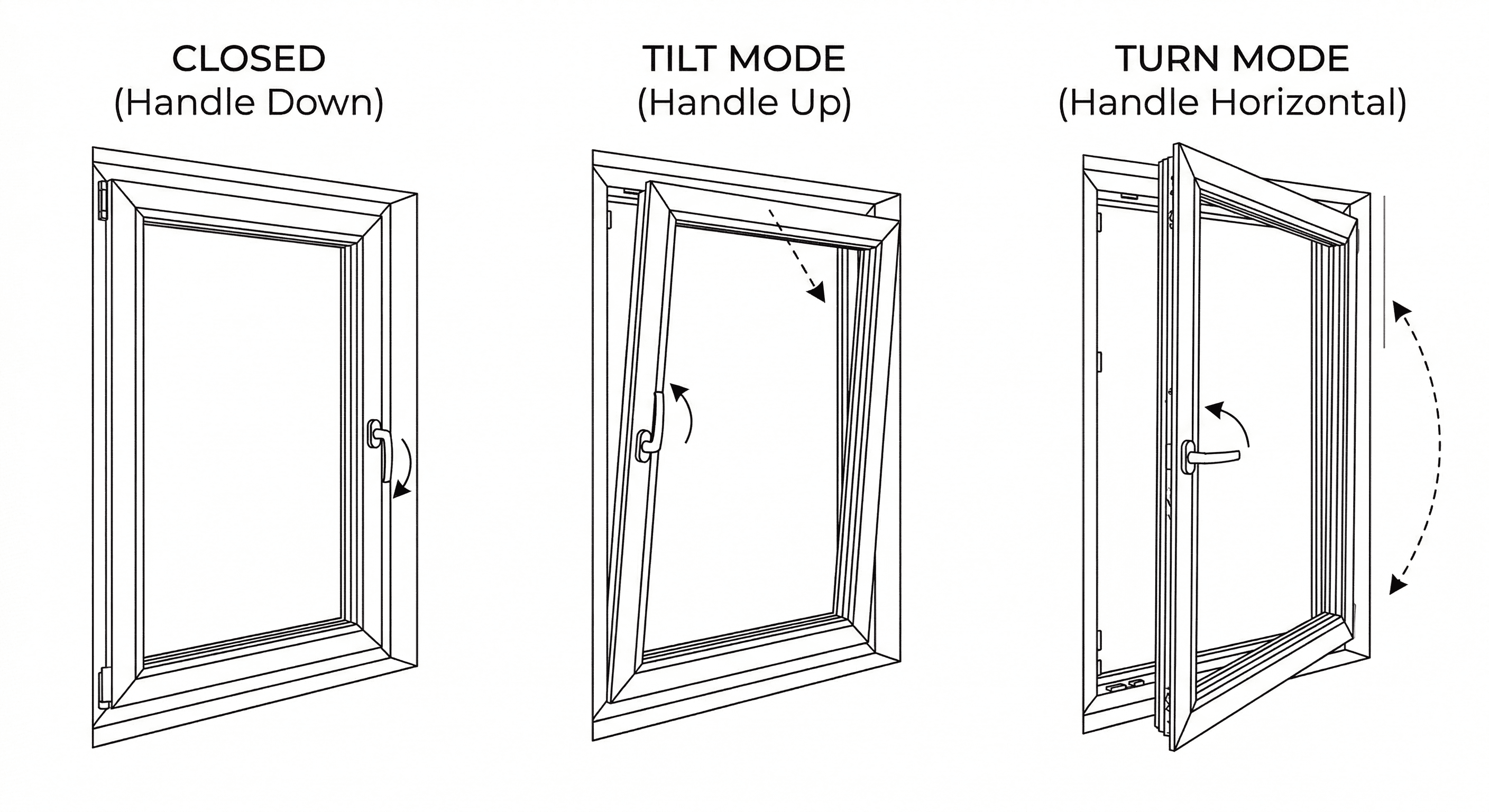
Image note (Kai): a dedicated close-up of an exterior-mounted tilt-turn screen (fixed frame or roller cassette) would strengthen this post. Real photo only - I'll reference an existing tilt-turn image until one is available.
The screen types you'll actually be offered
There are two common approaches, and which you want depends on how the window gets used.
Fixed-frame screens. A slim aluminum frame with mesh, mounted to the exterior of the window frame. Simple, durable, and inexpensive. The mesh is always in place. This is the default for most windows and the most trouble-free option - there's nothing to break because nothing moves. The trade-off is that the mesh is always there, very slightly softening the view and the light.
Retractable (roller) screens. The mesh rolls into a compact cassette at the top or side of the frame and pulls down or across only when you want it. When the window is closed for the season, the screen disappears into its housing, so you get an unobstructed view and full light. It's the tidier, more premium option, with a bit more mechanism to maintain. For big openings and doors, roller screens are usually the way to go.
For tilt-turn windows specifically, the fixed-frame screen is the workhorse and the roller screen is the upgrade. Both mount outside, both leave the interior swing completely free.
Mesh options and keeping them clean
The mesh itself is worth a moment's thought, because it's not one-size-fits-all. Standard fiberglass or aluminum mesh is the default and does the job for ordinary bugs. If you have pets, a heavier pet-resistant mesh stands up to claws and pushing without tearing. In areas with fine insects, allergens, or pollen, a tighter micro-mesh screens smaller particles - at the cost of slightly reduced airflow and a marginally darker view, so it's a trade-off rather than a strict upgrade. For coastal or high-exposure sites, a marine-grade or powder-coated frame resists corrosion better than bare aluminum.
Maintenance is genuinely minimal. Fixed-frame screens lift out for an occasional rinse; retractable screens mostly need the track kept free of grit so the cassette rolls smoothly. Because the screen sits on the exterior, it takes the weather rather than the interior finish - which is one less thing to fuss over inside the room.
Which windows need a screen - and which don't
You only need a screen where the window actually opens. A fixed (non-operating) window never needs one - there's no opening for anything to get through, so screening it would just cost money and block light for no reason. Every operable unit - each tilt-turn sash, each opening leaf of a French casement - gets one screen. On a combination unit with a fixed picture window beside an operable tilt-turn, only the tilt-turn side is screened.
That's worth knowing when you read a quote: the number of screens should match the number of operable sashes, not the total number of windows. If a package has a lot of large fixed glass and only a few operable units for ventilation, you need surprisingly few screens.
What screens cost - and how they show up in a quote
Insect screens are a modest per-window add-on, not a major budget line, but they are a real line item and they should appear explicitly on your quote rather than being assumed either in or out. Because they're priced per operable sash, the total scales with how many windows actually open, not with the overall glass area. My advice: decide up front whether you want fixed-frame or retractable screens, note which openings need them, and ask for screens as a clearly listed line so you can see exactly what you're paying for. It's the kind of detail that's easy to leave off a quote and annoying to add after the order is placed.
If the exterior screen arrangement is a dealbreaker for your project, there is a straightforward way around it: spec an outward-opening system instead. On European casement windows the sash swings out, so the screen mounts on the interior exactly like a US casement - and you keep the deep frames, perimeter locking, and triple glazing that brought you to European systems in the first place.
If you're comparing tilt-turn against the windows you already know, our tilt-turn vs casement comparison covers how the two operate, and the European window hardware explainer gets into the multi-point mechanism that makes the tilt-turn action - and its screen arrangement - work. To see how screens factor into a full package for your project, run your window schedule through the project estimator.
FAQ
Where does the screen go on an inward-opening window? On the exterior face of the window frame. The sash swings inward into the room while the screen stays fixed on the outside, so they occupy different planes and never interfere with each other.
Can you still open a tilt-turn window with the screen in place? Yes. Both the tilt (ventilation) and turn (full swing) positions work with the screen mounted outside - you operate the window from inside and the screen covers the opening the whole time.
What kinds of screens are available for tilt-turn windows? Fixed-frame screens (a slim mesh frame on the exterior - simple and durable) and retractable roller screens (mesh that rolls into a cassette when not needed). Fixed-frame is the common default; roller screens are the premium, view-preserving option.
Do I need a screen on every window? No - only on operable units. Fixed windows don't open, so they don't need screens. The number of screens should match the number of opening sashes, which is why a glass-heavy package with few operable units needs relatively few screens.