
If you're building with big glass - custom homes, luxury multifamily, contemporary renovations - you already know the pattern. Large sashes get heavy. Operation gets sticky. Alignment drifts. Then come the callbacks: air leaks, water infiltration, wind noise.
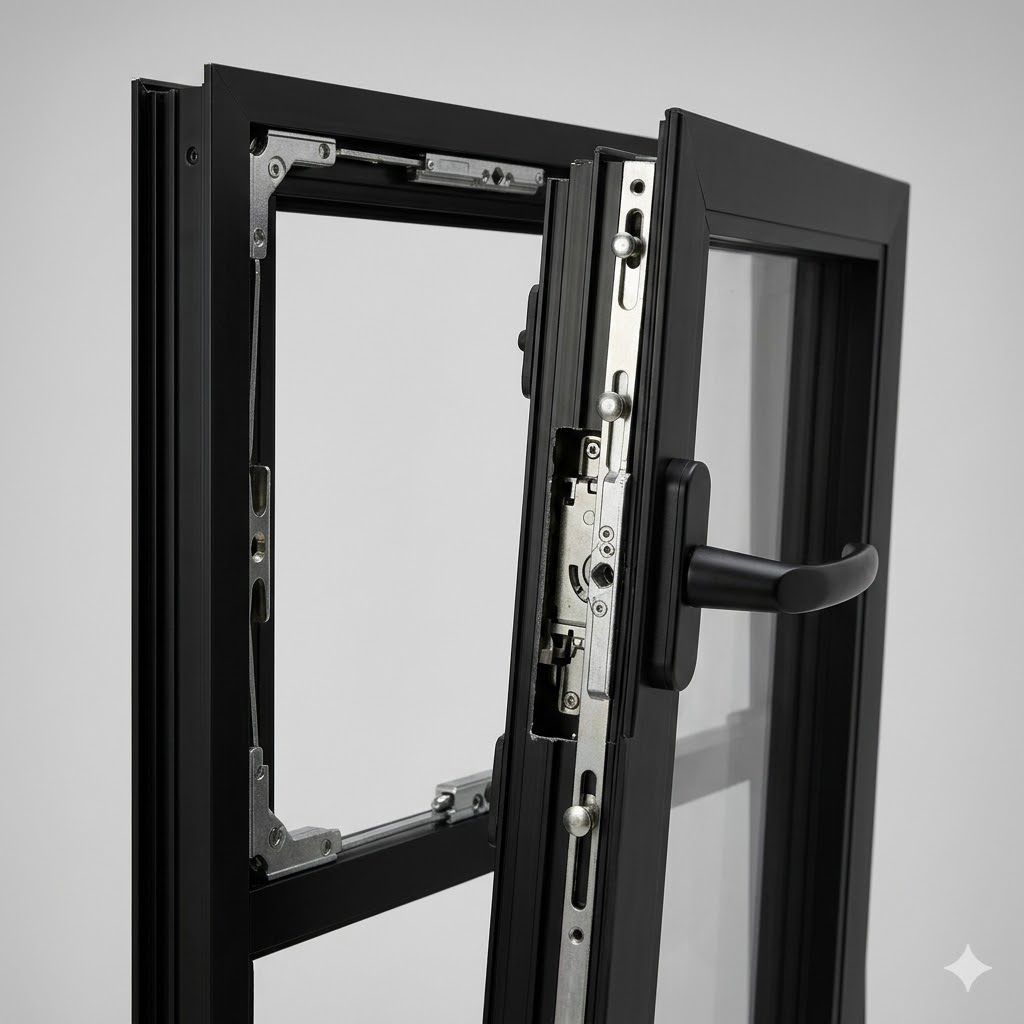
European tilt-and-turn window hardware is a concealed espagnolette system: one handle drives a locking bar around the whole sash, engages 4-8 or more locking points that pull the sash into a perimeter compression gasket, and switches the window between tilt (vent) and turn (full inward swing). That's why hardware matters far more than most people think on large modern glazing. Here's how it works.
How Does Tilt-and-Turn Window Hardware Work?
European tilt-and-turn hardware isn't just a handle and some hinges. It's an integrated mechanical system that controls:
- Tilt mode - top of sash leans inward for ventilation
- Turn mode - sash swings inward like a door for full opening and cleaning
- Multi-point locking - multiple lock points distributed around the sash perimeter
- Compression - the sash pulls tight against seals all the way around
- Adjustability - fine-tuning after install and as the building settles
The backbone is the espagnolette - a continuous locking bar that runs around the sash perimeter, activated by a single handle rotation. Turn the handle 90 degrees and all locking points unlock for swing mode. Turn it up (180 degrees) and the tilt mechanism engages.
A single handle controls the 4-8+ points of a multipoint lock on larger sashes, pulling the sash evenly into the compression gasket around the full perimeter. Many US hung and casement windows lock at one or two points, although some premium US casements also use multipoint locks. The mechanism works the same way whether the frame is uPVC, aluminum, wood or aluminum-clad wood - the hardware line is matched to the profile and the sash weight. What changes in a laminated timber frame is covered in tilt and turn wood windows. For the window itself - systems, sizes and budget - see my European tilt and turn windows page.
Why Full Perimeter Compression Matters
- Air tightness - even gasket contact minimizes infiltration paths
- Water resistance - even gasket compression supports the closed window's seal; confirm the complete assembly's tested water rating and installation detail.
- Wind noise - consistent gasket contact reduces rattle and drafts
Why Big Glass Creates Hardware Problems
When you push toward larger openings and slimmer frames, challenges compound fast:
Weight and leverage. A 60" x 80" tilt-turn unit with triple glazing can easily weigh 200+ lbs. That weight is far from hinge points, stressing hardware.
Tighter tolerances. Minimal sightlines look clean but leave less room to hide imperfect installation. Small alignment errors show up as drag or inconsistent gasket contact.
Higher expectations. Luxury clients expect quiet interiors, no drafts, no water, and smooth one-hand operation. Any stiffness becomes a quality issue.
Multifamily repetition. Even a small failure rate becomes a big number across hundreds of units.
European vs. U.S. Window Hardware
| Feature | European tilt-and-turn | Typical U.S. double-hung / sliding |
|---|---|---|
| Locking points | Multi-point perimeter | Single or dual latch |
| Sealing | Compression gasket (perimeter) | Brush or wiper seals |
| Ventilation modes | Tilt + full inward swing | Vertical slide only |
| Post-install adjustment | Yes - multiple points | Limited |
| Weight capacity | Engineered for large, heavy sashes | Generally lighter-duty |
Fair warning: Tilt-and-turn systems aren't magic. If the window is underspecified for size/load, installed poorly, or not adjusted, you can still get issues. The hardware enables performance - but the full system (profile, glass, and install) must match the opening.
What Hardware Components Does a Tilt-and-Turn Window Have?
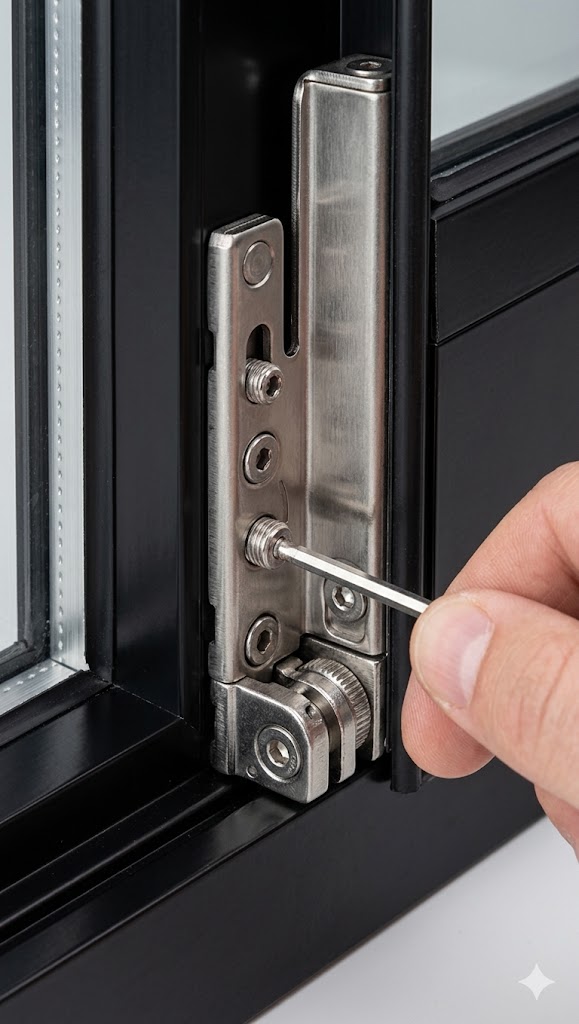
Hinges. Corner hinges carry the full sash weight. For large units, scissor hinges or heavy-duty connectors handle 80 kg, 130 kg, or more. Quality European suppliers match hinge systems to the specific weight class before production.
Locking bar and mushroom cams. The espagnolette carries mushroom-head cams that engage strike plates around the frame. More cams means more even pressure and better sealing. Taller windows get additional intermediate locking points to prevent gasket bowing.
Handle and gear box. The gear box translates handle rotation into tilt or turn movement. It's a wear point - quality matters, especially in multifamily with heavy daily use.
Adjustment mechanisms. Quality systems include multiple adjustment points at hinges and strikers for sash height, lateral position, and compression depth. Minor installation drift or seasonal movement gets corrected without replacing components.
Practical Tips for Your Project
- Confirm sash sizes and weights early - before final glazing decisions
- Match glass build-ups to weight realities - triple glazing adds significant weight
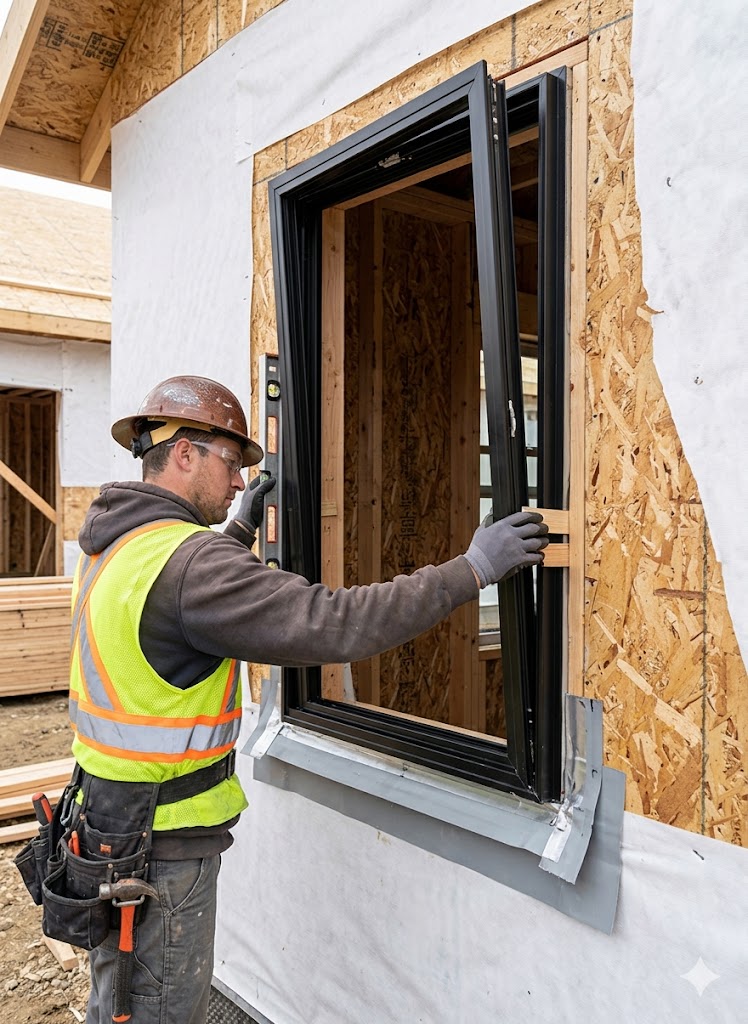
- Detail installation interfaces correctly - sill pan, air/water barrier continuity, drainage
- Plan for adjustment at install and at seasonal change - especially in year one
- Use installers familiar with tilt-and-turn - or include training in the scope
For bracket-mounted installation details, see the technical guide.
FAQ
Do tilt-and-turn windows need maintenance? Occasionally - especially after installation as the building settles. The advantage is that quality hardware is designed to be adjusted, not "lived with." Most adjustments are quick and need no special tools.
How many locking points does a tilt-and-turn window have? A tilt-and-turn window typically has 4 to 8 or more locking points, depending on sash size. All of them are driven by one handle through the espagnolette bar running around the sash, so the sash is pulled evenly into the perimeter gasket. Taller sashes get extra intermediate points to keep the gasket from bowing.
How do you adjust tilt-and-turn window hardware? Tilt-and-turn hardware adjusts with a hex key at the hinges and strikers, on three axes: sash height, lateral position and compression against the gasket. After install, check that the sash tilts and turns smoothly, the locks engage without force and the gasket compresses evenly all around. Plan a check after the first seasonal change.
Will I be able to service European hardware in the U.S.? Yes. The systems I source use established European hardware platforms, and service questions come to me rather than to a factory you have never dealt with. Hinges, multi-point locks and tilt-and-turn gear are covered by the 10-year written warranty from Windows Guy sp. z o.o. Specifying consistent hardware across a project makes troubleshooting much simpler.
What handle styles are available? Most European suppliers offer handles in matte black, brushed stainless, chrome, and sometimes custom finishes. I'll coordinate handle selection with your team during specification.
Talk Through Your Project
If you're specifying large tilt-and-turn windows, hardware selection is a conversation worth having early - not at submittal. Understanding why developers import European aluminum windows can also help frame the conversation with your team. Send me your project details and I'll flag the right hardware approach for your sash sizes and performance targets. Budget estimate the same or next working day, with shop drawings within 2-3 working days after review.
Schedule a Call | Request a Quote
Kai, your window guy!