
Here's the thing about triple glazing - it's not always the right call. I see it over-specified all the time. Someone hears "high performance" and assumes triple is automatically better. But it adds cost, weight, and in warmer climates, the payback just isn't there.
Triple glazing is worth it on US projects in IECC climate zones 5-8, on Passive House builds and on cold-climate houses with a lot of glass; in zones 1-3 and on large sliding doors, a good double-glazed European window is usually the smarter buy. On published European window data, going from double to triple lowers the whole-window U-factor by roughly 0.06-0.15 - for example from U-0.22 to U-0.13 on an Aluplast Ideal Neo uPVC tilt-turn - and adds about 11-15% to the supplied window price in my estimator.
Here's when triple actually earns its keep - and when it doesn't.
Quick Comparison
| Configuration | Glass Lites | Gas Cavities | Typical Center-of-Glass U-Factor |
|---|---|---|---|
| Double glazing | 2 | 1 | ~0.25 - 0.30 Btu/(hr-ft2-F) |
| Triple glazing | 3 | 2 | ~0.15 - 0.20 Btu/(hr-ft2-F) |
Note: These are center-of-glass values. Overall window U-factor (per NFRC) depends on frame design and thermal break quality. European aluminum frames with solid thermal breaks reach overall U-factors of about 0.22-0.26 even with double glazing.
Double vs triple on the same European frame
Whole-window U-factors as published for systems I quote, converted from European Uw (lower is better):
| System | Material | Double glazed | Triple glazed | Improvement |
|---|---|---|---|---|
| Aluplast Ideal Neo | uPVC tilt-turn | U-0.22 (Uw 1.25) | U-0.13 (Uw 0.74) | 0.09 |
| Aliplast Genesis 75 | Aluminum | U-0.22 (Uw 1.25) | U-0.15 (Uw 0.85) | 0.07 |
| Aluprof MB-79N | Aluminum | U-0.23 (Uw 1.31) | U-0.17 (Uw 0.97) | 0.06 |
| Reynaers SlimLine 38 Classic HI | Aluminum, steel-look | U-0.26 (Uw 1.47) | U-0.16 (Uw 0.90) | 0.10 |
| Aliplast Ultraglide UGi | Aluminum lift-and-slide | U-0.26 (Uw 1.47) | U-0.15 (Uw 0.86) | 0.11 |
| Aluplast Smart-Slide | uPVC sliding door | U-0.32 (Uw 1.81) | U-0.17 (Uw 0.95) | 0.15 |
The pattern: triple glazing cuts the whole-window U-factor of a European window by roughly 0.06-0.15, and sliding doors gain the most because they carry the most glass. To check any European data sheet against a US code target, run the Uw through the U-value to U-factor converter.
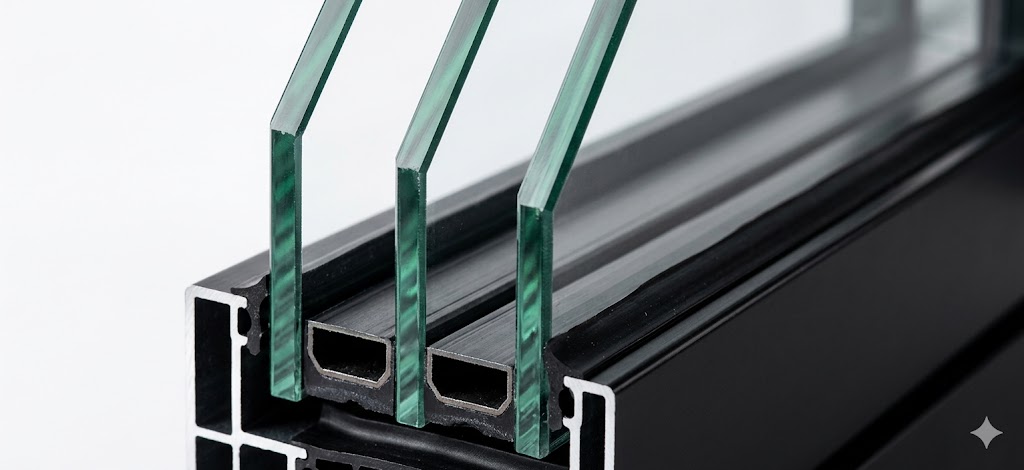
When Triple Glazing Is Worth It
Cold climates (IECC Zones 5-8). Northern Midwest, New England, Mountain states - the heating load reduction is real. A project in Minneapolis with a lot of glass will see meaningful savings going from a U-0.30 double-glazed window to a U-0.18 triple. Cold climates are where the payback is shortest - run it through the energy model for the exact number. In the Mountain states, order the triple units with a high-altitude package - a sealed unit built near sea level is under real pressure stress at 8,000 feet, as I explain for European windows in Colorado. Quad-pane exists too - a Colorado manufacturer lists it as one of its two glass choices, which I cover in Alpen vs European tilt and turn windows. For the full zone-by-zone rundown of when this and other specs shift, see European windows by US climate zone.
Passive House projects. PHI requirements for cool-temperate climates need an overall window U-value of 0.80 W/m2K or lower - about U-0.14 in US units - which means triple glazing plus a high-performance frame. The best European systems I quote reach U-0.11 (Uw 0.60) with Ug 0.5 glass. No way around it - see what actually qualifies as a Passive House window for the full breakdown of the frame, glazing, and install-detail levers that get you there.
Noise-sensitive sites. Near airports, highways or rail, glazing matters - but the third pane is not the main acoustic lever. Laminated glass and asymmetric pane thicknesses do most of the work, so an acoustic double-glazed unit often beats a standard triple for sound. Triple with a laminated lite makes sense when you need both the thermal and the acoustic gain; the trade-offs are in what soundproof windows cost.
High glazing-to-wall ratios. At 40-60% glazing, even a modest U-factor improvement has a big aggregate effect on the energy model - affects HVAC sizing, peak loads, everything.
When Double Glazing Is the Right Call
Warm and mixed climates (Zones 1-3). Texas, Gulf Coast, SoCal, the deep South - the building isn't fighting conductive heat loss. SHGC and air infiltration matter more than an extra glass lite. Double with a good low-E coating meets or beats code at lower cost and less weight - see European windows in Texas for how the SHGC-first code math actually works out in Zone 2A/3A.
Large-format sliding doors and panels. Triple is 30-40% heavier. On large lift-slide doors, that means heavier hardware, beefier profiles, more structural support. Often better to optimize the double-glazed spec - better gas fill, improved low-E, warm-edge spacer.
When the math does not work. Calculate simple payback as the incremental installed cost divided by modeled annual energy savings; do not infer savings or payback from the pane count or climate zone alone. Include comfort, condensation risk, weight and any project requirements in the decision. The estimator can compare preliminary supplied and landed budgets, while the project energy model supplies the energy-saving estimate.
Why a Good Double-Glazed Frame Can Beat a Weaker Triple
This is the part most people miss. A double-glazed aluminum window with a wide thermal break can match or beat a triple-glazed aluminum window with a narrow one, because the frame carries a large share of the heat loss. Two reasons:
Wider thermal breaks. The European profiles I quote use continuous polyamide thermal breaks that are typically wider than a poured break. The frame contributes less to heat loss, so the glass doesn't need to carry the whole performance burden.
IGU defaults. Warm-edge spacers, argon fill and high-performance low-E coatings are the default on these systems rather than upgrades.
Before assuming you need triple glazing, check what a European double-glazed system actually delivers. I run these comparisons at the quoting stage - it's one of the first things I look at. See my system provider comparison for how the systems differ.
FAQ
Is triple glazing worth it in the US? Triple glazing is worth it in IECC climate zones 5-8, on Passive House projects and on cold-climate houses with large glass areas, where it lowers heating load and keeps glass surfaces warmer. In zones 1-3, SHGC matters more than U-factor, and a well-specified double-glazed European window usually meets code at lower cost and weight. Large sliding panels also favor double.
What is the U-value of a triple glazed window? A triple-glazed European window typically reaches a whole-window U-factor of about U-0.13-0.18 (Uw 0.74-1.02 W/m2K) on published system data, against about U-0.22-0.26 double glazed. Passive-grade systems with Ug 0.5 glass reach U-0.11 (Uw 0.60). Lower is better, and frame design matters as much as the glass.
How much more does triple glazing cost? On European windows, triple glazing adds about 11-14% to the supplied price on aluminum and about 15% on uPVC in my estimator, because glass is a bigger share of a uPVC unit's cost. On a 20-window uPVC house that is roughly $1,700 landed. Triple units are also heavier, which matters most on large sliding doors.
Do you offer both double and triple glazing? Yes, both configurations are available across all the window and door systems I source. I'll recommend which one actually makes sense for your climate zone and project type, and NFRC-rated units are available on selected systems where the permit needs them - see the NFRC and NAFS guide.
How does triple glazing affect lead time? Triple glazing adds a little to production, so flag it early - glass is often the critical path. Overall, plan on roughly 9-16 weeks from approved shop drawings to delivery on site, depending on material and coast; the breakdown is in European window lead times.
Bottom Line
Triple glazing earns its place in cold climates, Passive House builds, acoustic-sensitive sites, and high-glazing commercial projects. If your project sits in zones 6-8, glazing is only one of the five things that decide winter comfort - the best windows for cold US climates guide covers the spacer, seal, and thermal-break side of it. For warm climates, large sliding systems, or projects where the payback doesn't pencil - a well-specified European double-glazed unit is the better move.
The smart approach: spec the European aluminum frame first (the thermal break and IGU standards already put you ahead of most domestic options), then decide if triple is needed to close the gap to your target U-value. Frame material matters too - for a comparison of aluclad vs. aluminum vs. wood windows, see the material guide.
Two follow-ups worth reading before you finalize the glazing spec: what a good U-factor actually is for your climate zone, and - if noise rather than heat is driving the decision - what soundproof glazing really costs, because acoustic performance comes from laminated asymmetric make-ups, not from adding a third pane.
I can provide published performance data for both configurations, with NFRC-rated units on selected systems where the permit needs them, and help with the energy model comparison. For an envelope built around triple glazing, my passive house windows page covers the systems that qualify. Send your window schedule and I'll have a budget estimate back to you the same or next working day.
Request a Quote | Schedule a Call
Kai, your window guy!