Ask what the best windows for a cold climate are and you'll usually get one word back: U-factor. It's the right instinct, but it's an incomplete answer. I've walked plenty of cold-climate homes where the windows had a good U-factor on paper and the owner was still standing in a draft, wiping condensation off the glass in January. Comfort through a northern winter is four or five things working together, and the U-factor is only one of them. Here's the full picture: what the code asks for in zones 5-8, how the frame materials and glazing options compare, and what actually fails when it's ten below.
What the code asks for in zones 5-8
The northern half of the country sits in IECC climate zones 5 through 8: zone 5 covers Chicago, Boston and most of the Midwest and Northeast; zones 6 and 7 are Minneapolis, Burlington, Duluth and the northern tier; zone 8 is interior Alaska. Under the 2021 IECC baseline, residential prescriptive code caps window U-factor at 0.30 in all four zones and stops requiring an SHGC ceiling, because heat loss, not solar gain, is the problem. High-performance targets run lower, and zone 8 jurisdictions often tighten the number by local amendment. My climate zone cheat-sheet has the full table for all eight zones - always confirm against your plan reviewer's copy, since states and municipalities amend IECC freely.
Code minimum is the floor, not the goal. A U-0.30 window passes review in Minneapolis and can still sweat at the edges and pour cold air down the wall on a January night. The rest of this post is about what separates "passes" from "comfortable".
Start with the whole-unit U-factor - but read it correctly
U-factor measures how fast heat escapes through the entire window - frame, spacer, and glass together. Lower is better, and in a cold climate it's the single most important number. The trap is comparing a whole-unit number to a glass-only one. Some quotes lead with the glass U-factor, which is always better than the real thing; two windows with identical glass perform very differently once you include a cheap frame and a poor spacer. Always compare the whole-unit, tested value. My guide on what a good U-factor is breaks the targets down in detail.
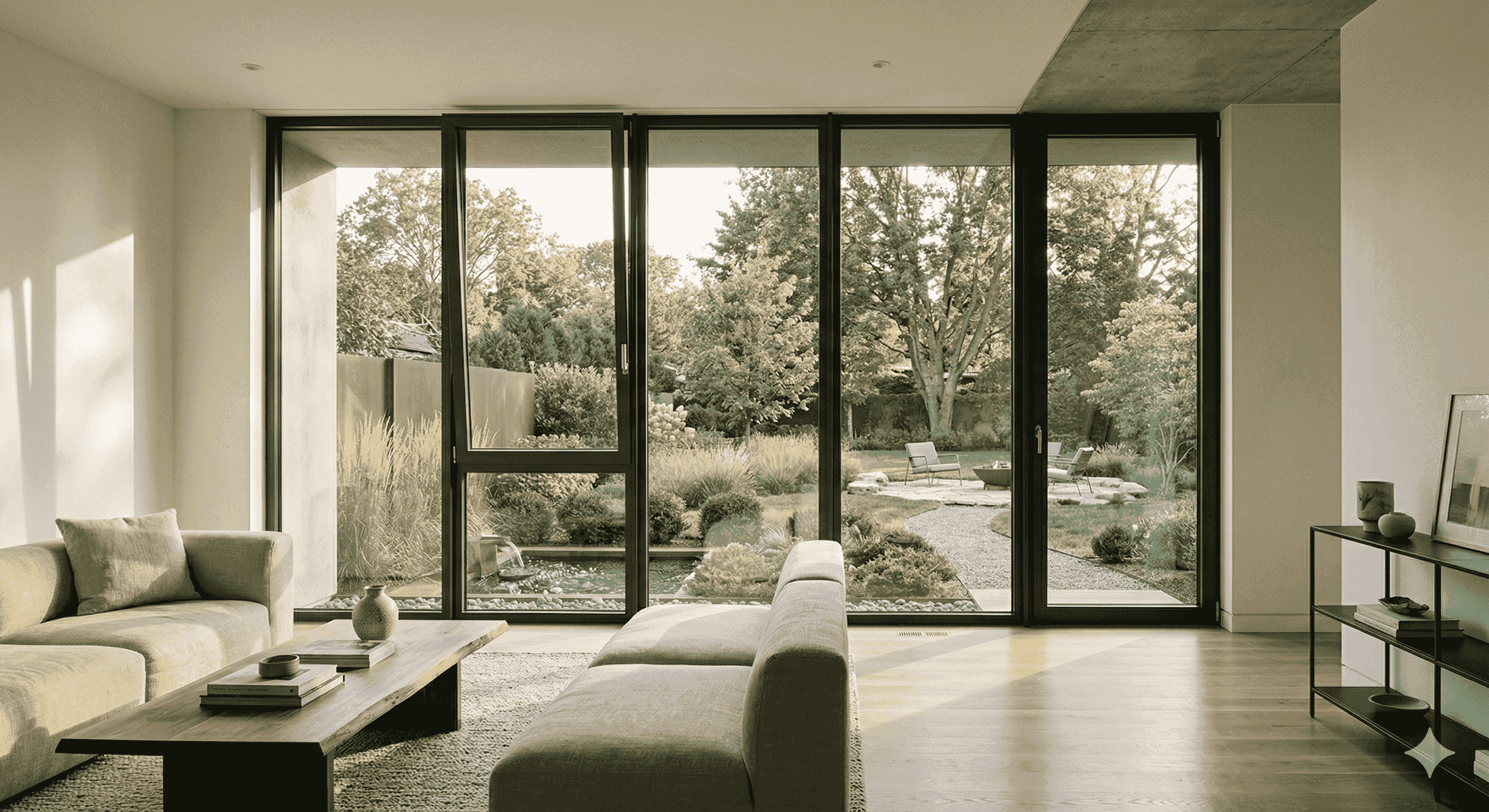
Frame material and glazing, compared for the cold
Here's how the four frame materials I work with stack up on the numbers that matter in a northern climate. U-factors are whole-unit values for the window systems in my catalog; the cost band is the supplied price per square foot of window from my estimator, double-glazed, before freight and duty.
| Frame | Double-glazed U-factor | Triple-glazed U-factor | Condensation resistance | Supplied cost band (windows) |
|---|---|---|---|---|
| uPVC, multi-chamber, steel-reinforced | about 0.22 | about 0.13 | Strong - the frame itself insulates; a warm-edge spacer covers the glass edge | Lowest - about $26 per sq ft; triple adds about 15% |
| Aluminum, thermally broken | 0.22 - 0.26 | 0.15 - 0.16 | Good with a deep thermal break; shallow breaks frost at the interior frame first | About $56 - $80 per sq ft by system; triple adds about 6% |
| Aluclad (wood inside, aluminum outside) | quoted per project | 0.11 - 0.21 by system, best case | Strong - warm wood interior, aluminum skin outside the thermal line | Not in my estimator - quoted per project, generally above aluminum |
| Wood, solid timber | quoted per project | down to about 0.14 on an 88 mm frame | Strong - low-conductivity frame; relies on the finish staying tight | Not in my estimator - quoted per project |
Two takeaways. First, uPVC is the cold-climate value play: the best triple-glazed U-factor in the table at the lowest price, which is why it shows up on so many northern builds where sightlines aren't the priority. Second, aluminum is not disqualified by the cold - a properly broken profile with triple glazing lands at U-0.15 to 0.16, well inside any zone 5-8 target - but the depth of the thermal break is the whole game, which brings us to what fails.
Triple glazing earns its keep in the cold
In hot climates, triple glazing is often a marginal upgrade. In cold climates, it's usually worth it. The third pane and second gas-filled cavity drop the U-factor meaningfully, and - just as important for how a room feels - they raise the interior glass temperature. That second effect is what kills the cold-glass downdraft: warmer inner glass means less of the convective draft where cold air sheets down off the window and pools at your feet.
Across the systems I work with, triple-glazed units run roughly U-0.13 to U-0.19 whole-unit, versus U-0.22 to U-0.32 for double. In zones 5-8, on north elevations, and anywhere near big glass, that's a real comfort difference, not just a spec-sheet one. See my triple vs double glazing breakdown for the cost-versus-performance case.
What fails in a cold climate
Three things, and none of them show up in a glass-only U-factor.
Thermal bridging through the frame. Aluminum conducts heat readily, so an aluminum window with a shallow or cheap thermal break becomes a cold bridge - frost on the frame, condensation at the edges - even with good glass. A properly thermally broken profile puts an insulating barrier between the outside and inside of the frame, keeping the interior side warm, and it lets you have slim aluminum sightlines and cold-climate performance at the same time. The same failure happens at the install: a frame set hard against uninsulated metal or a bare buck bridges around the thermal break entirely. My explainer on thermally broken aluminum windows covers how much break depth actually matters.
The spacer. Condensation on the inside of a window in winter is almost always a sign of a cold surface, not a defective window. Warm, humid indoor air meets cold glass or a cold frame edge and gives up its moisture. Cheap metal spacers create a cold ring right where the glass meets the frame, which is exactly where condensation - and eventually mold on the gasket - shows up first. A warm-edge spacer keeps that edge warmer and pushes back the point where moisture appears. In a cold climate with normal indoor humidity, this detail is the difference between clear glass and a wet sill.
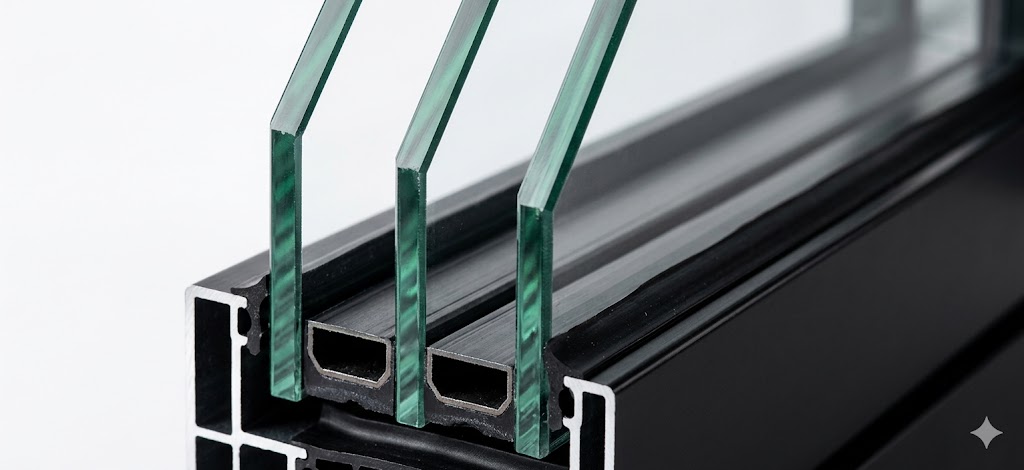
Air infiltration. A window can have a great U-factor and still feel drafty if air leaks around the sash, and this is where operation type matters more than people expect. A classic American single- or double-hung window seals along sliding tracks, which is inherently leakier - I go through that in tilt-turn vs single-hung and tilt-turn vs double-hung. A European tilt-turn works differently: close and lock the handle and multi-point hardware pulls the sash tight against a continuous gasket all the way around the frame. There's no sliding gap to leak through - the whole perimeter clamps shut, which is why a well-made European window goes quiet and still the moment you throw the handle. Why European windows open inward explains how the tilt-turn action and that seal work together.
The SHGC nuance that's specific to cold climates
Here's where cold-climate advice diverges from hot-climate advice. SHGC measures how much solar heat the window admits. In a hot climate you want it low. In a cold, heating-dominated climate, a moderate-to-higher SHGC on south-facing glass is actually helpful - it lets in free solar heat during the day and reduces your heating load. So the "best" glass for a northern house is often not one coating everywhere: lower SHGC where you're fighting summer glare, higher SHGC on the south face to harvest winter sun. Getting this right by orientation is a small specification choice with a real comfort and energy payoff.
Putting it together
The best windows for a cold or northern US climate get all of this right at once: a low whole-unit U-factor, triple glazing where the zone justifies it, a warm-edge spacer to keep condensation off the glass, a compression seal that stops air infiltration, a genuine frame thermal break, and SHGC chosen by orientation. European tilt-turn systems tend to deliver that combination as standard rather than as a stack of upgrades - which is why they land where they do for cold-climate builders.
If you're weighing options for a heating-dominated project, the passive house windows page covers the highest-performance end, and what actually qualifies as a Passive House window walks through the real U-factor threshold. Running your window schedule through the project estimator will show you where a cold-climate package lands for your sizes and zone.
FAQ
What are the best windows for northern climates? A tilt-turn or fixed European window with a low whole-unit U-factor, triple glazing, a warm-edge spacer, a genuine frame thermal break, and a compression seal that limits air infiltration. uPVC gives the lowest U-factor for the money (about 0.13 triple-glazed); thermally broken aluminum lands at 0.15 to 0.16 with slimmer frames. The combination matters more than any single number.
Are triple pane windows worth it in a cold climate? Usually yes. In climate zones 5-8 and near large or north-facing glass, triple glazing lowers the U-factor and raises the interior glass temperature, which cuts the cold-glass draft and condensation. It adds about 15% to a uPVC window and about 6% to an aluminum one in my pricing.
What U-factor do windows need in a cold climate? The 2021 IECC baseline caps residential window U-factor at 0.30 in climate zones 5 through 8, with no SHGC requirement; high-performance targets run lower and some zone 8 jurisdictions tighten it by local amendment. European triple-glazed systems run about U-0.13 to U-0.19 whole-unit, so they clear the code number with room to spare.
Do European windows work in cold weather? Yes - they were designed for it. Central and Northern European winters are the reference climate for tilt-turn hardware, multi-chamber uPVC and deep-thermal-break aluminum profiles, and triple glazing is common there. The things to verify for a US northern build are the whole-unit U-factor, a warm-edge spacer, and an insulated install detail.
Why do my windows get condensation in winter? Condensation forms on cold surfaces when warm, humid indoor air reaches them. A higher-performance window with a warm-edge spacer keeps the glass and frame edge warmer, pushing back the point where moisture appears. Very high indoor humidity makes it worse regardless.
Kai, your window guy!