
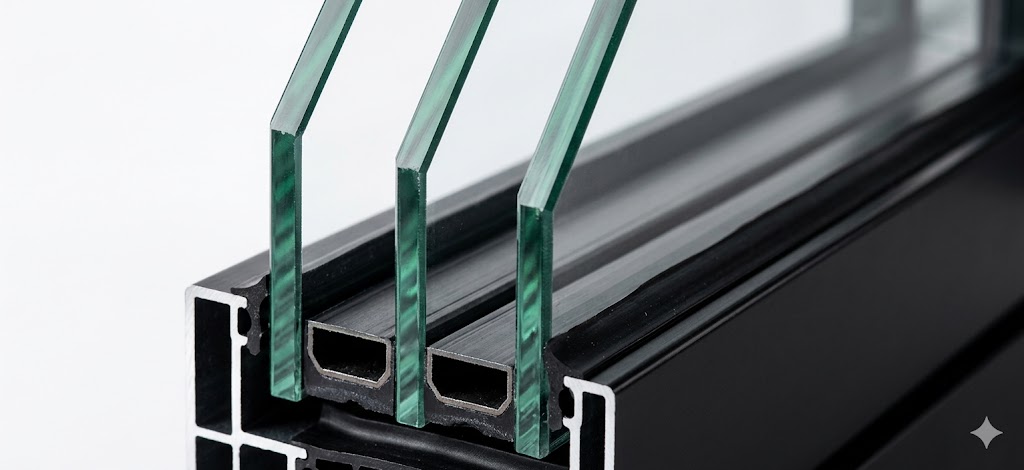
 Acoustic laminated and triple-glazed units are available across European premium window systems.
You've been quoted $400 for window inserts and $3,500 for "soundproof replacement windows" and you're not sure either is actually the answer. That price spread exists because those two products solve completely different problems.
European soundproof windows start with supplied-window budgets of about $15-25 per square foot in uPVC and $45-95 per square foot in aluminum, plus the project-specific acoustic glass upgrade, freight, duty and installation. "Soundproof" means noise-reducing, not silent: the glass, complete frame assembly and installation all affect the result. European Rw values are not substitutes for US STC or OITC ratings.
Inserts sit inside your existing frame and add an air gap. They help. But if your windows are already failing - single-pane, thin seals, rattling hardware - an insert treats the symptom, because the frame is the leak.
European windows engineered for acoustic performance are a different category. The glass, the seals, and the multi-point hardware all contribute. Here's what they actually cost, and when the investment makes sense. (For a broader overview of what makes European windows different, see the European windows buyer's guide.)
How window soundproofing actually works
Three things control how much noise a window stops:
Glass make-up - pane thickness, asymmetric layers and acoustic interlayers change how the glass responds to different sound frequencies. Pane count alone does not tell you whether a window will control traffic or aircraft noise.
Seals and installation - sound can enter around the sash, through an open vent or around an unsealed installation joint. A high glass rating does not compensate for these paths. Secondary glazing with a substantial separate cavity is also different from a small cavity change inside an insulating glass unit.
Laminated glass - an acoustic interlayer helps damp vibration. Standard safety laminate and specialist acoustic laminate are not interchangeable specifications. Ask for test data for the exact glass make-up and distinguish glass-only results from complete-window results. Pilkington's noise-control FAQ explains why asymmetric glazing, acoustic laminates and the noise source matter.
What the insert approach actually delivers
Acrylic window inserts are secondary panels fitted inside the existing window, commonly with a perimeter compression seal. They can help where the existing frame remains serviceable and replacement is impractical.
The result depends on the original window, insert, separation and seals. STC points cannot simply be added to the existing window rating; request a test of the combined assembly before comparing an insert with a replacement window.
But inserts are a retrofit product. They do not repair deteriorated frames or installation joints, and some need removal for cleaning and ventilation. In new construction, compare a suitable primary window with an engineered primary-plus-secondary glazing approach if the acoustic target calls for it; a separate cavity can be useful in a demanding noise-control design.
European windows built for acoustic performance
I source European windows built on established system providers' profiles, with the glass specification selected for each project. Acoustic glazing should be stated in the quote, not assumed from a system name or country of origin.
Many European aluminum tilt-turn systems accept double or triple insulating glass. Check the permitted glazing thickness and sash weight for the selected profile; frame depth alone does not establish which acoustic glass will fit.
For acoustic applications, the relevant specs:
- Laminated double glazing: confirm the interlayer type, pane thicknesses and tested acoustic performance.
- Asymmetric acoustic double glazing: different pane thicknesses and an acoustic interlayer may improve the relevant frequency response; use the test report to select the make-up.
- Acoustic triple glazing: useful when thermal and noise targets must both be met, provided the frame and hardware accept the specified glass weight and thickness.
Published system data lists up to Rw 46 dB for Cortizo COR 70 Hidden Sash. That is a system reference, not a promise for every size or glass option. Wood and aluminum-clad wood windows can also be specified with acoustic glazing, subject to the selected profile and hardware limits, and are quoted per project.
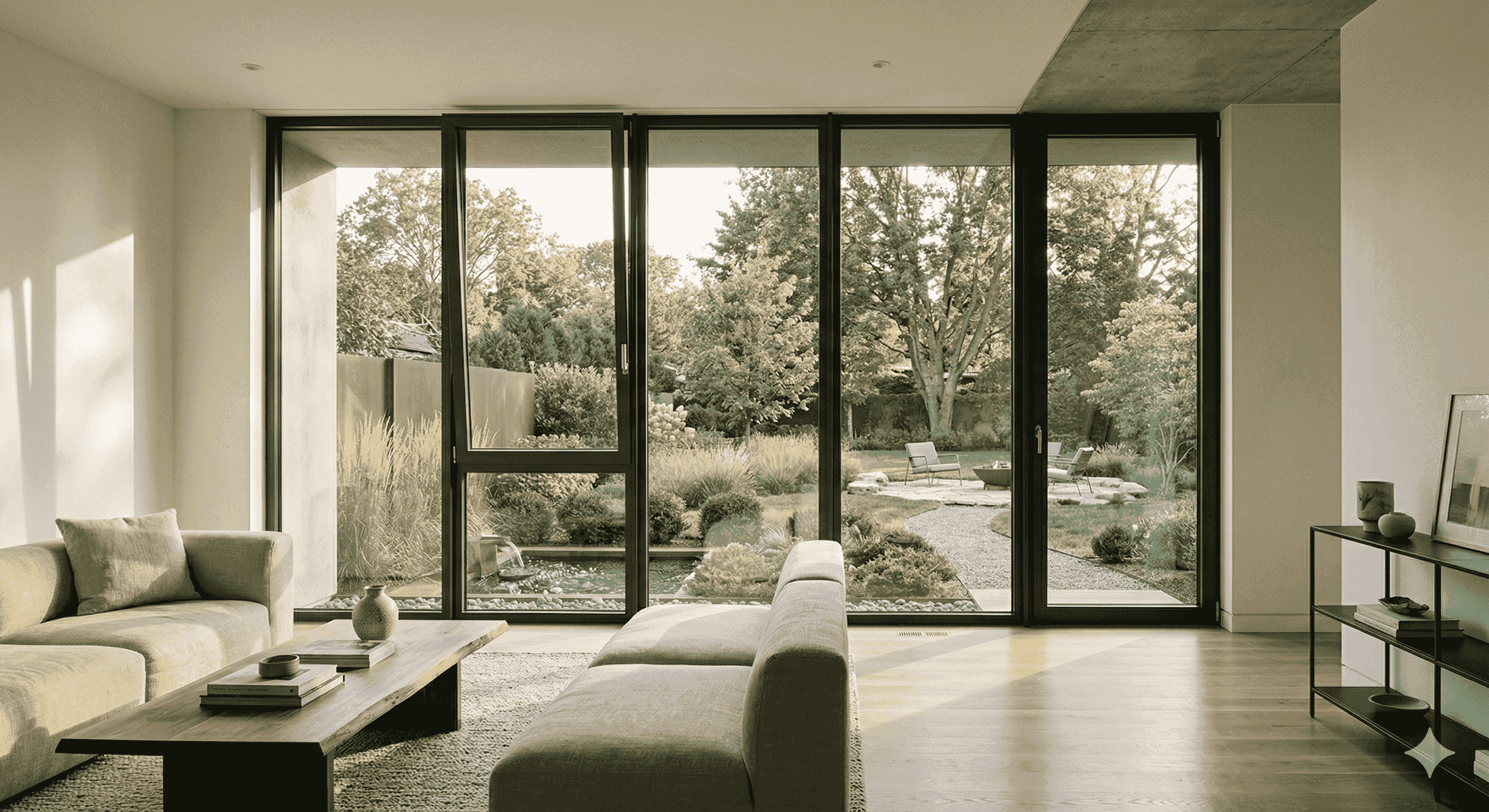 Tilt-turn hardware compresses the seals when closed. Opening the sash for ventilation reduces its noise protection.
Soundproof glass doors: what works
Soundproof glass doors reduce noise through a combination of acoustic glazing, effective seals and a well-sealed installation; no sliding or lift-and-slide door blocks all sound. Choose the complete door assembly against the project's acoustic target, not a glass-only rating or the number of panes.
Two sliding systems in my product catalog publish these European acoustic references:
| Sliding door system | Published acoustic reference | What to confirm before ordering |
|---|---|---|
| Cortizo COR Vision | Up to Rw 41 dB | Tested glass, panel layout, size and seal details |
| Cortizo COR Vision Plus | Up to Rw 43 dB | Tested glass, panel layout, size and threshold details |
These are published system maxima in Rw, not STC conversions and not guaranteed reductions in the sound level inside your room. Request the supporting complete-door report for the quoted configuration. An acoustic glass report alone does not establish the performance of its frame, sliding joints or threshold.
Lift-and-slide doors are another option where the closing mechanism and seals suit the project. I confirm acoustic data for the specific system and configuration rather than assigning a generic lift-and-slide rating. If the US specification calls for STC or OITC, request that rating for the assembly; do not substitute an Rw number.
Acoustic laminated glass increases the supplied price, and its additional weight can affect hardware and allowable panel sizes. The premium depends on the glass make-up and door layout, so the window allowance below is not a fixed door surcharge. Use the sliding patio door cost guide for base supplied and landed budgets, then send the door schedule and acoustic target for a confirmed specification and price.
How much do soundproof windows cost?
Keep the three cost layers separate - supplied, landed and installed - or the comparison with a US installed quote will mislead you:
| Cost layer | uPVC tilt-turn | Aluminum tilt-turn or fixed |
|---|---|---|
| Supplied window, standard double glazing | about $15-25/sq ft | about $45-95/sq ft |
| Acoustic laminated glass, preliminary allowance only | + about $5-12/sq ft, confirm by quote | + about $5-12/sq ft, confirm by quote |
| Triple glazing instead of double | + about 15% | + about 11-14% |
| Landed (DDP) | + ocean freight, customs clearance and duty | + ocean freight, customs clearance and the applicable duty |
| Installed | + US installation, about $15-25/sq ft | + US installation, about $15-25/sq ft |
The base window and triple-glazing figures follow the estimator. The acoustic glass and installation allowances are separate preliminary budgets, not live estimator outputs or fixed prices. Large fixed lights and operable windows have different price curves; sliding doors need their own system and size calculation. Exact pricing requires a takeoff and the specified acoustic glass.
Worked example. A typical urban renovation with 20 windows averaging 15 sq ft each (300 sq ft total):
- uPVC with acoustic laminated glass: about $6,000-$11,100 supplied
- Aluminum with acoustic laminated glass: about $15,000-$32,100 supplied
- Installation on top: about $4,500-$7,500 for 300 sq ft
Freight and duty are added to land either package; freight is allocated per container, so its share per window drops on larger orders. The estimator gives the landed range for your schedule. You get new frames, hardware and airtight seals rather than a retrofit sitting inside an aging frame.
Compare a US installed quote against the European landed-plus-installed total for the same openings and acoustic target, not against the supplied price alone.
Triple glazing vs. acoustic laminated double: which one for sound?
For sound control, select the tested glass make-up rather than assuming triple glazing wins. An acoustic laminated double unit can be a better match than a standard triple unit, but the result depends on the noise spectrum and exact construction.
Triple glazing adds a third pane and second cavity, but pane thickness, interlayers and resonance still matter. There is no universal cavity width that eliminates acoustic problems. Confirm the permitted glass thickness and weight with the selected frame system rather than inferring them from its overall depth.
If you also need a very low U-factor, an acoustic triple configuration may meet both targets. If thermal demands are less stringent, compare a tested acoustic double option before paying for an additional pane.
I wrote a more detailed breakdown on when triple glazing makes sense for US projects if you want to dig into the thermal side.
What actually drives the cost
The variables that matter most in a real quote:
System selection - uPVC and aluminum have different price floors. uPVC is the better value for residential-scale acoustic projects; aluminum handles larger spans and commercial-scale openings better. See the full European windows cost breakdown for a system-by-system comparison.
Glass specification - standard double vs. acoustic laminated vs. triple. The $5-12/sq ft acoustic allowance above is preliminary; confirm the actual premium for the tested make-up. Ask for both the glass data and applicable complete-window report, and keep in mind that Rw and STC are not interchangeable when a spec calls for one of them.
Opening size and count - smaller windows in higher count (bedrooms, bathrooms) carry more linear frame cost per sq ft than large fixed lights. Fixed windows remove operable sash joints, but their acoustic performance still needs confirmation for the glass, frame and installation.
Frame depth and profile - the glazing rebate, hardware capacity and installation depth constrain the available glass package. A deeper frame does not automatically require a wider rough opening; use the actual unit dimensions and installation clearances.
When to use a take-off approach
If you're doing a full gut renovation or new construction where acoustic performance matters - urban infill, near rail or near an airport approach path - put the project-specific window and facade acoustic targets in the schedule before selecting glass. This lets the design team compare complete assemblies and ventilation details while there is still time to coordinate them.
The right move is to get a proper takeoff done before your GC finalizes the window budget line. I can run the numbers from your drawings. Use the estimator to get a ballpark by system and square footage, or send me the drawings for a line-item takeoff.
For the thermal-break aluminum frame in detail - relevant because the frame itself is the second leak point after glass - the thermally broken aluminum windows explainer covers the frame engineering.
FAQ
How much do soundproof windows cost per window? A European acoustic window of about 15 sq ft has a preliminary supplied budget of roughly $300-555 in uPVC or $750-1,605 in aluminum, using the base ranges and $5-12 per sq ft acoustic allowance above. The glass premium needs a project quote. Freight, customs, duty and installation are additional; these figures are not door prices.
What is a good STC rating for a soundproof window? There is no single STC rating that guarantees a quiet room. The target depends on exterior noise, room use, window area and the rest of the facade. For traffic or aircraft noise, an acoustic consultant may specify OITC or frequency-specific performance. Compare complete-window test reports using the required rating; do not convert a European Rw result into STC.
Are soundproof windows worth it in new construction? Acoustic glazing is worth pricing early when outside noise affects the rooms you are designing. It can be easier to accommodate glass weight, frame limits and sealing details before construction. The $5-12 per sq ft allowance on this page is a preliminary budget, not a guaranteed upgrade price; confirm the tested assembly and any handling or hardware changes.
What's the difference between Rw and STC? Rw is a weighted sound reduction index under ISO 717-1. STC is a US classification under ASTM E413, commonly calculated from ASTM E90 laboratory transmission-loss data. The frequency ranges and rating procedures differ, so there is no reliable fixed conversion. Request the actual required rating and check whether the report covers glass alone or the complete window or door.
Do tilt-turn windows help with soundproofing? Closed tilt-turn windows use multi-point locking to compress perimeter seals, which can help the assembly control air and sound leaks. The result still depends on the glass, frame and installation. Tilting the sash open reduces noise protection; a project that needs quiet rooms during ventilation needs a separate ventilation strategy.
Can European windows meet US acoustic requirements for multifamily projects? They can, when documentation for the proposed assembly satisfies the project's required rating. Have the design team set the exterior facade target from the site noise and applicable requirements, then check the window, vents, wall and installation together. An Rw result or glass-only report does not by itself demonstrate compliance with a US STC or OITC specification.