
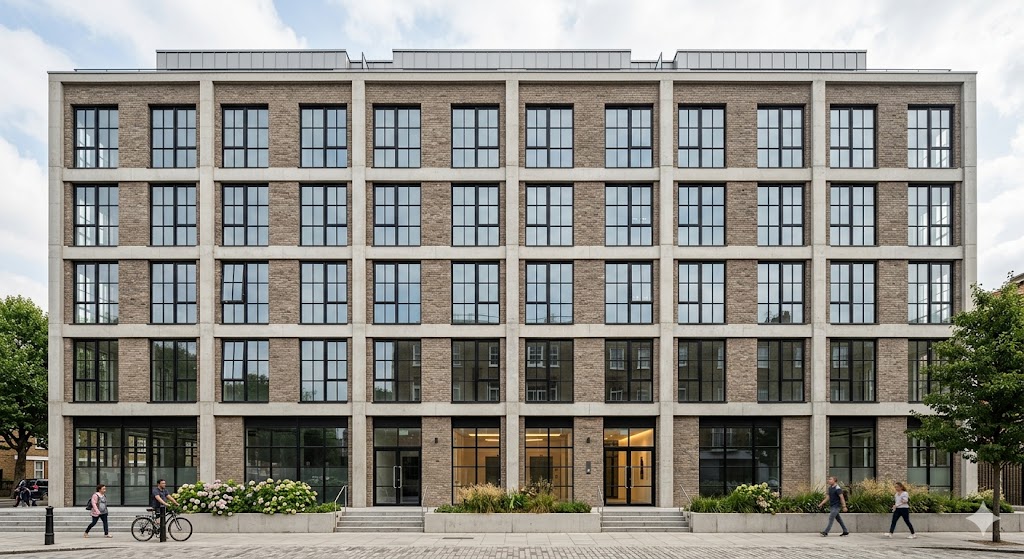
 European aluminum frames in RAL 7016 anthracite - one of the most requested exterior finishes in the US market right now.
Many US window lines come with a fixed color card. Order European aluminum and you're looking at 200-plus RAL shades, several anodized metallic options, wood-look laminates in half a dozen species, and the ability to specify a completely different color on the inside versus the outside.
European windows come in any RAL color as powder coat on aluminum, plus anodized finishes, wood-look laminates and dual-color frames; uPVC uses factory foils with white standard, and timber is stained or lacquered at the factory.
That level of choice matters on design-build projects where the architect has a specific RAL number on the drawing. It also matters when you want dark grey frames outside and clean white inside without paying for an interior trim board to cover up a dark frame.
Here's how the European finish system works.
What Are RAL Colors for Windows?
RAL is the European standardized color reference - think Pantone for architectural surfaces. The RAL Classic catalog has 213 colors, all identified by a four-digit number. When an architect calls out RAL 7016 on a spec sheet, a European manufacturer knows exactly what that means and can apply it as a precision-matched powder coat.
Powder coating on aluminum means an electrostatically applied polymer layer baked onto the frame at high temperature. Done right, it's UV-stable and resistant to chalking, and on quality systems it holds color far better than painted wood trim. Check the finish warranty and the care instructions for your exposure, especially near the coast. If you are wondering whether a finished clad frame can be repainted later, I answer that in can you paint aluminum clad windows.
The practical upshot: standard RAL colors are included in the base system price I quote. You're not paying extra for RAL 9010 off-white versus RAL 9005 jet black - the finish type is the same, only the pigment changes. If black is your color, I put per-window numbers on it in black aluminum windows cost. Custom or "special effect" finishes (metallic pearls, textured powders) sit outside the standard palette and typically carry a surcharge - worth asking about upfront.
The most requested colors I see on US projects right now:
- RAL 7016 - anthracite grey. The current go-to for modern exteriors.
- RAL 9005 - jet black. High contrast, dramatic. Pairs well with natural wood cladding, and just as well with pale brick - see the Mississippi custom home photos.
- RAL 9010 - off-white / pure white. Cleaner than standard white on uPVC.
- RAL 7040 - window grey. A softer mid-tone that reads as "warm grey" in daylight.
- RAL 8019 - grey-brown. Popular on projects with brick or stone cladding.
Anodized Finishes
Anodizing is a different process entirely - electrochemical rather than applied coating. The surface of the aluminum is oxidized to form a hard, integrated layer that's part of the metal itself. You can't chip anodizing the way you can chip paint.
The trade-off is palette. Anodized options run to natural (silver/champagne), light bronze, dark bronze, and black anodized - maybe eight to twelve shades depending on the system. That's narrower than RAL, but the scratch resistance and low-maintenance surface make it the first choice for commercial projects and multifamily where the frames will take regular contact.
Black anodized in particular has become popular for the steel-look aesthetic - it reads as dark and minimal without the additional cost of a genuine steel frame.
Wood-Look and Woodgrain Laminates
European system providers have been doing wood-look finishes for decades. The standard approach is a thermally applied film (Decoral is one common brand) over the aluminum or uPVC profile. The film is printed to replicate oak, walnut, mahogany, white ash, or grey wood grain - in some cases convincingly enough that you need to look at the corner joints to confirm it's not real wood.
The most popular combination on residential projects: wood-look interior (golden oak or white ash) with a RAL exterior in anthracite or dark bronze. The inside reads warm and natural; the outside presents the clean dark-frame look that photographs well. You get the design benefit of both without the maintenance overhead of real timber.
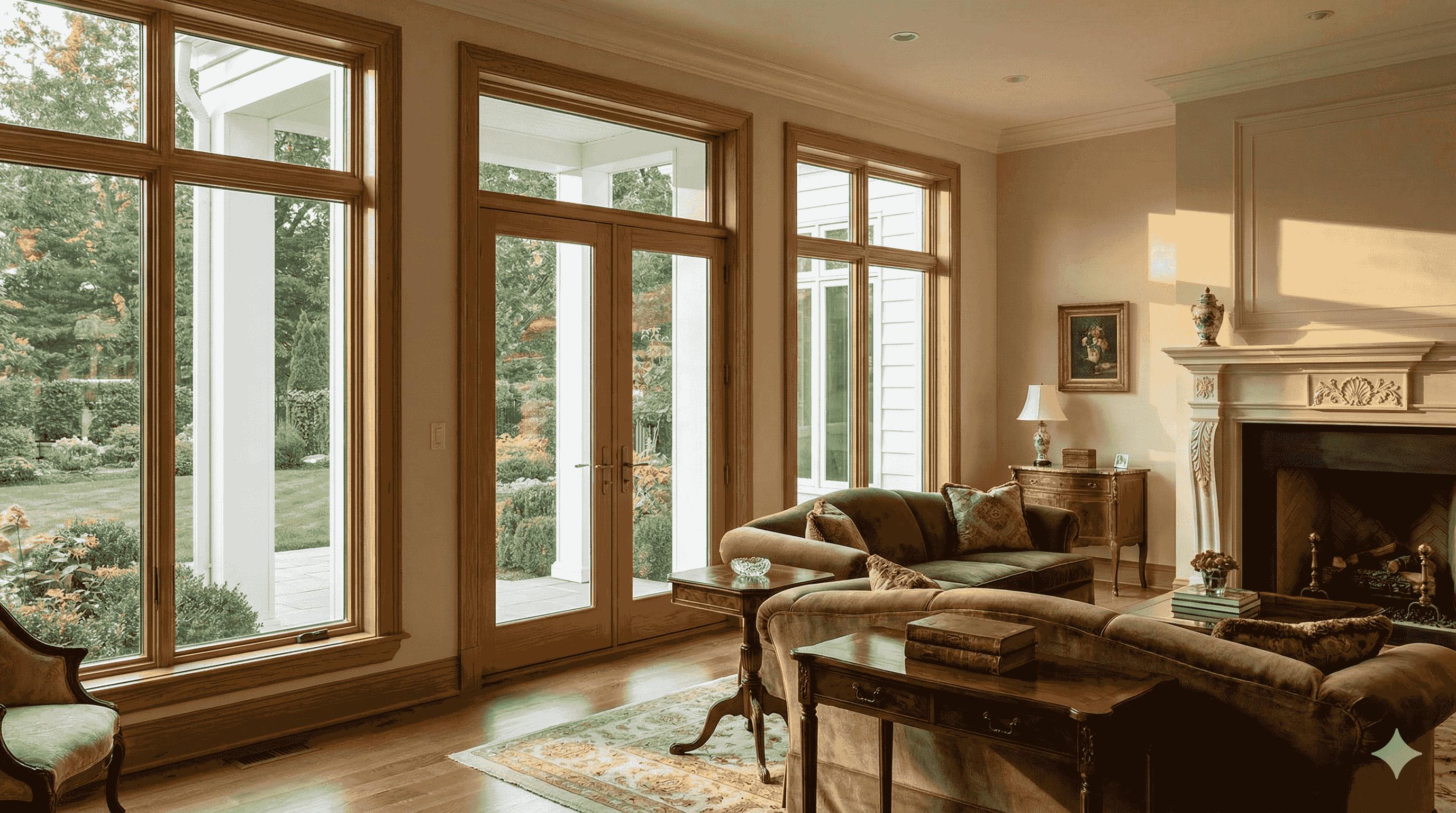 Wood-look laminate interior with aluminum exterior - a common combination on premium residential projects.
It's worth being clear about what this is: a surface film, not solid wood. The durability is actually better than real wood trim - no rot, no seasonal expansion - but if a client specifically wants real wood inside, that's the aluclad route - a solid timber frame with a powder-coated aluminum shell outside, which I describe system by system on the aluminum-clad wood windows page. I cover the difference in detail in this post on aluclad vs aluminum vs wood windows.
Real timber has its own finish logic. The solid wood lines, Timber Classic and Timber Estate, are stained, oiled or lacquered at the factory - see wood windows. The aluclad lines - Clad Flush, Clad Hidden Sash and Clad Passive - pair a powder-coated RAL exterior with a stained, lacquered or painted wood interior, so the two faces are chosen independently, much like a dual-color aluminum frame.
Dual-Color Frames
This is the option that catches most US buyers off guard - you can specify a different color on the interior face of the frame than the exterior face. The two halves of the profile are finished separately before assembly.
Common combinations:
- Anthracite exterior / white interior
- Black exterior / white interior
- Dark bronze exterior / cream interior
The interior white keeps rooms feeling bright and works with any interior trim color without requiring custom interior window casing. The exterior gets the curb-appeal color. It's a small surcharge over a single-color order - ask your supplier to quote it as a line item so you know what you're paying.
Most premium aluminum systems support dual-color as a standard option. On uPVC it's less common because the foil-wrap process makes it more complicated, though some manufacturers offer it.
uPVC Color Options
The uPVC frames and finish directions I quote are collected on the European uPVC windows page.
uPVC frames don't get powder-coated the way aluminum does - the color is applied as a factory-laminated foil over the extruded profile. Standard white is always included in the base price. Common upgrade colors: cream, light grey, anthracite grey (RAL 7016 equivalent), and black.
Wood-look foil is widely available on uPVC systems and often looks surprisingly good on residential windows at a mid-range price point.
One practical note: very dark uPVC colors - particularly black - can absorb more solar heat than lighter profiles. In warm-climate states this can cause warping in lower-quality profiles over time. On quality European uPVC systems with steel reinforcement this is generally not an issue, but it's worth confirming with your system provider for the specific profile you're specifying.
Practical Guidance Before You Order
A few things I've learned to do consistently on projects:
Request a physical color sample. Screen colors are unreliable - what reads as warm grey on one monitor is cool grey on another. Manufacturers will send a powder-coated or anodized sample chip for the RAL or anodized reference you're specifying. Match it to the actual cladding and trim materials on site.
Check the architect's RAL call-out. On design-build projects the architect often has a specific RAL number already. Get that number early - it eliminates the color-approval loop later.
Think about dark colors and thermal break requirements. Dark exterior frames absorb more heat, which means higher thermal stress on the frame. Thermally broken aluminum systems handle this without issue - all the systems I work with qualify. If someone is quoting you non-thermally-broken aluminum in a dark color, that's a question worth asking.
Dual-color costs less than you'd expect. The surcharge is typically modest relative to the total project cost, and the design value is high. Worth asking for it as a line-item quote.
If you want to see how color and finish choices affect total project cost, the online estimator gives you baseline ranges by system - I can then factor in any special-finish surcharge when I put together a full quote.
For a broader comparison of how European aluminum systems differ from US alternatives, the American vs European aluminum windows benchmarks post covers frame depth, glazing capacity, and performance specs in detail.
FAQ
What is RAL in window colors? RAL is a European standardized color system with 213 reference shades, each identified by a four-digit number (e.g. RAL 7016 = anthracite grey). European window manufacturers apply these as precision powder-coat finishes, which means an architect's RAL spec on a drawing can be matched exactly.
What are the most popular window frame colors right now? In the US custom-home market I work in, RAL 7016 anthracite grey is by far the most requested exterior color, followed by RAL 9005 jet black and RAL 9010 off-white. Bronze anodized remains popular for projects with traditional or transitional aesthetics.
Can you get European windows in two different colors inside and out? Yes - dual-color frames (different interior and exterior finish) are a standard option on most premium aluminum systems. A common combination is anthracite or black exterior with white interior. It carries a small surcharge over a single-color order.
Are dark window frame colors more expensive? Standard dark RAL colors (anthracite, black) are typically included in the base powder-coat price alongside lighter colors. Special-effect finishes - metallic pearls, textured powders - outside the standard RAL palette may carry a surcharge. Anodized finishes are priced by finish category rather than by color.
Do wood-look window frames require extra maintenance? No - wood-look laminate or Decoral film over aluminum or uPVC requires no painting, sealing, or staining. The film is factory-applied and warrantied. It's more durable in practice than real wood trim, which needs repainting every few years - for real timber windows that schedule is laid out in how long do wood windows last.
What colors are available on uPVC windows? Standard white is always included. Common upgrade options include cream, light grey, anthracite grey, and black. Wood-look foil (oak, walnut, grey wood) is widely available. Very dark colors on uPVC in hot climates should be confirmed with the system provider for the specific profile being used.