
You've narrowed it down to three premium frame materials: full aluminum, wood, or the hybrid - aluclad (wood interior, aluminum exterior). All three can deliver high performance, and I source all three in European systems. But they serve different projects, different maintenance realities, and, since 2026, a different customs conversation.
Aluclad vs aluminum vs wood windows: full aluminum suits many slim-frame designs; aluminum-clad wood combines a timber interior with a protective metal exterior; solid wood provides timber surfaces inside and out. All require maintenance. Compare the actual whole-window thermal rating, structural limits, finish instructions and price for the proposed assemblies.
Here's a direct comparison based on what I see across U.S. residential and light commercial projects. If you already know you want a wood interior, my pages on aluminum-clad wood windows and wood windows go deeper, and vinyl-clad vs aluminum-clad wood windows covers the shell alone; this post is for choosing between the three.
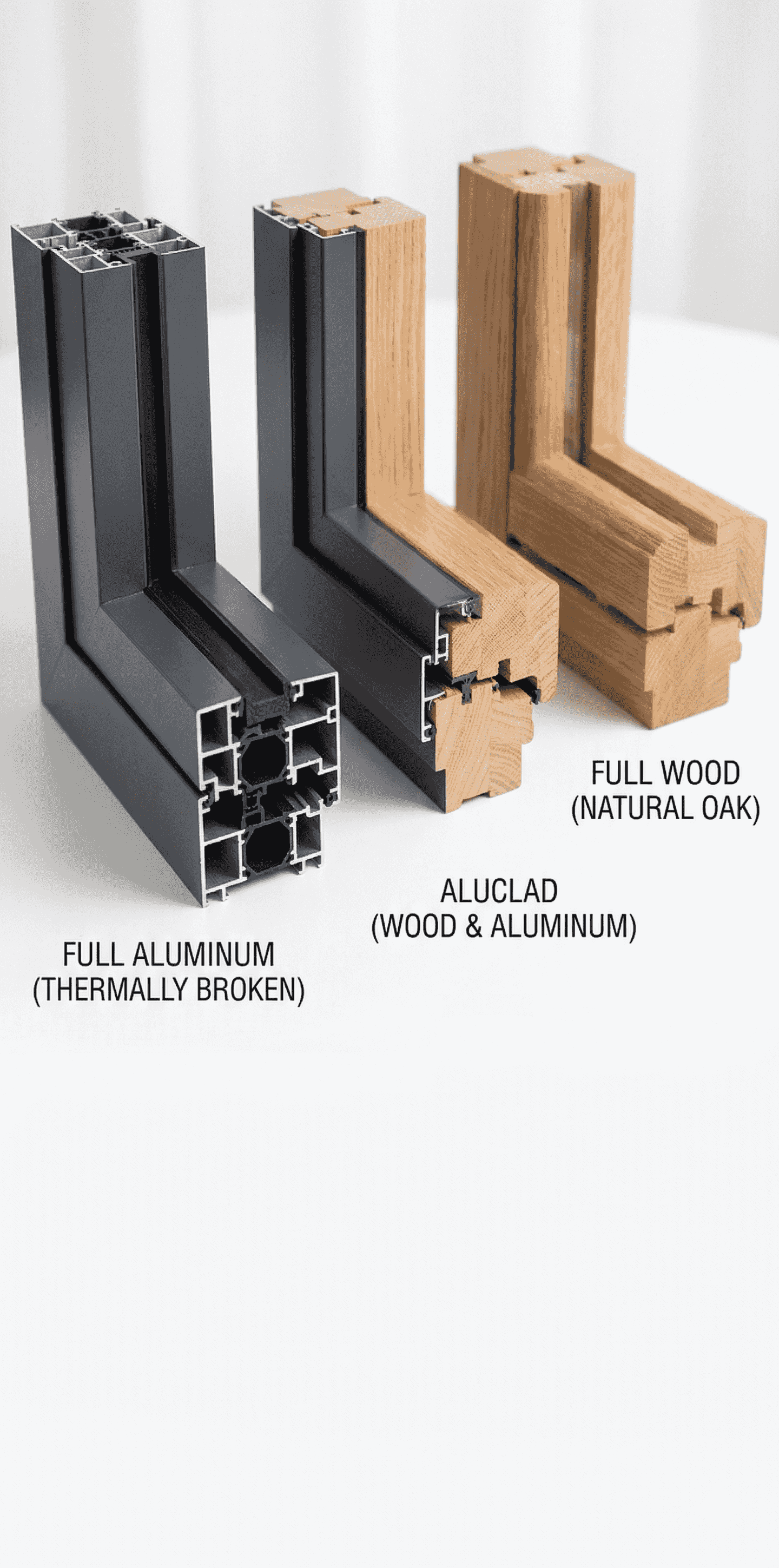
The Three Materials at a Glance
| Feature | Aluminum (Thermally Broken) | Aluclad (Wood + Aluminum) | Wood |
|---|---|---|---|
| Interior finish | Powder coat / anodized | Natural wood (oak, pine, meranti) | Natural wood |
| Exterior finish | Powder coat / anodized | Aluminum clad (any RAL color) | Paint or stain |
| Sightline width | System-specific; slim designs available | System-specific | System-specific |
| Whole-window U-factor | Confirm quoted configuration | Confirm quoted configuration | Confirm quoted configuration |
| Service life | Product, exposure and care dependent | Product, exposure and care dependent | Product, exposure and care dependent |
| Exterior maintenance | Clean, inspect drainage and care for finish | Clean cladding and inspect joints and drainage | Inspect coating; refinish as condition requires |
| Interior maintenance | Clean and inspect | Care for specified wood finish | Care for specified wood finish |
| Max panel sizes | Confirm system limits | Confirm system limits | Confirm system limits |
| DP rating capability | Confirm tested assembly | Confirm tested assembly | Confirm tested assembly |
| Pricing | Quoted for the specified system | Quoted per project | Quoted per project |
Full Aluminum
What it is. Extruded aluminum profiles with polyamide thermal breaks. Both interior and exterior surfaces are aluminum with factory-applied finishes.
Why choose it:
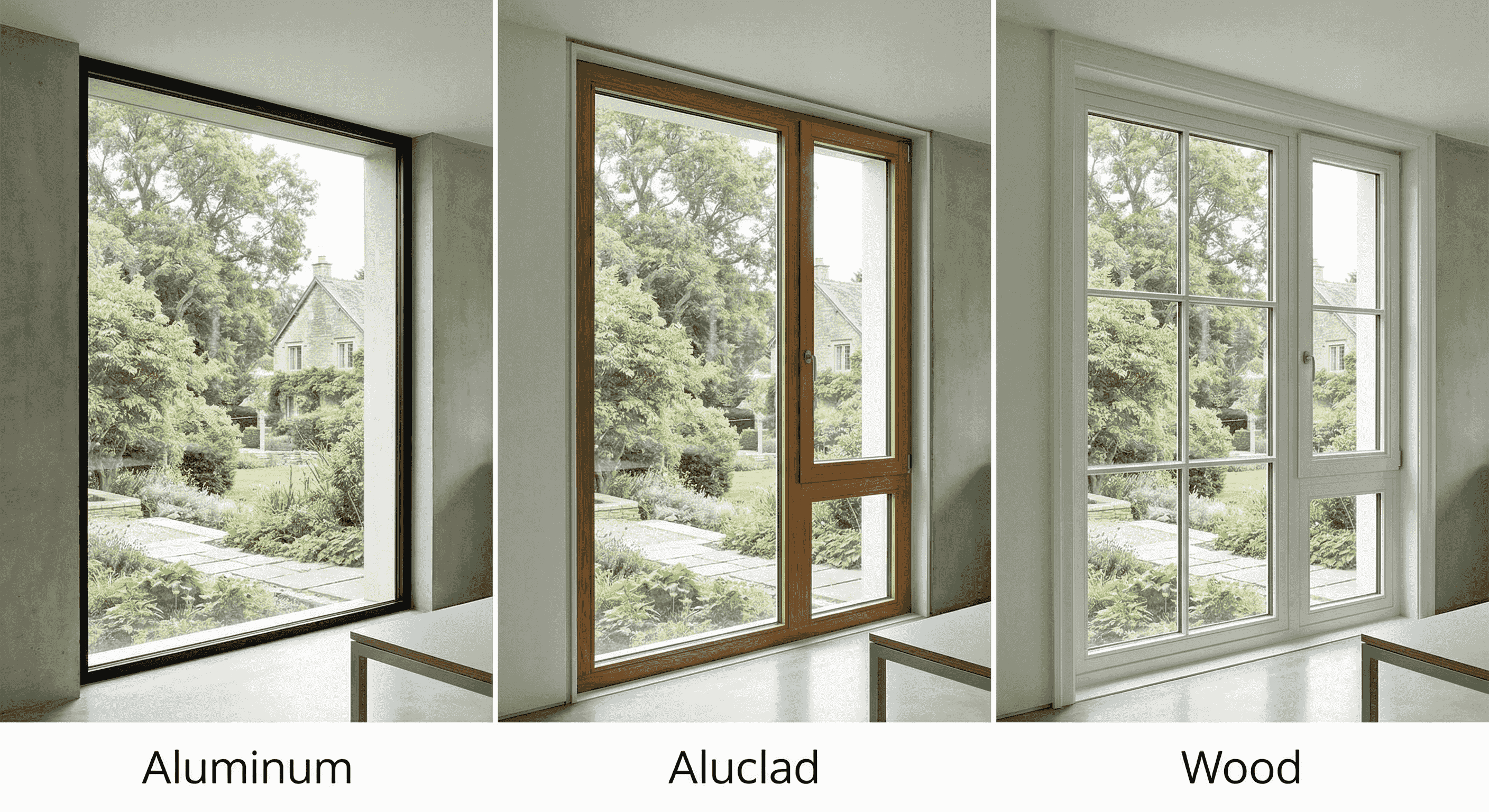
- Slim-frame options for contemporary architecture and steel-look aesthetics
- Systems suitable for large panels, subject to tested size and load limits
- Routine cleaning, drainage inspection and hardware care according to the product instructions
- Full RAL color range, dual-color options, anodized finishes
- Durable frame and finish options, with service life dependent on exposure and maintenance
Where it fits: Modern architecture, commercial-grade residential, coastal projects, high-rise, any project where slim frames and maximum glass area drive the design.
Trade-off: No natural warmth of wood on the interior. Aluminum reads "modern" - for traditional or transitional projects, that may not be the right look.
For a deeper comparison between aluminum and other materials, see my uPVC vs aluminum guide. For a quick landed range on the aluminum option, run the schedule through the estimator; wood and aluclad are quoted per project.
Aluclad (Wood-Aluminum)
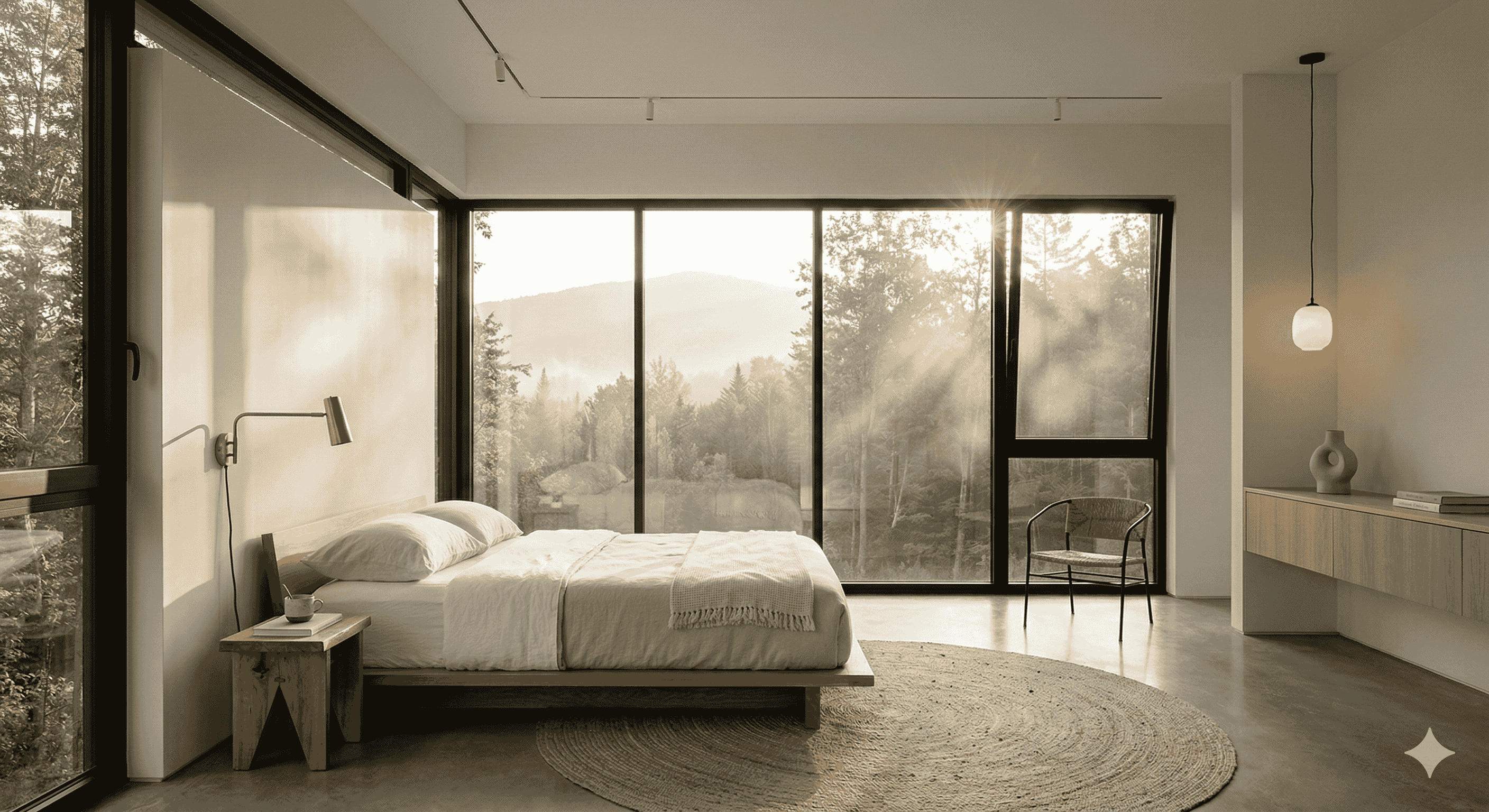
What it is. A structural wood frame (most often pine, with oak on request) clad on the exterior with aluminum. You get wood on the inside, aluminum on the outside.
Why choose it:
- Natural wood interior adds warmth and richness - ideal for traditional, transitional, and high-end residential
- Aluminum cladding shields exterior wood surfaces, while still requiring cleaning and inspection
- Low U-factor configurations are available; compare complete-window ratings, not a material ranking
- Can be stained or painted on the interior to match millwork and trim
Where it fits: Luxury custom homes where the client wants the warmth of wood inside but refuses to accept exterior painting schedules. Traditional or transitional architecture where aluminum reads too modern. Passive house projects where every fraction of U-factor matters. I walk through the four clad systems I actually quote, with frame depths and published performance, on the aluminum-clad wood windows page.
Trade-off: Thicker profiles mean wider sightlines - not ideal for minimalist contemporary design. The wood interior still needs occasional care of its finish, on the schedule the finish supplier gives.
Full Wood
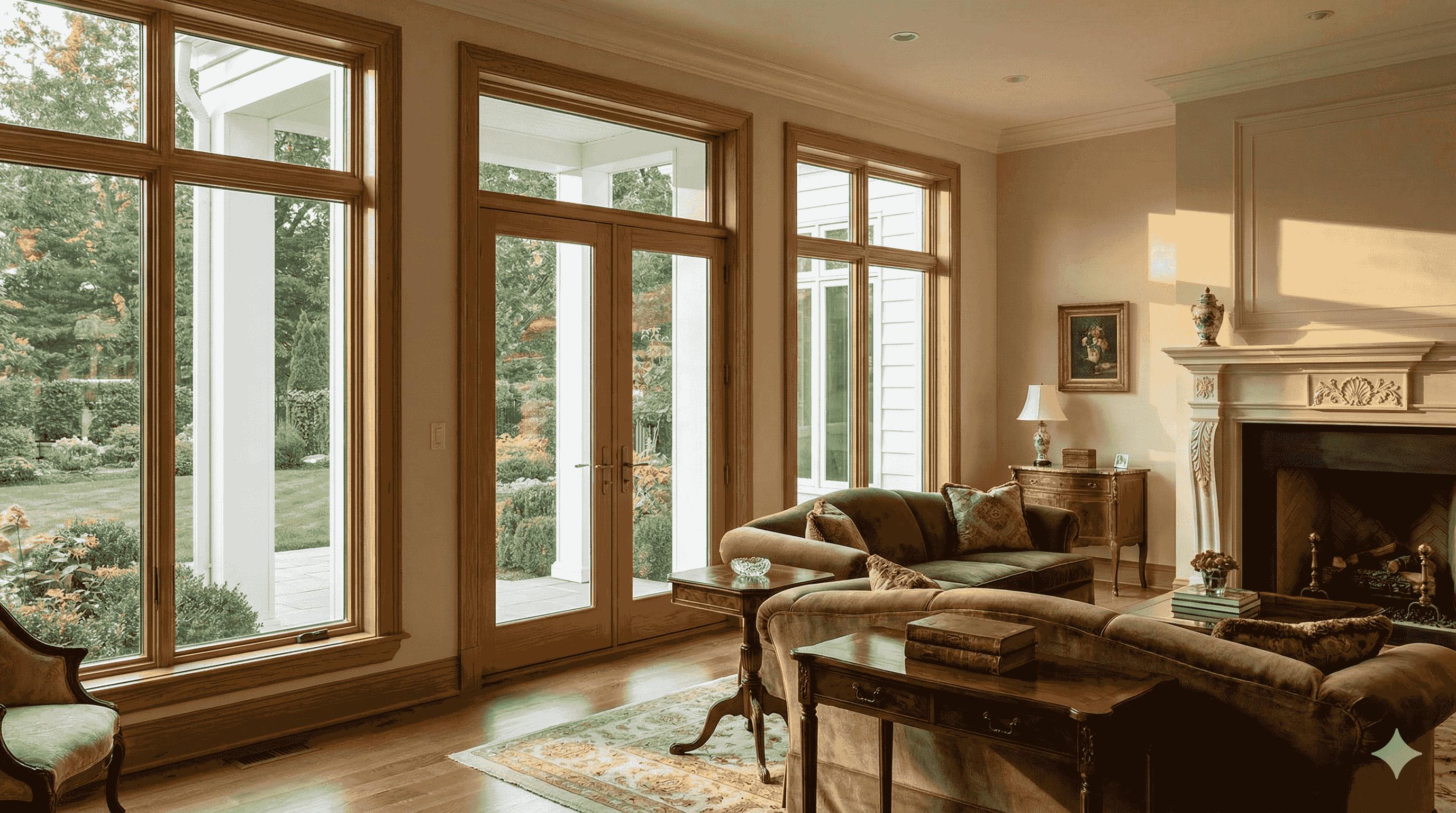
What it is. Solid wood frames - typically pine, oak, larch, or meranti - painted or stained inside and out. How those species differ in weight, hardness and how they take a stain is covered in choosing the wood for your windows, and what the laminated frame itself is made of - depth, seals, glazing bead - in wood window frames explained.
Why choose it:
- Warmest aesthetic, both inside and outside - nothing else matches the look of painted or stained wood
- Natural insulator - wood itself is a decent thermal barrier
- Matches historical and preservation requirements where aluminum exteriors aren't permitted
- Can be refinished and restored
Where it fits: Historical renovations, landmark districts with material restrictions, projects where the exterior wood aesthetic is a non-negotiable design element. See the NFRC & NAFS guide for compliance documentation across all three materials. The species, profile depths and finishes I offer in solid timber are laid out on the wood windows page.
Trade-off: Exposed wood coatings need inspection and renewal according to the finish manufacturer, exposure and condition. There is no universal refinishing interval or maintenance-cost multiplier. See how long wood windows last. Aluminum and clad systems also require care: Reynaers maintenance guidance describes cleaning and attention to moving parts.
My perspective: Compare aluclad when you want timber inside with a metal exterior, and full wood when timber on both faces is important. Neither choice removes the need for maintenance or proves lower lifetime cost.
The Wood, Aluclad and Hybrid Systems I Quote
Wood, aluclad and the PVC-aluminum hybrids come from a timber manufacturer in Poland. The figures below are the ones published on each product page, converted to inches. They are catalogue references, not NFRC ratings.
| System | Material | What it is | Published reference |
|---|---|---|---|
| Timber Classic | Wood | Rounded profiles, laminated timber, entry wood line | Depth and glazing set per project |
| Timber Estate | Wood | Deep timber section with drip-cap and seal detailing | Depth and glazing set per project |
| Clad Flush | Aluclad | Frame and sash flush on the outside | About 3.54 in. (90 mm) depth; U-factor approx. 0.19-0.21 |
| Clad Hidden Sash | Aluclad | Concealed sash, concealed hinges | 3.21 / 3.60 in. (81.5 / 91.5 mm) depth; U-factor from 0.16 |
| Clad Passive | Aluclad | Foamed frame insulation, triple glazing | 4.86 in. (123.5 mm) depth; U-factor from approx. 0.11 |
| Timber Lift & Slide | Wood or aluclad | Large patio door | 9.45 in. (240 mm) depth; U-factor from 0.20 |
| Kontur Alu | PVC + aluminum | Multi-chamber PVC core, aluminum exterior cover | Confirmed for the selected assembly |
| Kombisystem | PVC | Colored PVC with an acrylic exterior finish | Confirmed with the quote |
Two things stand out. Aluclad is not one product: the flush exterior, the hidden sash and the insulation-first build look and perform differently, which is why the first table asks you to confirm the quoted configuration instead of giving one aluclad number. And wood is not only a fallback for historic districts - Timber Estate is the deepest wood section I offer when you want the timber to stay visible outside.
The PVC-aluminum hybrids are a different idea: a PVC core instead of a wood core. They suit projects that want metal detailing outside without a wood interior. They do not replace aluclad when the wood interior is the point; I compare the two cores in my post on hybrid windows with a PVC core and an aluminum shell.
Why Frame Material Also Changes the Customs Conversation
Since 2026 the frame material has mattered for import paperwork, not only for looks. Wood and aluminum-clad wood are generally handled as joinery, aluminum windows as aluminum articles, and the two fall under different rules. Which rate applies depends on the frame material and the exact product, and it is confirmed at classification with the customs broker for your order.
I do not put a saving for one material over another in a blog post, and you should be wary of anyone who does without a like-for-like quote. If two materials are close on design, ask for both to be quoted with the customs treatment shown separately.
Why aluclad costs more than aluminum
Clad windows are two products in one, and the factory pays for both. Compared with a thermally broken aluminum window, the extra work is easy to list:
- Profiling the timber section, and selecting the wood (the rejected pieces are waste you still pay for)
- Four coats of lacquer on the wood, with sanding between them - by machine, and by hand on every edge that is not flat
- Longer frame assembly, then clips screwed on to carry the aluminum shell, which aluminum windows do not have
- Fitting and fixing the aluminum covers, plus the covers themselves and the silicone sealing
- Gluing the glazing unit in on tape
- More rework, because timber is softer than metal and a damaged frame or sash is more often remade
Aluminum skips most of that list. The reasons to pay the difference are a warmer timber interior and, on the better lines, a stronger thermal result. I would not expect aluclad to be the cheaper way to get an aluminum exterior, and with labor and energy costs rising in Europe the gap is not closing. Only a like-for-like quote shows how big it is on your schedule.
What determines the quote
Wood and aluminum-clad wood are quoted per project. Species, profile, opening size, glazing, finish and hardware all affect the specification. Without a current, like-for-like quote, I do not assign a price premium or savings percentage to either material.
The nine factors that move a wood quote are listed in what determines the price of wood windows. Send your schedule for a project quote. I confirm the product scope, freight, customs treatment and delivery arrangements before presenting the landed price.
Aluclad vs Aluminum vs Wood: Which Should You Choose?
If fiberglass is also on your list, the wood vs fiberglass windows guide covers that comparison.
Choose aluminum when:
- Design is contemporary or modern
- Slim sightlines and maximum glass are priorities
- Large panel sizes or high DP ratings required
- Low maintenance is a selling point (multifamily, rental, commercial)
Choose aluclad when:
- Client wants wood warmth inside without an exterior painting schedule
- Traditional or transitional architecture
- Passive house or ultra-low U-factor target
- Budget exists for the premium
Choose wood when:
- Historical district or preservation requirements dictate exterior material
- The exterior wood look is a core design element
- Client understands and accepts the maintenance commitment
FAQ
Is aluclad heavier than aluminum? Weight and panel-size limits depend on the complete system, glass and hardware, not just frame material. Compare the actual dimensions, sash weight and load ratings for lift-and-slide, bi-fold and fixed assemblies.
Can I get aluclad in the same colors as aluminum? The exterior aluminum cladding accepts any RAL powder coat finish, same as full aluminum. The interior wood can be stained, oiled, lacquered, or painted. So you get full color flexibility on both sides. Choose the exterior color before production: repainting an installed clad shell is a last resort.
Which material has the best resale value? Resale value depends on the property, market, design and condition; no material guarantees a resale premium. Choose a material that fits the architecture and ownership requirements. For exterior-shell differences, see vinyl-clad vs aluminum-clad wood windows.
How is aluclad built - is it just a wood window with a metal cover? Aluclad combines a structural timber frame with an exterior aluminum cladding system. The attachment, drainage and ventilation details vary by product; review the system section and maintenance instructions. Cladding protects exposed timber but does not eliminate cleaning, inspection or hardware care.
Which aluclad system fits a low-energy or passive house? Clad Passive is built for it: foamed frame insulation, triple glazing and enhanced seals. Its published U-factor is from approx. 0.11, a converted European reference and not an NFRC rating. See passive house windows for what the frame has to do.
Can I get tilt-turn or lift-and-slide in wood or aluclad? Yes. Clad Hidden Sash offers tilt-turn, Clad Flush and Timber Classic are the general-purpose lines, and Timber Lift & Slide is the patio door in timber or aluclad. I match opening types to your schedule before quoting.
Do wood and aluclad windows cost more than aluminum? Aluclad usually does, because it is a labor-heavy build: profiled and lacquered timber plus an aluminum shell on clips. How much more depends on species, profile, size, glazing and finish, and I do not publish a number for it. Send the schedule and I will quote the materials you are comparing.
Not sure which frame material fits your project? Send me your elevations and design intent - I'll recommend the right material for each elevation and quote accordingly. Request a Quote | Schedule a Call
Kai, your window guy!