
If you're weighing uPVC against aluminum for a U.S. project - or wondering whether European PVC is just expensive vinyl - you're juggling design intent, code compliance, and lifecycle economics at the same time.
uPVC vs aluminum windows: uPVC is the better-value choice for standard residential openings - on published European data it insulates as well as or better than thermally broken aluminum at roughly a third of the price per square foot - while aluminum is the choice when the design needs slim sightlines, large or heavy sashes, or dark and dual-color finishes. European uPVC windows cost about $15-25 per square foot supplied and European aluminum about $45-95, so aluminum runs roughly three times uPVC - two to four times, depending on system and operation. American vinyl is the cheaper US product I contrast against here; it is not what I supply. The uPVC systems I source are on the European uPVC windows and doors page.
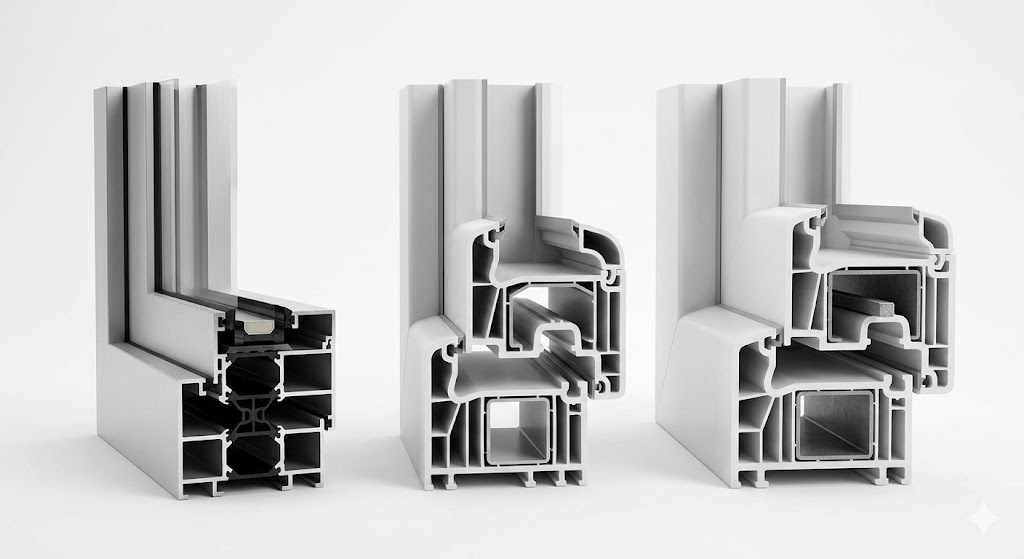
uPVC vs Aluminum Windows at a Glance
| Item | European uPVC | European aluminum (thermally broken) |
|---|---|---|
| Supplied price, per sq ft | about $15-25 | about $45-95 |
| Whole-window U-factor, double glazed | U-0.22 (Aluplast Ideal Neo) | U-0.22-0.26 (Aliplast Genesis 75, Aluprof MB-79N, Reynaers SlimLine 38) |
| Whole-window U-factor, triple glazed | U-0.13 (Aluplast Ideal Neo) | U-0.15-0.18 (Genesis 75, Aluprof MB-86N, Reynaers MasterLine 8) |
| Frame depth | 3.35 in. (85 mm), Ideal Neo | about 2.8-3.8 in. (70-97 mm), by system |
| Sightlines | Wider - the profile carries its own reinforcement | Slim; steel-look and minimal systems are the narrowest |
| Large and heavy sashes | Modest sizes; deflection limits come first | Sashes to 441 lbs (MasterLine 8), lift-and-slide panels to 970 lbs (Aliplast Ultraglide) |
| Colors | White standard; foils for colors and woodgrain | Any RAL powder coat, anodized, dual-color |
| US import duty | Confirm for actual shipment | Confirm for actual shipment |
| Service life | Depends on product, exposure and maintenance | Depends on product, exposure and maintenance |
| Best for | Budget-disciplined residential, passive-level envelopes | Modern design, large openings, steel-look, build-to-hold |
U-factors are published whole-window values for the named systems (lower is better), converted from European Uw. Prices are the supplied window before freight, duty and installation.
What Is the Difference Between PVC and Aluminum Windows?
The difference starts with how each material handles heat and load. uPVC (unplasticized PVC) is a poor conductor of heat, so a multi-chamber uPVC profile insulates on its own; corners are welded and the profile is reinforced with steel where the span needs it. Aluminum is stiff and strong but conducts heat, so every premium European aluminum system splits the profile with a polyamide thermal break and joins the corners mechanically.
That is why uPVC wins on thermal value per dollar, and aluminum wins on what you can build: a thinner frame for the same span, bigger operable sashes, heavier glass, and finishes that hold color for decades.
European Aluminum
Modern European aluminum systems use multi-chamber polyamide thermal breaks and compression seals to deliver competitive U-factors with slender profiles. Finishes - powder coat or anodized - provide long-term color stability. Structurally, aluminum handles larger modules, higher DP ratings, and narrower mullions. That's the essential recipe for contemporary, steel-look architecture.
I work with aluminum systems from Reynaers, Aluprof, Aliplast and Cortizo depending on what the project demands. For how these compare, see my system provider comparison.
European uPVC
European uPVC posts excellent U-factors at a compelling price, but profile mass and span limits often conflict with minimalist design and large operables. For modest sizes and budget-first specs, it's solid - but it rarely achieves the slim look that architects and owners expect from premium modern projects. The system I supply is Aluplast Ideal Neo, in tilt-and-turn and as the outswing Ideal Neo OUT casement. If uPVC fits your scope, the uPVC tilt and turn windows price list shows what each common window size actually costs.
American Vinyl
US vinyl includes a wide range of products. Compare the actual profile, reinforcement, finish limitations, tested sizes and assembly ratings; geography and the word vinyl alone do not establish rigidity or durability.
Is uPVC the Same as Vinyl?
Chemically, yes - US vinyl and European uPVC windows both use rigid PVC. The complete window differs by system: profile depth, reinforcement, glazing, hardware and tested limits. European and US markets both include multiple performance tiers. Compare the actual units, not a country-wide product class. For a PVC core with a metal exterior, see hybrid windows.
| Material | Typical U-Factor (whole window) | Sightline Profile | Typical Service Life | CapEx Level |
|---|---|---|---|---|
| European Aluminum (thermally broken) | Confirm assembly rating | System-specific | Product and exposure dependent | Compare total ownership scope |
| European PVC | Confirm assembly rating | System-specific | Product and exposure dependent | Compare total ownership scope |
| American Vinyl | Confirm assembly rating | System-specific | Product and exposure dependent | Compare total ownership scope |
Ranges vary by system, climate zone, and glazing package.
Which Is Better, uPVC or Aluminum Windows?
Aluminum wins when:
- Minimal sightlines, steel-look, or large tilt-turn units are non-negotiable
- High DP ratings without bulky profiles (coastal or tall structures)
- Dark colors, dual-color frames or a specific RAL call-out are part of the design
- Build-to-hold and lifecycle cost matters
uPVC wins when:
- Budget-first with modest operable sizes
- The thermal target is aggressive and the frame look is secondary - uPVC triple glazing posts the lowest U-factor of the two
- White or a standard foil color works for the design
- The schedule is tight - uPVC production usually runs a couple of weeks shorter than aluminum (see European window lead times)
Many projects use both: uPVC for bedrooms, baths and secondary elevations, aluminum for the large openings and the street facade. If neither plastic nor metal suits the interior, the other two materials I supply are wood and aluminum-clad wood - compared in aluclad vs aluminum vs wood windows.
Performance and Compliance
For U.S. permits and submittals, labeled thermal data (U-factor/SHGC) and structural performance results can help smooth the review process. NFRC-rated units are available on selected systems where the permit needs them - including the outswing uPVC Ideal Neo OUT - and NAFS documentation can be part of the project package. See NFRC and NAFS certified European windows for how that works.
Where aluminum tends to have the edge on large openings:
- Higher tested design pressures at larger sizes with less visual bulk - confirm the rating for the exact unit
- Deep thermal breaks reach competitive U-factors while keeping slim sightlines
- Stiff profiles carry heavy triple-glazed sashes that would exceed uPVC size limits
Design: Slim Frames for Modern Architecture
If the design brief includes razor-thin sightlines, true steel-look muntins, and large tilt-turn sashes, aluminum is the reliable path. Narrow meeting stiles maximize glass area, premium finishes stay consistent across multi-building phases, and concealed hardware delivers the minimalist look architects expect.
The European systems I source are engineered for steel-look and slim-frame aesthetics without sacrificing DP ratings or ease of installation.
What Is the Price Difference Between Aluminum and uPVC Windows?
Per square foot, European aluminum windows cost roughly three times as much as European uPVC - about $45-95 against $15-25 for the supplied window. Compared like for like in my estimator, the multiple runs from about two times on fixed lights to about four times on small operable sashes. Three things widen or narrow that gap on a real quote:
- Duty. Confirm the customs treatment for the actual product and shipment in the project-specific DDP quote; do not assume a rate from frame material alone.
- Glazing. Triple glazing adds about 15% on uPVC and about 11-14% on aluminum in my estimator, because glass is a bigger share of a uPVC unit's cost.
- Operation and size. Fixed units cost far less per square foot than operable ones in both materials, and big units cost less per square foot than small ones.
I keep the size-by-size price tables in one place: aluminum windows cost for aluminum and the uPVC tilt and turn price list for uPVC. To price your own mix, the estimator runs the same schedule in both materials side by side.
Compare Ownership Costs Alongside the Unit Price
Service life is not a fixed number determined by the frame material or country. Exposure, finish, drainage, installation, glazing seals, hardware and maintenance all affect it. A frame can outlast parts that need service or replacement.
Compare the purchase and installation price, the written maintenance schedule, finish warranty, spare-part availability and access costs over the intended ownership period. Do not assume that aluminum has fewer callbacks or a lower lifetime cost without project evidence. See my cost optimization guide.
Reynaers maintenance guidance includes cleaning and care for moving parts; aluminum is not maintenance-free.
Compare Like for Like Before You Choose
I can compare aluminum and uPVC on the same schedule, with the selected hardware, finish, glazing, accessories and documentation listed in the offer. Neither material nor origin guarantees a lower total. Compare the supplied prices, then add delivery, customs, installation and site work consistently.
FAQ
Which is better, uPVC or aluminum windows? Neither is better everywhere. uPVC windows are better value for standard residential openings and insulate as well as or better than thermally broken aluminum on published European data. Aluminum windows are better for slim sightlines, large or heavy sashes, and dark or dual-color finishes. Many projects use uPVC for secondary rooms and aluminum for the main openings.
What is the price difference between aluminum and uPVC windows? European aluminum windows cost roughly three times as much as European uPVC per square foot - about $45-95 against $15-25 for the supplied window, from about two times on fixed lights to about four times on small operable sashes. Confirm customs treatment for the actual shipment; glazing premiums depend on the selected package. Size-by-size prices are in my aluminum windows cost guide and the uPVC tilt and turn price list.
Is uPVC the same as vinyl? uPVC and vinyl are the same material - rigid PVC - but usually not the same window. European uPVC tilt-and-turn profiles are deeper (3.35 in. on Aluplast Ideal Neo), multi-chamber and steel-reinforced, with multi-point hardware and triple glazing. US replacement vinyl is typically a lighter profile built for double-hung or slider operation and sold at a lower price point.
Do aluminum frames always have worse U-factors than uPVC? Not by much with modern thermal breaks. With double glazing, European aluminum reaches about U-0.22-0.26 against U-0.22 for Aluplast Ideal Neo uPVC; with triple glazing it is U-0.15-0.18 against U-0.13. Passive-grade aluminum systems reach U-0.11. See my triple vs double glazing guide for the glazing side.
Are European aluminum windows more durable than vinyl? Aluminum can suit large openings and slim-frame designs, but service life and ownership costs depend on the exact product, exposure and care. Compare structural ratings, finish requirements, replaceable components and warranty terms. Every material I supply carries a 10-year written warranty, subject to its terms.
How complicated is importing uPVC or aluminum windows from Europe? Not complicated for you if the supplier quotes DDP. I manage the import process end-to-end - quote, thermal data, NAFS documentation where needed, crating, customs and delivery duty paid to the site. Your team gets a complete package without needing to become logistics experts.
Send me your window schedule and elevations - I'll have a budget estimate back to you the same or next working day, with shop drawings within 2-3 working days after review. For a quick range in both materials, run it through the estimator. Request a Quote | Schedule a Call
Kai, your window guy!