
When you're building a luxury home, windows can quietly become one of the biggest line items on the schedule of values. Slim frames, oversized glass, and European hardware are stunning - but they're not cheap.
The biggest levers on a high-end window budget are the fixed-to-operable mix (an opening aluminum sash costs roughly twice a fixed light of the same size), fewer and larger units (a 24 x 36 inch aluminum tilt and turn costs about $100 per square foot, a 72 x 60 inch one under $60), the glazing spec, one consolidated shipment, and buying European systems on a landed DDP basis. Used together, they take real money out of a package without changing the look.
Savings need matched, dated quotes for the same sizes, operation, glazing, finish and documentation. Add installation and site work to both offers before comparing the installed total; DDP delivery alone does not include that work. See project-specific import costs.
The Five Variables That Drive a Window Budget
Five variables drive most of the total cost:
- Unit size and count - area of glass and framing
- Operable vs. fixed ratio - operables cost more (hardware, seals, reinforcement)
- Glazing spec - U-value, solar control, laminated, thickness
- Finish and hardware tier
- Complexity - corner units, sliders vs. tilt-turn, custom shapes
Dialing these in early - during schematic design or DD - is when they cost least to change.
What Each Design Decision Does to the Price
These numbers come from the pricing model my estimator runs on - supplied prices, double glazed, before freight, duty and installation:
| Decision | Effect on the supplied price |
|---|---|
| Fixed light instead of an opening sash (60 x 60 in, standard aluminum) | $765 - $880 instead of $1,460 - $1,580 - roughly half |
| Fewer, larger windows (aluminum tilt and turn) | about $100 per sq ft at 24 x 36 in, under $60 per sq ft at 72 x 60 in |
| Standard aluminum instead of steel-look or premium profiles | steel-look costs about a third more on the same opening |
| uPVC instead of aluminum | about a third of the aluminum price per window |
| Double instead of triple glazing | saves about 11-14% on aluminum, about 15% on uPVC |
| Bars between the panes instead of simulated divided lites | about +2-5% per window instead of about +15% (aluminum) |
| Nailing fin and NFRC label only where needed | nailing fin +6% on aluminum, +8% on uPVC; NFRC label +5% |
| Black or any standard RAL color | no change - black prices like white |
Wood and aluminum-clad wood follow the same logic but are quoted from drawings, not from a price table - see wood windows and aluminum-clad wood windows.
Cost Lever Cheat Sheet
| Cost lever | Where the saving comes from |
|---|---|
| More fixed lights, fewer operable sashes | Hardware, seals and the second frame on each opening sash |
| Standardized module widths | Fewer unique sizes to draw, set up and check |
| Glazing tuned by orientation | Triple, laminated or low-iron glass only where it earns its cost |
| One consolidated shipment | Freight spread across one container instead of several |
| Standard powder coat finish | No specialty anodizing or effect finish surcharge |
How much each lever saves depends on the schedule, so I price the alternatives side by side on your project rather than quoting a generic percentage.
Design Decisions That Cut Cost (Without Losing the Look)
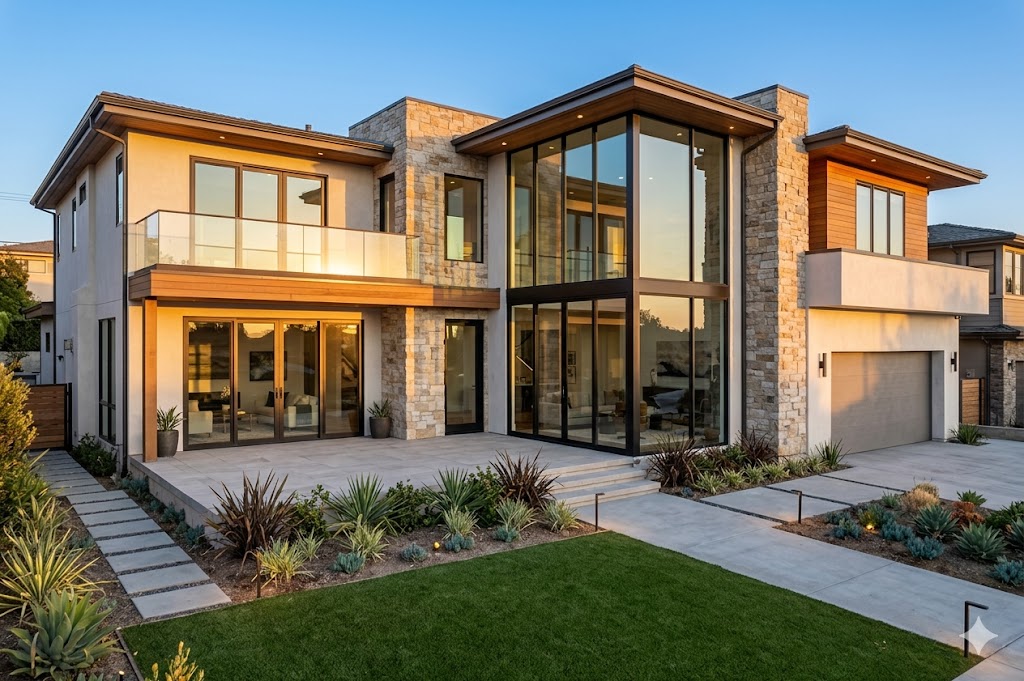
Right-size the glass. Don't default to 10-12 ft. everywhere. Identify view corridors that deserve the largest spans and downsize secondary elevations by 10-15%. With steel-look profiles, coupled fixed lights with slim mullions read intentional, not bulky.
Shift the operable/fixed mix. Most clients don't need every bay to open. Large fixed picture windows anchor facades. Strategic operables (tilt-turn or awning) handle bedrooms and cross-ventilation at lower cost.
Tune glazing by orientation. A blanket spec of triple-pane, laminated, low-iron everywhere is expensive overkill in most climates. Use energy modeling to target glazing by facade. Low-iron glass is beautiful but try it only at feature locations to control cost.
Pick the right system early. Thermally broken slim-frame aluminum with steel-look profiles hits the sweet spot of minimal sightlines, performance, and price. True steel windows usually cost considerably more than steel-look aluminum - compare a matched steel quote before deciding. I quote across several system providers to match the right system to your project and budget - often pricing the same schedule on two or three of them. NAFS data is available on many configurations and NFRC-rated units on selected systems where the permit needs them - see NAFS and NFRC documentation.
Standardize module widths. Five slightly different widths means five unique setups and shop drawings. Lock module widths and two heights per elevation. Maintain rhythm with mullion alignment rather than unique sizes.
Detail for installation efficiency. Consistent sill conditions, factory-applied membranes, and confirmed R.O. tolerances cut labor and punch lists. For bracket-mounted installation details, see the technical guide.
The Landed-Cost Formula
Before comparing any domestic quote to a European import, make sure you're comparing the same thing:
Landed Cost = Product + Freight/Insurance + Duties/Tariffs + Brokerage/Port + Inland Delivery

Installed Cost = Landed Cost + Installation Labor/Equipment + Misc. Materials
When comparing quotes, normalize specs (U-factor, SHGC, PG ratings, finishes), demand landed pricing, account for install labor (factory-glazed units install faster), and check what compliance documentation is available for your actual sizes and glazing.
Procurement That Saves Real Money
Consolidate orders and shipments. One purchase order, one trans-Atlantic shipment. I can handle customs, duties, and inland logistics under a DDP arrangement and stage delivery to match your install sequence.
Lock finish and hardware early. Late changes force line changeovers or rework. Freeze selections at CD/submittals.
Plan for ocean freight lead times. Rushed air freight on oversized glass can erase months of savings. Integrate window lead times into your CPM schedule during precon - European window lead times has the numbers by material and coast.
What Can Erode Savings
Being transparent about this matters:
- Tiny scopes that don't fill a container - freight cost dominates
- Late design changes after production starts
- Over-customization - every unit unique slows fabrication
- No receiving plan - lack of offloading/staging drives extra labor
- Non-DDP terms where fees appear as add-ons after you've committed
Value-Engineering Review: What to Compare
Review these options against the same approved design and performance requirements. They are scope decisions, not a documented project result or a promised saving.
- Use fixed glazing where ventilation, cleaning access and egress allow it.
- Keep pocketing sliders at feature locations where their function matters.
- Select solar-control and acoustic glazing from the energy model and site conditions.
- Compare a consistent finish and hardware package before adding upgrades.
Price each revision separately, record what changed, and obtain design-team approval. Confirm comfort, structural loads, egress and installation scope before accepting a lower quote.
When Importing Makes Sense (and When It Doesn't)
Good fit: Projects that value minimal sightlines and oversized openings. Larger packages that fill a container, so freight is spread over more units. Teams open to VE. Schedules that allow about 9-16 weeks from approved shop drawings to delivery. This is exactly why more U.S. developers are importing European aluminum windows - the economics improve with scale.
Not ideal: Ultra-rush timelines requiring airfreight. Very small scopes where freight dominates. Fire-rated assemblies (specify separate rated systems).
FAQ
How can I lower window costs without changing the design? Change what the eye doesn't see: make secondary windows fixed instead of operable, consolidate many small units into fewer larger ones, match the glazing to each facade instead of specifying triple glass everywhere, ship the whole package in one container, and compare European systems on a landed DDP basis. Each of those moves keeps the sightlines and the look.
Do fixed windows cost less than operable windows? Yes - roughly half. A 60 x 60 inch fixed light in a standard European aluminum system costs about $765 to $880 supplied, against $1,460 to $1,580 for a tilt and turn window of the same size, because the opening sash carries the hardware, the second frame and the seals.
Can I keep floor-to-ceiling glass and still reduce cost? Yes - prioritize key vistas for full height, then drop head or sill by 6-12 inches on secondary elevations. You keep the drama where it matters.
Do tariffs erase the savings? Savings need matched, dated quotes for the same sizes, operation, glazing, finish and documentation. Add installation and site work to both offers before comparing the installed total; DDP delivery alone does not include that work. See China vs. Europe windows and the real import cost.
Are tilt-turns more expensive than casements? Typically yes - robust hardware. Use them where the dual function shines (bedrooms, tilt ventilation) and pair fixed lights elsewhere for budget control.
Get a Budget-Sure Window Package
Run your schedule through my estimator for a first landed range, then send your elevations and window schedule. I'll deliver a side-by-side landed-cost comparison so you can hit the design and the budget.
Request a Quote | Schedule a Call
Kai, your window guy!