
Chinese windows vs European windows is a landed-cost and supplier-support comparison: the lower factory quote is only a starting point. For the same opening schedule, compare glazing, hardware, freight, customs costs, permit documentation, inspection, replacement lead time and who handles warranty claims.
A vetted supplier from either region can be a workable choice. Country of origin alone does not establish quality, US compliance or the final installed price. I source European systems, and I compare the actual specification and support behind an offer rather than treating a cheaper quote as an equivalent product.
This article compares European and Chinese windows the way project teams actually experience them - total risk, total support, total cost.
It's Not About the Country - It's About the System
"Europe" and "China" aren't quality levels. They're manufacturing ecosystems. You can get excellent or mediocre products from either region.
The real difference is the system behind the product:
- How consistent is production across batches?
- Can the supplier provide U.S.-ready documentation when you need it?
- What happens when something arrives wrong or damaged?
- Is there a real warranty process - or just a PDF promise?
If your core concern is "how do we avoid a screw-up," focus on predictability and accountability. For a structured approach, see my supplier evaluation guide.
Where "Cheap" Gets Expensive
The quoted price is only the visible part of what you'll actually pay. Windows made in China and in Europe also sit under different US tariff layers, and both move with trade policy - with 2026 tariffs shifting the landscape, compare landed numbers, never factory prices. Here's where the rest of the cost hides:
- Documentation gaps - incomplete submittals, missing product data, confusing labeling. Result: schedule slip, rework, change orders.
- Quality variability - the sample looked great, but production runs don't match. Uneven gaskets, hardware misalignment, inconsistent finishes, poor drainage detailing. Understanding the differences between aluminum, PVC, and vinyl systems helps you spot these issues early.
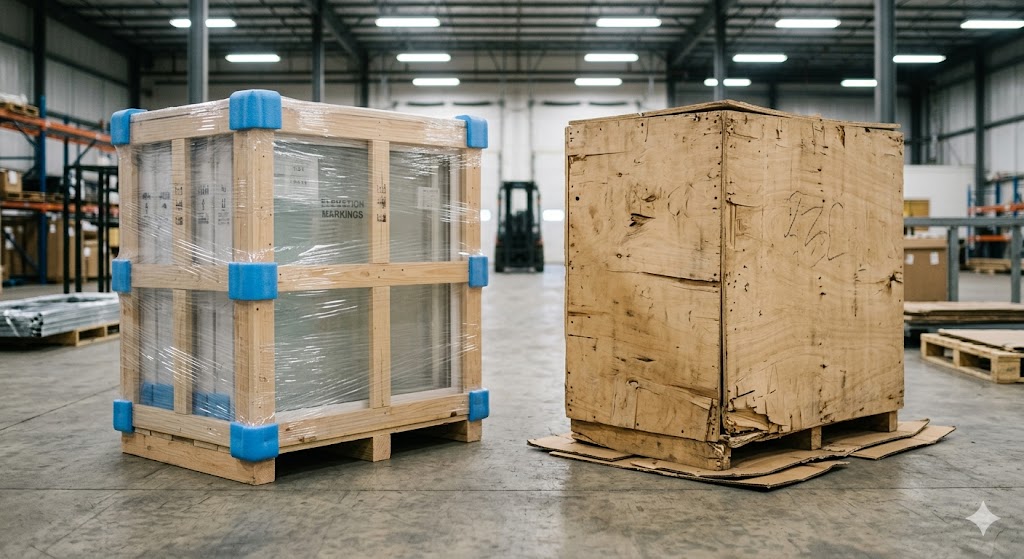
- Shipping damage with unclear responsibility - weak packaging + no clear liability = a dispute instead of a solution.
- Warranty that doesn't work across borders - no U.S. process, no local parts, no one covers labor. You eat the cost.
- No installation support - modern imported systems need proper shimming, anchoring, sealant compatibility, and drainage integration. Without supplier support, "should work" designs fail on real jobsites. For how proper installation support should look, see my dedicated guide.
Supplier-risk check: Apply the same documentation, quality-control, packaging, delivery and warranty checks to every bid, regardless of origin.
The Decision Matrix
| Factor | European sourcing | Chinese sourcing |
|---|---|---|
| Engineering documentation | Request submittals for the exact configuration | Request submittals for the exact configuration |
| Production consistency | Review factory QC and relevant project references | Review factory QC and relevant project references |
| Hardware reliability | Identify hardware and confirm replacement-part access | Identify hardware and confirm replacement-part access |
| U.S. code documentation | Confirm the project-required ratings and approvals | Confirm the project-required ratings and approvals |
| Field support | Name the party responsible for installation questions and claims | Name the party responsible for installation questions and claims |
| Lead times | Obtain an approval-to-site schedule and replacement plan | Obtain an approval-to-site schedule and replacement plan |
| Price (landed) | Compare matched DDP scope plus installation and site work | Compare matched DDP scope plus installation and site work |
Country of origin does not establish quality, compliance or lifetime cost. Compare supplier evidence and the actual scope. See the American vs. European aluminum window comparison.
When European Sourcing Fits
Consider the European systems I source when their documented capabilities match your project:
- Large, heavy operables and minimal sightlines on aluminum window systems
- A schedule that fits the confirmed production, shipping and replacement plan
- A clear written warranty and named service contact
- A supplier able to document the required performance and installation details
The choice depends on the specific system and delivery team. For comparing systems, see my Schuco vs Reynaers vs Aluprof comparison.
The warranty point is the one I built my own process around. Every order I supply - aluminum, uPVC, wood or aluminum-clad wood - carries a 10-year written warranty issued by Windows Guy sp. z o.o. itself, with no square-footage cap on insulating glass. A claim comes to me, not to a factory desk on another continent. Whichever origin you choose, ask who signs the warranty and who answers the phone in year four.
When China Can Make Sense
China can be a rational choice when:
- You have strong internal technical review and procurement discipline
- The supplier is vetted and proven on U.S. expectations
- The supplier can demonstrate capability for the actual design complexity
- The contract clearly assigns coordination, inspection and service responsibilities
If you go this route, treat it as a process, not a transaction - pay for third-party QC, require pre-shipment inspections, lock hardware specs contractually, and create a spare parts plan before production starts. Having a clear DDP import process as a reference point helps you benchmark what "good" logistics should look like regardless of origin.
FAQ
Are Chinese windows cheaper than European windows? There is no reliable country-wide discount. Compare current quotes for the same openings and specifications, then include freight, customs, inspection, documentation, installation and warranty service. A low factory price alone does not establish the lowest delivered or installed cost.
Are Chinese windows good quality? Quality depends on the supplier, production controls and specific product. Review test reports, hardware traceability, packaging, references and the written service process using the same criteria for suppliers in China and Europe.
What's the biggest risk when importing windows? The biggest risk when importing windows is not the price - it is schedule and warranty risk. One misfabricated or damaged batch can cost more than the initial savings through replacement lead time, site delays and rework, and a warranty that only works across an ocean leaves the builder carrying the callback.
Is Europe always better than China? No. Evaluate both origins using the same product ratings, production evidence, contract scope and service obligations. Neither origin guarantees predictable batches, US compliance or a shorter replacement cycle.
How do I vet an overseas window supplier fast? To vet an overseas window supplier fast, check six things: who actually fabricates the units and how you can verify it, QC proof from past US orders, hardware brand and stability, documentation readiness for US permits, packaging standards, and a written warranty process that names who handles claims in the US. My supplier evaluation guide turns this into a checklist.
Send me your window schedule and project type - I'll return a landed-cost comparison with documentation included, so you know exactly what you're getting before you commit. Get a Quote | Get in touch
Kai, your window guy!