
A lot of window decisions get made too late. By the time the team is pricing glass packages, the design intent is already colliding with structure, rough openings, lead times, and budget. That is usually where European windows for custom homes either become a smart advantage or a preventable problem.
European windows are worth it for a custom home when the project is envelope-driven, architecturally ambitious or built around large glass - where slimmer sightlines, larger operable units, tilt-and-turn operation and lower U-factors pay off - and usually not for a cost-driven build with standard openings.
For the right project, they solve real design and performance constraints that many domestic packages still struggle with - slimmer sightlines, larger operable units, better thermal values, tilt-turn functionality, and a broader range of frame materials and configurations. But the product alone is not the whole story. On a U.S. custom home, success depends as much on specification discipline, code alignment, and delivery control as it does on the window itself.
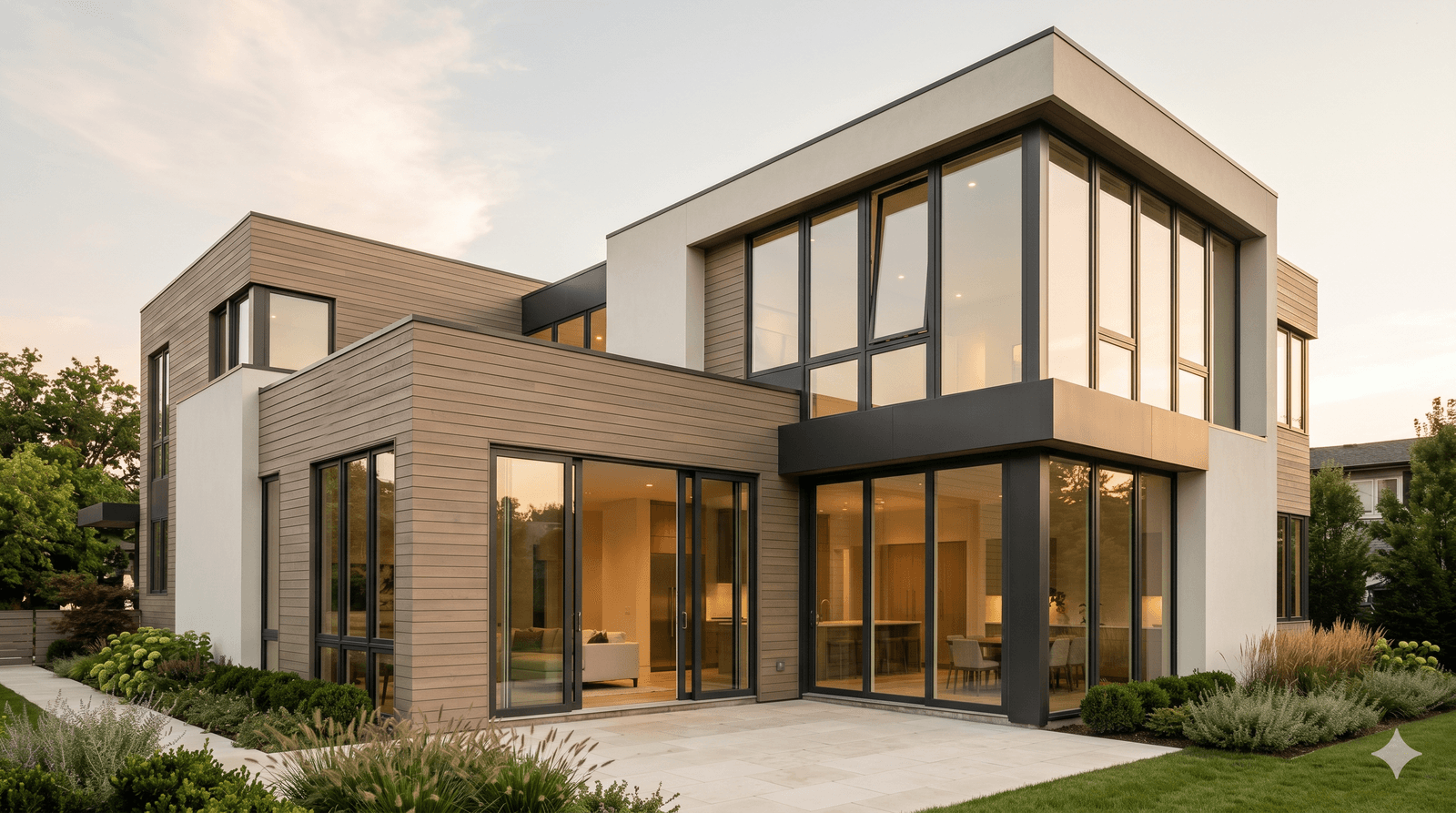
The One-Minute Version
- European windows are worth it when the project is envelope-driven, architecturally ambitious, or centered around large glass and refined detailing - not by default.
- Choose by project priorities, not material trend: PVC for thermal value, thermally broken aluminum for slim sightlines and large spans, wood or aluclad for warmth and high-end finish.
- The product is the easy part. The hard part is specification discipline, code alignment, lead time control, and install quality.
- Engage the sourcing decision early - while design can still respond to real dimensions, sightlines, and thresholds.
- A manufacturer-independent sourcing model keeps product matching honest. One accountable party from pricing through site delivery beats fragmented dealer chains.
Why European windows keep showing up on better projects
Architects and builders usually come to European systems for one of three reasons. They want a cleaner aesthetic with more glass and less frame. They need higher performance for a demanding envelope. Or they are trying to execute opening types and dimensions that are hard to achieve with standard domestic offerings.
That combination matters on modern custom homes, passive-level builds, coastal projects, and houses where the window package is a defining architectural feature rather than a commodity line item. A narrow frame profile changes the look of a facade. A lift-and-slide door that actually delivers on scale changes how interior and exterior space connect. A properly engineered tilt-turn window changes ventilation strategy, water performance, and air tightness.
This is also why broad comparisons can be misleading. Not every European product is high-end, and not every domestic system is inadequate. The real difference is that the European fenestration market generally offers more mature options in high-performance residential design, especially when the project calls for ambitious geometry, large openings, or specific thermal and visual targets.
What makes these systems different
The differences start with the operating logic. Tilt-turn windows are the most obvious example. For U.S. buyers, they can feel unfamiliar at first, but they combine inward swing cleaning access, tilt ventilation, and excellent compression sealing in one unit. That is a practical advantage, not just a novelty.
Frame construction is another major point. European systems are commonly available in PVC, thermally broken aluminum, wood (made to your exact sizes, with arches and divided lights - see custom wood windows from Europe), and aluclad formats with deeper profiles and better insulation strategies than many standard U.S. products. Hardware quality also tends to be a step up, especially on larger operable units where long-term performance matters.
Then there is the visual result. Many custom projects want minimal sightlines without giving up structural stability or weather performance. That is where European engineering often stands out. The glass-to-frame ratio is better, corners can be cleaner, and large-format units feel less bulky. Concretely, aluminum system providers like Reynaers, Aluprof, Aliplast and Cortizo, and the uPVC system provider Aluplast, each have profiles aimed at different priorities - slim-line aluminum for minimal sightlines, deep PVC profiles for passive-level Uw values, and large lift-and-slide configurations for openings that are hard to source domestically.
Still, none of this means every custom home should import a European package. If the project is cost-driven, highly standardized, or not especially sensitive to envelope performance or architectural detailing, the premium may not be justified. Good sourcing starts with that honesty.
Where the trade-offs show up
The biggest mistake buyers make is treating European windows as a simple product substitution. They are not. They affect detailing, sequencing, and coordination from early design through installation.
Lead time is the first trade-off. Imported systems require production planning, ocean freight, customs handling, and final delivery scheduling. Typical end-to-end is roughly 9 to 16 weeks from approved shop drawings to site delivery, depending on material and coast - the breakdown is in European window lead times. That can be managed well, but it cannot be improvised at the last minute. If your team wants same-month flexibility after framing is complete, that is not how this category works. My import-from-Europe guide walks through the full process.
The second trade-off is technical coordination. Performance numbers need to be interpreted correctly for the U.S. market. CE marking under EN 14351-1 is not the same as NFRC energy ratings or AAMA/NAFS structural data. Ratings, testing, glass makeups, and code compliance all need to be checked against the actual jurisdiction and project conditions. A beautiful system mismatched to local requirements creates expensive friction.
The third is installation quality. High-performance windows can underdeliver if the install strategy is weak. Shimming, anchoring, air sealing, waterproofing, and interface detailing matter more, not less, with premium systems. The expectation should be tighter tolerances and clearer accountability.
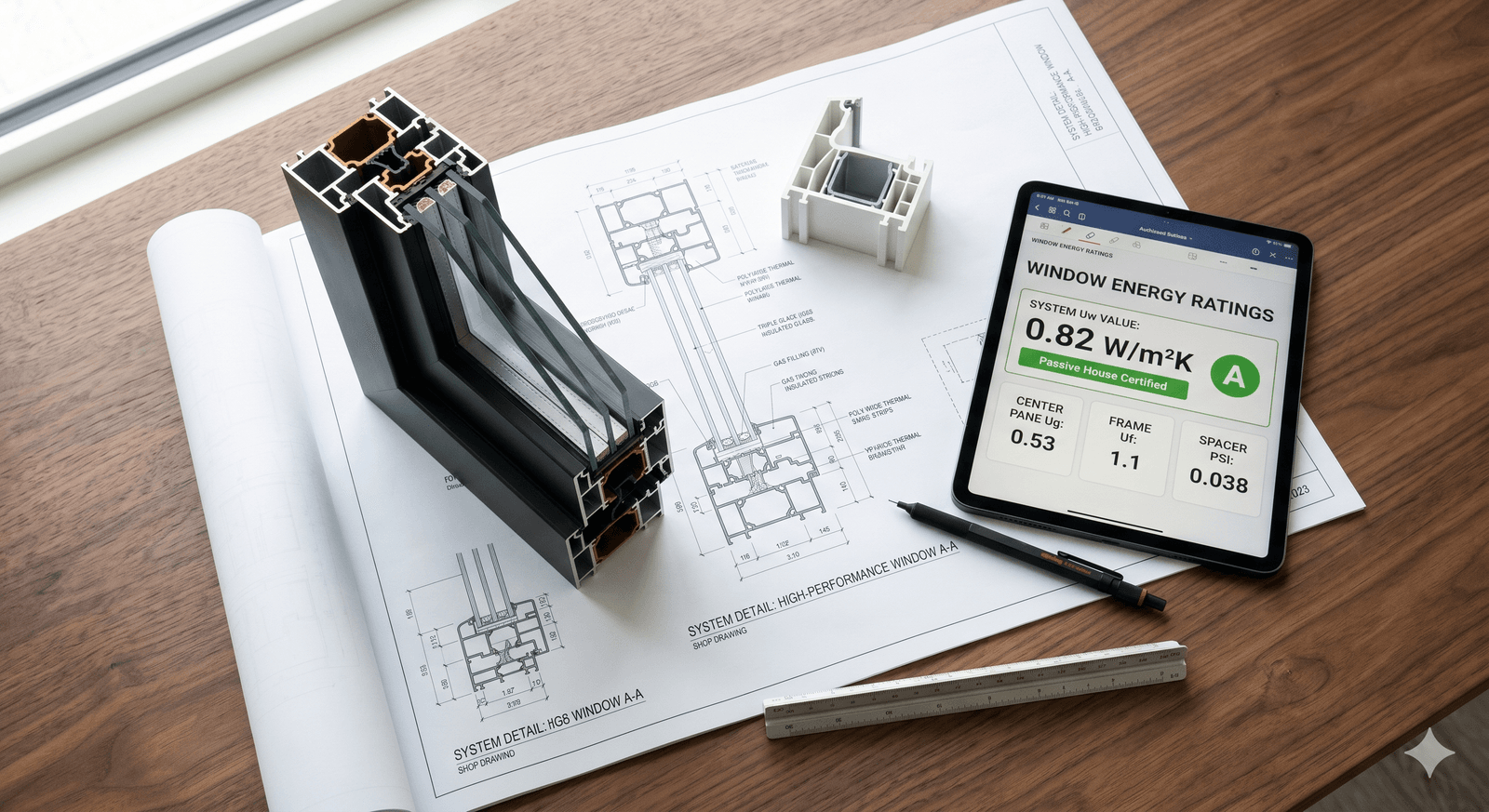
Choosing the right material for the project
Material choice should follow project priorities, not trend preference.
PVC is often the strongest value in the category when thermal performance is critical and budgets still need discipline. It performs well, offers good design flexibility, and works especially well on high-performance residential envelopes. The visual language is not right for every luxury project, but for many homes it is a very efficient answer.
Thermally broken aluminum is usually selected for aesthetics, durability, and larger spans. It is ideal when the architecture calls for crisp lines, darker finishes, and expansive openings. The trade-off is thermal performance. Good thermally broken aluminum can still perform very well, but it needs to be evaluated carefully rather than assumed.
Wood brings warmth and depth that some custom homes need, especially where the interior finish matters as much as the exterior elevation - the species decides that finish, and I compare them in pine, meranti, oak or larch. Aluclad systems often provide the best of both worlds, with wood inside and weather protection outside. They also tend to sit at the higher end of the cost range - see the aluclad vs aluminum vs wood guide for a direct comparison.
There is no universal winner here. A mountain house, a coastal build, and a flat-roof contemporary residence may all land on different answers even if they share the same budget tier. If you are still weighing categories, the aluminum vs PVC developer guide covers how each material performs across real projects.
The sourcing issue most teams underestimate
Factory-direct sounds efficient until the project team is managing time zones, technical submittals, revisions, freight coordination, damaged crate claims, and customs paperwork while trying to keep a build on schedule. That is where many otherwise strong product decisions start to break down.
For U.S. custom homes, the real challenge is not finding a European system provider. There are many. The challenge is comparing systems objectively, matching the product to the design and performance brief, and then controlling the path from budgeting to delivered units on site.
That requires fast pricing, clean takeoffs, shop drawing review, production follow-up, quality control, shipping coordination, and a clear answer when something changes. Dealer chains and fragmented distribution setups often slow this down because responsibility is split across too many parties.
A manufacturer-independent model keeps product matching honest. If one system is better for a narrow-frame aluminum facade and another is stronger for a passive-level PVC envelope, the recommendation should follow the project, not a brand relationship. That is the reason I work with multiple system providers as a single point of contact instead of representing one factory - and why every order carries a 10-year written warranty issued by Windows Guy sp. z o.o., whichever factory built it.
How to specify European windows without creating schedule risk
The best time to engage these systems is early - while the design can still respond to real dimensions, sightlines, thresholds, and structural implications. That does not mean every detail needs to be locked on day one. It means the team needs enough technical input early enough to avoid designing around assumptions.
Budgeting should also happen earlier than many teams expect. Premium fenestration packages can influence facade decisions, opening sizes, and door strategies. Early pricing gives the architect and builder room to adjust before the package becomes a late-stage surprise. If keeping landed cost in check is a priority, the playbook in lowering window costs in high-end homes is a good reference.
Shop drawings are another key checkpoint. They are not paperwork for the file. They are where frame dimensions, handing, mullions, threshold conditions, and installation assumptions get translated into something buildable. If those drawings are rushed or lightly reviewed, field problems usually follow.
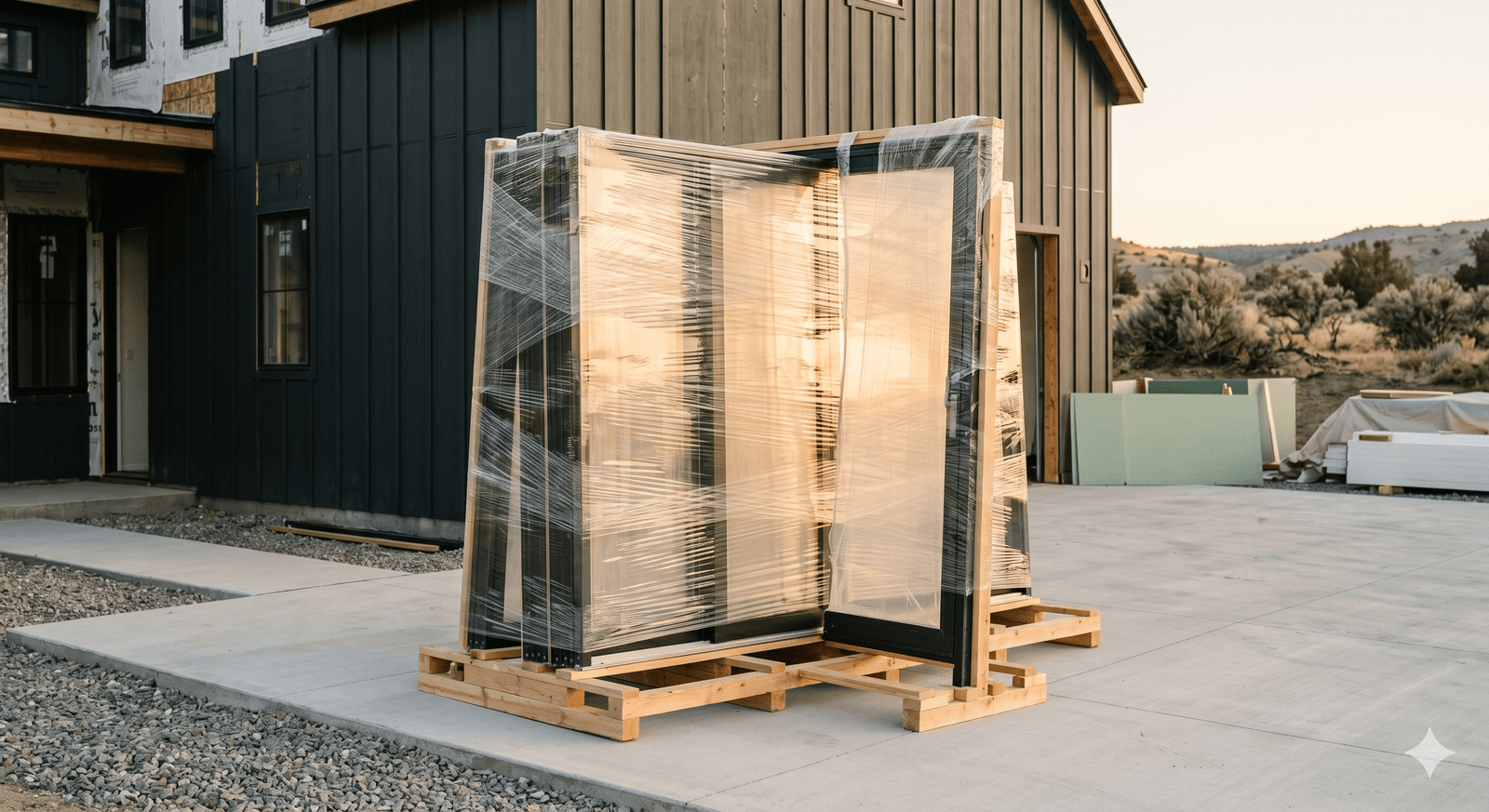
Finally, delivery planning matters. Custom homes rarely have unlimited staging space, and window packages should arrive in step with site readiness. That sounds basic, but on imported projects it requires active coordination rather than hopeful timing.
Is it worth it?
If the home is architecturally ambitious, envelope-driven, or centered around large glass and refined detailing, often yes. European windows can materially improve both performance and appearance. They can help the project do things that are harder to achieve with conventional domestic packages.
If the project does not need those gains, the answer is less clear. Paying a premium for a feature set the design will not use is not smart buying. The right question is not whether European windows are better in the abstract. It is whether they are better for this house, in this climate, with this team, and within this timeline.
That is the standard serious custom projects should apply. Good fenestration decisions are not about chasing imported products for their own sake. They are about specifying the right system, getting the details right, and making sure the package arrives exactly when the build needs it. When that happens, the windows stop being a risk item and start doing what they should have done from the beginning - elevate the house.
FAQs
When should I make the European window decision on a custom home? Early - ideally during schematic design or by the start of design development. The frame depth, threshold conditions, and large-opening sizes affect facade composition, structural detailing, and interior trim alignment. Late decisions force the design to bend around the product instead of the product supporting the design.
Are European windows always more expensive than domestic equivalents? Not always. PVC systems are often competitive on landed cost, especially on performance-driven envelopes. Aluminum and aluclad usually do sit at a premium, but the comparison only makes sense on a like-for-like basis: same glazing, same hardware level, same testing data, same scope.
What about U.S. code compliance? Imported systems can meet U.S. code when the documentation matches the configurations actually installed. The work is in translation - matching NFRC ratings, NAFS data (where reviewers ask for it), and any local energy code requirements to the actual configurations being installed. CE marking alone does not satisfy U.S. pathways by default.
How long do European windows take to arrive? Plan for roughly 9 to 16 weeks from approved shop drawings to site delivery on most aluminum and uPVC systems, depending on material and coast, and confirmed per order - the phase-by-phase breakdown is in European window lead times. Wood, aluclad and specialty finishes are scheduled per order.
Can I install European windows with a U.S. framing crew? Yes - with clear installation instructions, the right bracket and flashing approach, and a short brief from the supplier. The systems are not difficult to install, they are just different from American windows, and those differences matter for warranty and long-term performance.
Ready to specify the right package?
Send me your elevations, window schedule, or even an early concept set - I will come back with a landed budget, a system recommendation, and a realistic timeline the same or next working day. No obligation, no factory hand-off, no chasing multiple dealers. One person owns your project from pricing through site delivery.
Kai, your window guy!