
At some point in the spec process, someone on the project - an architect, a GC, a homeowner who saw a photo online - says "let's do German windows," meaning a heavy, tight-sealing window that tilts in for ventilation instead of cranking out. Ask what actually makes a window "German" and the answers get vague quickly.
German-style windows are European windows built to German-originated engineering standards - DIN and EN norms, multi-point tilt-turn hardware, continuous thermal breaks and RAL finishes - not windows that have to be made in Germany. The same system fabricated in Poland or Austria to the same specs performs the same. Here's what the label covers, what it costs, and what to check before you spec anything under it.
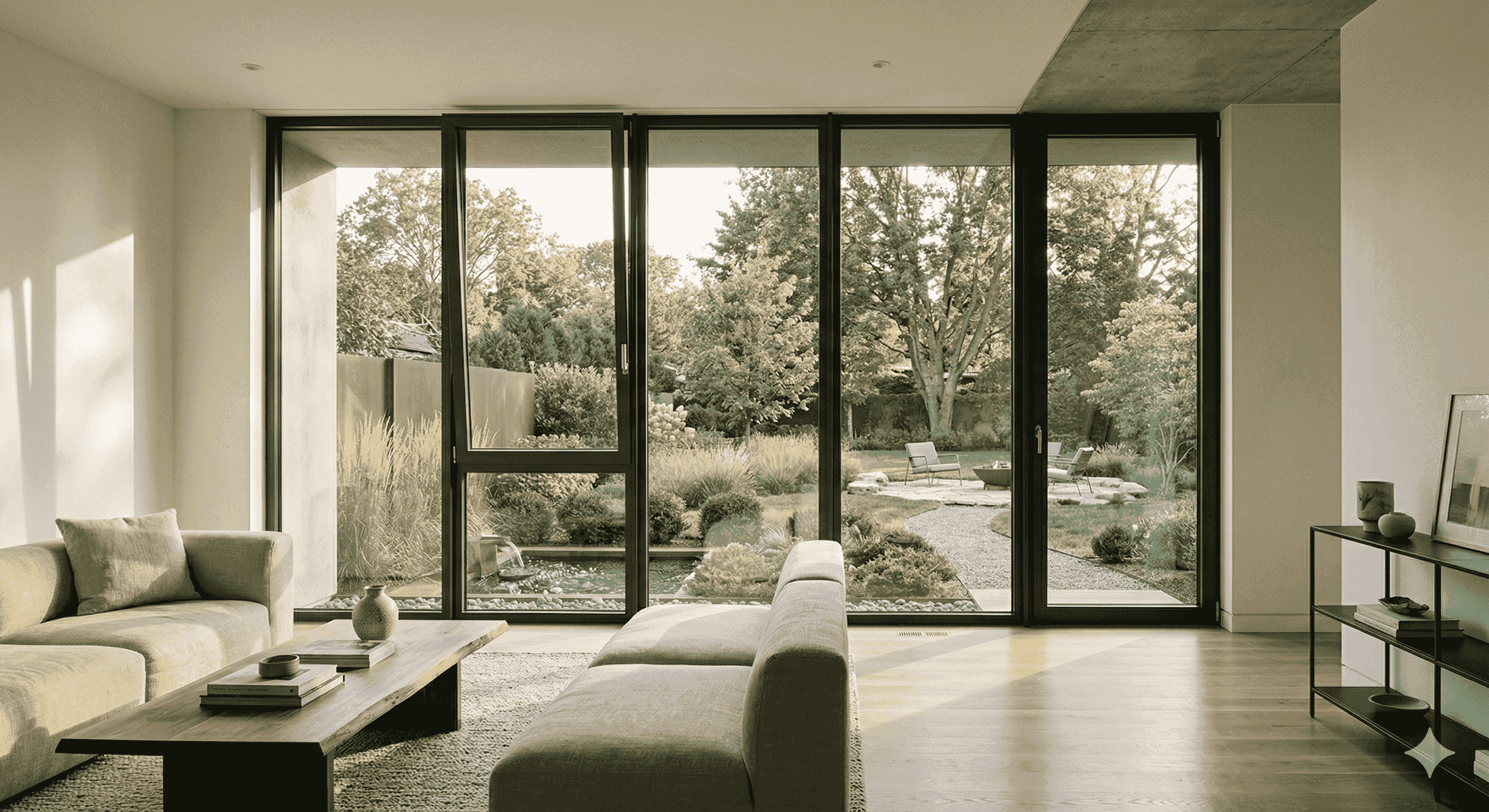
Are German-Style Windows Made in Germany?
Usually not. "German windows" almost never means the window was physically built in Germany. It refers to a family of engineering standards and hardware conventions that originated with German fabricators and hardware manufacturers, then became the dominant standard across the entire European window industry - built to DIN norms, tested to EN standards, and finished in the RAL color system that's now used continent-wide.
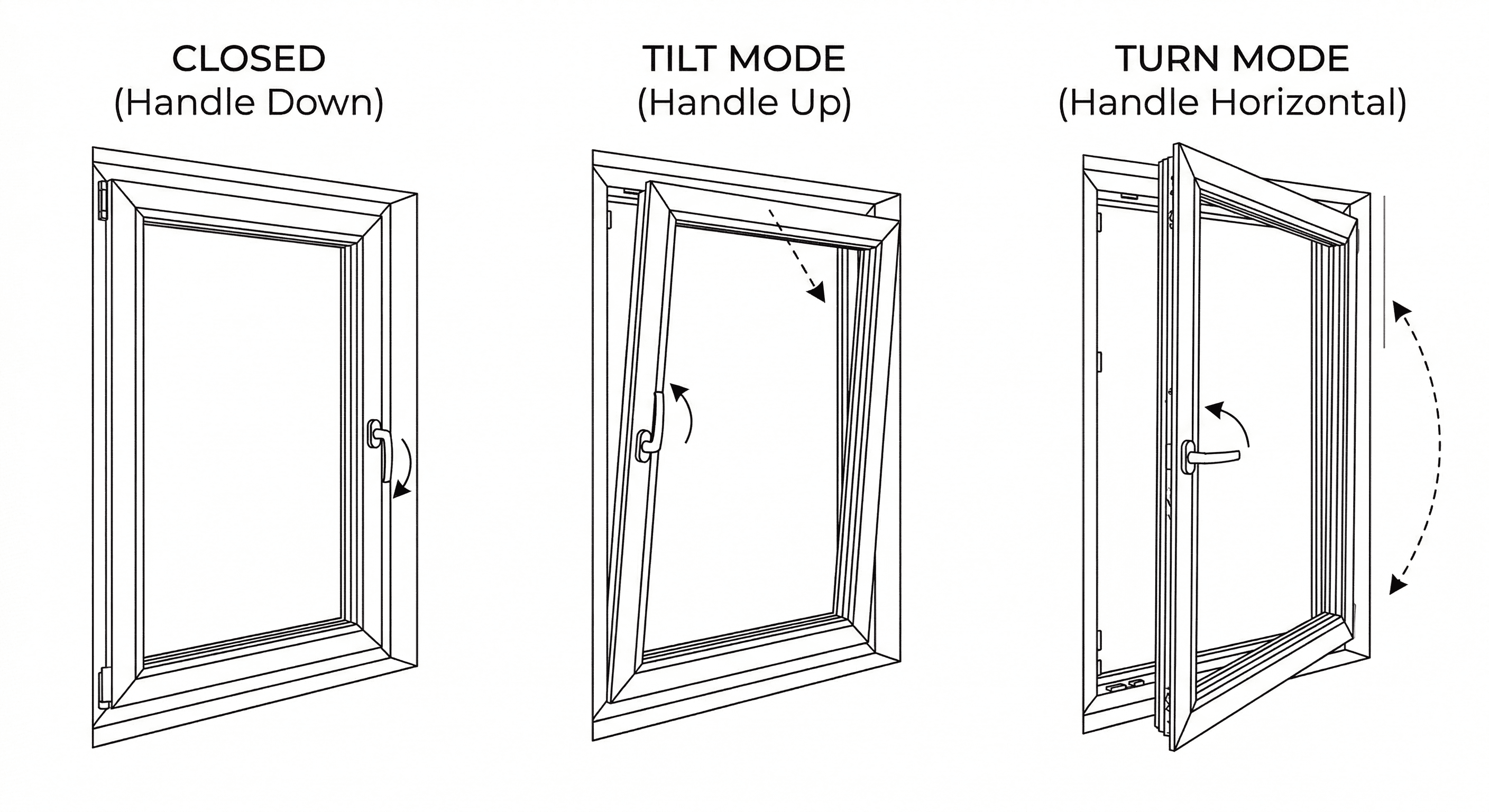
The tilt-turn mechanism itself - one handle, two operating modes, a multi-point locking gasket that runs the full perimeter of the sash - was popularized by German hardware manufacturers decades ago. That hardware, and the frame engineering built around it, is now standard across system providers in Germany, Austria, Poland, and elsewhere in the EU. A tilt-turn window fabricated in Poland to the same DIN specs, with the same German-engineered hardware, performs identically to one assembled in Germany - which is why so many windows from Poland are built on German and Belgian systems. The engineering travels. The factory location doesn't change the physics.
I work with system providers across several EU countries depending on the project's budget, lead time, and spec - not a single "German" factory. If someone tells you their windows are "German-made" as a blanket claim, ask what that actually means for your project: which system, which hardware, which factory. Country of origin is not a performance spec. If what you actually want is the mechanism rather than the passport, my European tilt and turn windows page covers the systems I source for US projects, screens, egress, and what they cost.
What Makes German-Style Windows Different?
Strip away the marketing and "German-style" is really describing three things:
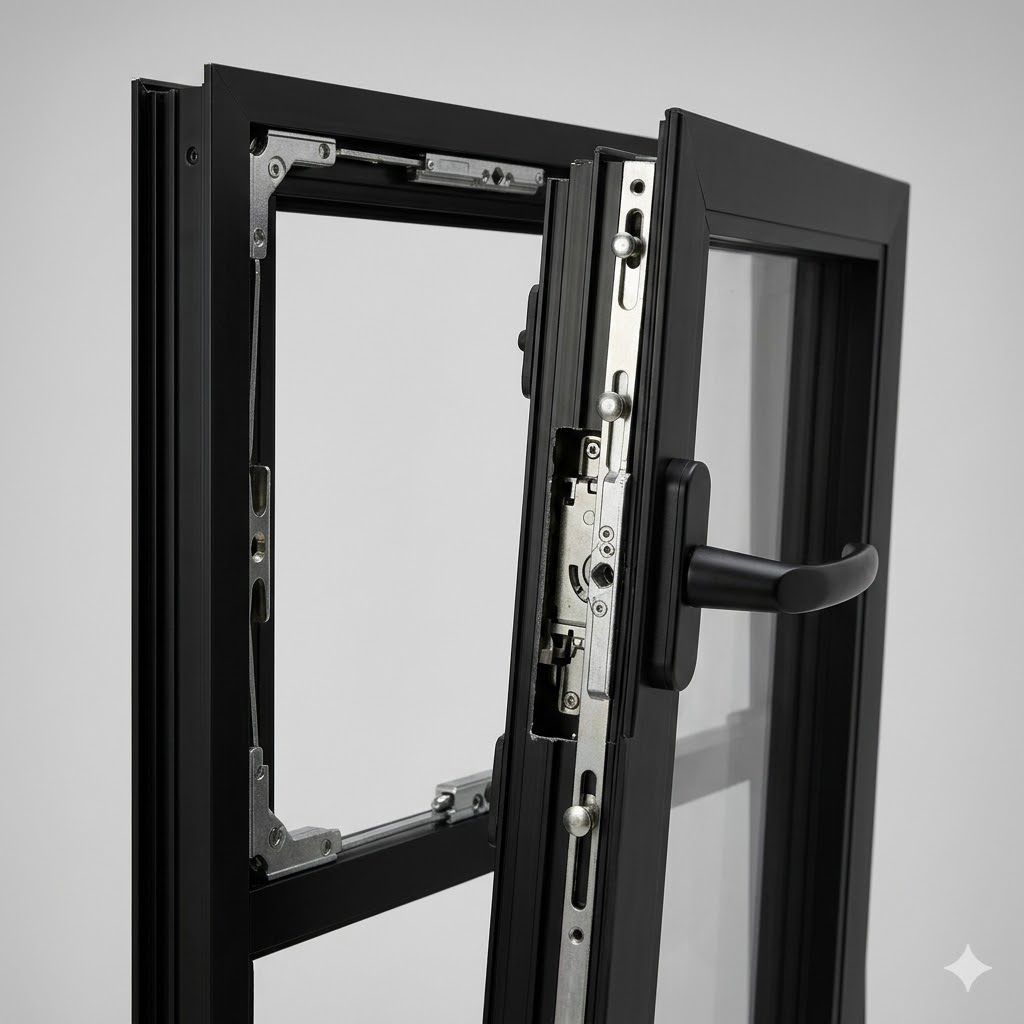
Multi-point locking hardware. The espagnolette mechanism locks the sash at 4-8+ points around the full frame, not just at the handle. That perimeter compression is a main reason these windows tend to test well on air infiltration against sliding US double-hung units - compare tested ratings for the exact products, and see the full mechanical breakdown in my tilt-turn vs casement comparison and, for the more common US baseline, tilt-turn vs double-hung.
Insulated frame engineering. Aluminum profiles use a continuous polyamide thermal break and uPVC profiles use multi-chamber sections, with gaskets in the profile rather than add-on weatherstripping. Across the systems I quote, that works out to whole-window U-factors of about 0.22 to 0.32 double-glazed and 0.13 to 0.19 with triple glazing, depending on frame material and glazing package.
RAL color and finish system. Instead of a handful of stock colors, RAL gives you a standardized palette of more than 200 RAL Classic colors, matched consistently across system providers. If color-matching to a specific facade spec matters on your project, this is a real advantage - I cover the finish options in more detail in my European window colors guide.
None of that requires the window to be manufactured in Germany specifically. It requires the fabricator to be working to the DIN/EN standard and using hardware built to that spec - which most serious European system providers do, regardless of country. And it is not limited to one frame material: the same hardware and sealing logic runs through uPVC, aluminum, wood and aluminum-clad wood windows.
What This Means for Your Spec
If a supplier is marketing "German windows," push past the label and ask:
- Which system provider, and which specific product line?
- What's the tested U-factor and air infiltration rating for that spec?
- Is the frame material aluminum, uPVC, wood or aluminum-clad wood - each has a different cost and performance profile?
- Does the finish come in your RAL color, and is it a factory finish or field-applied?
Those answers tell you far more than "it's German" ever will. The country label is marketing shorthand for a performance tier - your job is to verify the actual performance, not the passport.
How Much Do German-Style Windows Cost in the US?
Pricing depends on frame material, glazing and size, not on which country assembled the unit. These are supplied prices from my project estimator for a 36 x 60 in (15 sq ft) tilt-turn window, double-glazed, before freight, duty and installation:
| Frame material | Whole-unit U-factor, double / triple glazed | Supplied price, 36 x 60 in tilt-turn |
|---|---|---|
| uPVC, multi-chamber | about 0.22 / 0.13 | about $380 (about $25 per sq ft) |
| Aluminum, thermally broken | about 0.22-0.26 / 0.15-0.16 | about $1,050-1,660 by system (about $70-110 per sq ft) |
| Wood (Timber Classic, Timber Estate) | about 0.14-0.15, published reference | quoted per project |
| Aluminum-clad wood (Clad Flush, Clad Hidden Sash, Clad Passive) | from about 0.11 to 0.21 by line, converted European references | quoted per project |
Triple glazing adds about 15% on uPVC and about 11-14% on aluminum, and smaller windows cost more per square foot than big ones. The estimator adds freight, duty and customs clearance for a landed number; installation is always a separate local line. For wood and aluminum-clad wood, send the drawings through the quote page.
FAQ
Are German windows better than American windows? "Better" depends on what you're optimizing for. European tilt-turn systems bring multi-point locking and perimeter compression seals as standard, which often shows up in better air-infiltration results than standard double-hung units - compare tested ratings for the exact products. American systems can be faster to source domestically and simpler to service. For a full side-by-side, see my tilt-turn vs casement comparison.
Are German-style windows actually made in Germany? Usually not exclusively. The term describes an engineering standard - DIN specs, RAL finishes, German-originated tilt-turn hardware - that's used by system providers across Germany, Austria, Poland, and other EU countries. Ask your supplier which specific system provider and factory your windows come from rather than relying on the country label.
How much do German-style windows cost? In my estimator, a German-style 36 x 60 inch tilt-turn window costs about $380 supplied in uPVC and about $1,050 to $1,660 in thermally broken aluminum, double-glazed, before freight, duty and installation. Wood and aluminum-clad wood are quoted per project. The country of assembly does not set the price; frame material, glazing and size do.
Is there a standard German window size? No. German-style windows are made to order, so each one is built to the size on your window schedule rather than picked from a stock list. I convert the US sizes on your plans into the factory's millimeter dimensions on the order, and you approve the shop drawings before anything goes into production.
Do German-style windows meet US energy codes? Most tilt-turn systems can meet or exceed US energy code requirements, depending on the specific frame, glazing package, and climate zone - always verify certified ratings for your project rather than assuming a blanket answer. See my triple vs double glazing guide for how glazing choice affects thermal performance in different climate zones.
Working through a spec that mentions "German windows" and want a straight answer on what system actually fits? Get an estimate, send me the drawings or book a call and I'll walk you through the real options.