
If you have ever asked a window supplier "what U-factor do I need" and gotten "it depends" as the full answer, you know how unhelpful that is when a plan reviewer or energy consultant is waiting on a number. So here is the number first, then what it depends on.
A good U-factor for windows is 0.30 or lower in most mixed and cold US climates; high-performance projects often target 0.20 or lower. Under the 2021 IECC residential prescriptive table, the typical maximum is U-0.30 in zones 3-8 and U-0.40 in zone 2; zone 1 has no tabulated maximum. Local adoption and exceptions matter. Premium European double glazing lands around U-0.22 to 0.32 and triple glazing around U-0.13 to 0.19. Passive House targets depend on the certification program, climate and installed detail.
What does U-factor measure?
U-factor is the rate of heat transfer through the whole window unit - frame, spacer, and glass together, not just the glass. Lower is better: a window at U-0.30 loses more heat than one at U-0.20. It is the inverse of R-value (the insulation number you know from walls), which is why the two get mixed up constantly.
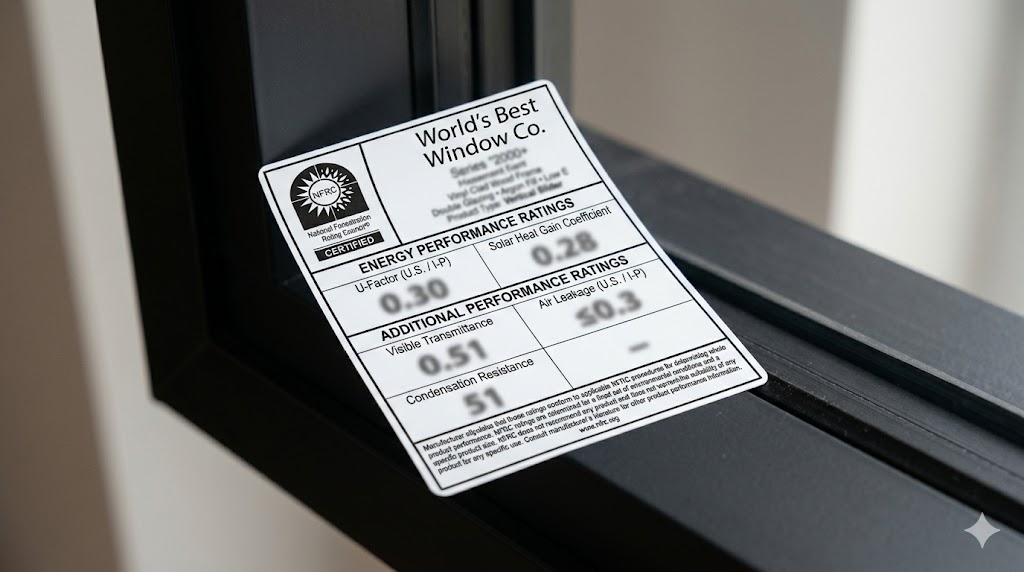
The number on the NFRC label is a whole-unit value, rated to a standardized US procedure (NFRC 100) for a specific configuration - not a marketing figure. That matters because two windows with identical glass can have different U-factors if one has a much better frame and thermal break.
U-factor chart: window types, metric U-value and R-value
This is the chart I hand to owners and consultants when they want to see where a window sits. The U-factor is imperial (Btu/h-ft2-F), the U-value is the metric figure on a European datasheet (W/m2K), and R-value is simply 1 divided by the U-factor.
| U-factor (US) | U-value (metric, W/m2K) | R-value | Typical window |
|---|---|---|---|
| 1.00 | 5.68 | R-1.0 | Single pane, clear glass |
| 0.50 | 2.84 | R-2.0 | Older double pane, no coating |
| 0.35 | 1.99 | R-2.9 | Builder-grade double, low-E |
| 0.30 | 1.70 | R-3.3 | Double low-E at the typical 2021 code maximum (zones 3-8) |
| 0.25 | 1.42 | R-4.0 | Premium European double glazing |
| 0.20 | 1.14 | R-5.0 | Entry triple glazing |
| 0.15 | 0.85 | R-6.7 | European triple glazing |
| 0.14 | 0.80 | R-7.1 | Passive House class |
Read it top to bottom: every step down the U-factor column is less heat loss, every step down the R-value column is more insulation. Even the best window in the chart is a fraction of a wall insulated to R-20, which is why window choice moves an energy model so much.
What counts as a good U-factor for your climate zone?
There is no universal good number - only a good number for your climate zone and project. As a field guide to the typical 2021 IECC residential maximums (always verify against your local amendment):
- Climate zones 1-2 (hot, southern): zone 1 has no tabulated U-factor maximum; zone 2 is U-0.40. Solar heat gain also matters - see European windows in Texas for plan-review considerations.
- Climate zone 3: U-0.30 under the 2021 table; older adopted editions can differ.
- Climate zones 4-8 (mixed to cold): U-0.30, with some cold-climate jurisdictions and high-performance programs targeting lower. U-factor alone will not get you a comfortable room up there - see best windows for cold US climates for the condensation and air-infiltration factors that sit alongside it.
Source: DOE/PNNL's comparison of IECC fenestration requirements. The table includes exceptions, including certain high-elevation and windborne-debris applications in zones 5-8; confirm the adopted code and compliance path for your project.
For the full zone-by-zone table with SHGC limits and representative cities, use my climate zone cheat-sheet - that page owns the code targets; this one owns what the numbers mean.
If you are chasing an energy model number rather than a code minimum - common on custom homes and passive-house-adjacent projects - the target comes from the energy consultant, not the code book. In that case "good" means "meets the model," and you work backward from there. If the target is an actual PHI or PHIUS certification, see what qualifies as a Passive House window.
What is a good U-value for windows in metric?
European datasheets quote a U-value in W/m2K, which is 5.678 times larger than the US U-factor for the same window. A metric U-value of about 1.7 W/m2K equals the US code-level U-0.30; premium European double glazing sits around 1.25-1.8 W/m2K, triple glazing around 0.74-1.1 W/m2K, and the Passive House benchmark is 0.80 W/m2K. To convert, multiply the metric value by 0.17611 - the U-value to U-factor converter does it both ways.
The trap is converting the wrong line. A European sheet lists Uw (whole window), Ug (glass only) and Uf (frame only); only Uw maps to the US U-factor. My guide to reading a European window quote in US units walks through a full datasheet line by line.
What is a good R-value for windows?
A window at R-3.3 (U-0.30) meets code in most of the US; premium European double glazing reaches about R-4, and triple glazing R-5 to R-7. Windows are rarely specified by R-value in the US, so if an owner or inspector quotes one, convert it before comparing - the U-factor to R-value calculator flips it in one step.
Which windows have the highest R-value?
In the chart above, triple-glazed and Passive House-class windows have the highest R-values: about R-5 at U-0.20, R-6.7 at U-0.15 and R-7.1 at U-0.14. These are examples from this chart, not a ceiling on what a specialist window can achieve. High R-value windows combine insulating glass with an effective frame and spacer; adding a pane alone does not guarantee the best whole-window result.
Calculate US R-value as R = 1 / U using the whole-window U-factor in Btu/(h.ft2.F); the result is in h.ft2.F/Btu. Convert a metric U-value to US U-factor first. A center-of-glass R-value excludes the frame and edge losses, so it cannot be compared directly with these whole-window examples. Confirm the value for your quoted size and configuration, and request an NFRC rating where the permit requires it.
How do you calculate the U-value of a window?
There are two calculations people mean by this:
- Converting a number you already have. US R-value = 1 / US U-factor, and US U-factor = 1 / US R-value. Use matching imperial units and the same whole-window assembly. Metric to imperial: U-factor = U-value x 0.17611; imperial to metric: multiply by 5.678.
- Calculating a window from its parts. The whole-window value is an area-weighted average of the glass, the frame and the heat lost along the glass edge at the spacer: Uw = (glass area x Ug + frame area x Uf + edge length x psi) / total window area. European system providers calculate it this way to EN ISO 10077; the US rating procedure is NFRC 100. Because the frame usually loses more heat than the glass, a small window with a lot of frame scores worse than a large one with the same glass and profile.
Three worked examples, using numbers you will see on real sheets:
- European datasheet, double glazed: Uw 1.3 W/m2K x 0.17611 = U-factor 0.23, which is about R-4.4.
- Passive House benchmark: 0.80 W/m2K x 0.17611 = U-factor 0.14, about R-7.1.
- US code-level window: U-0.30 = R-3.3, and 0.30 x 5.678 = 1.70 W/m2K for the European factory.
U-factor vs SHGC vs R-value - the difference that actually matters
These three get lumped together in specs, but they answer different questions:
- U-factor - how much heat escapes through the window. Lower is always better, in every climate.
- SHGC (Solar Heat Gain Coefficient) - how much solar heat the window lets in. Lower SHGC helps in hot climates; a higher SHGC can help in cold climates by letting in free solar heat on south-facing glass. This is the one that is climate-specific in direction, not just degree.
- R-value - the inverse of U-factor, more commonly used for walls and insulation. Higher is better.
A window with an excellent U-factor and the wrong SHGC for your climate can still perform poorly in the energy model, and a great SHGC will not offset a poor U-factor in a cold climate. Both numbers matter, and they do not always move together.
U-factor by window type: where European systems land
These are the catalog whole-window values for the systems in my estimator, converted from the European Uw - not glass-only numbers, and not NFRC labels, which are issued per tested configuration.
| Window type | Double glazed | Triple glazed | Systems behind the numbers |
|---|---|---|---|
| uPVC tilt-turn and casement windows | U-0.22 | U-0.13 | Aluplast Ideal Neo, Ideal Neo OUT |
| Aluminum tilt-turn and casement windows | U-0.22-0.26 | U-0.15-0.16 | Aliplast Genesis 75, Aliplast Maxlight Modern |
| Steel-look aluminum windows | U-0.26 | U-0.16 | Reynaers SlimLine 38 Classic HI, Aliplast Maxlight Steel |
| Aluminum sliding and lift-and-slide doors | U-0.26-0.28 | U-0.15-0.19 | Aliplast Ultraglide, Aliplast Visoglide Plus |
| uPVC sliding doors | U-0.32 | U-0.17 | Aluplast Smart Slide |
| Aluminum bifold doors | U-0.29 | U-0.19 | Reynaers ConceptFolding 68 |
The deepest aluminum profiles go further: Reynaers MasterLine 10 publishes U-0.14 and Aluprof MB-86 in its AERO version about U-0.11 in their best configurations. The aluminum-clad wood lines publish their values differently - Clad Flush converts to about U-0.19-0.21, Clad Hidden Sash starts from about U-0.16 and Clad Passive from about U-0.11 - as references, not NFRC ratings; wood and aluminum-clad wood windows are quoted from drawings. If a quote you are comparing only lists a glass U-factor, ask for the whole-unit number before you compare it to anything.
Is triple glazing worth it for U-factor alone?
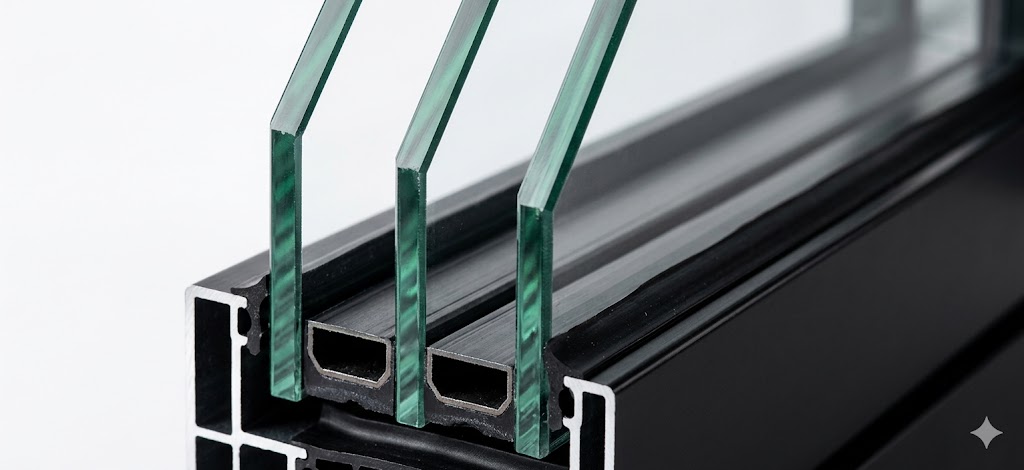
If you are in climate zones 6-8, chasing a passive-house-adjacent target, or dealing with a north-facing elevation with heavy glass, the U-factor jump from double to triple glazing is real and often worth it. In climate zones 1-4, the U-factor gain matters less than getting SHGC right, and any acoustic benefit depends on the tested glass make-up, not pane count alone. See the triple vs double glazing breakdown for the full cost-versus-performance case.
Reading the label without guessing
The whole-unit U-factor, SHGC, and VT (visible transmittance) all live on the same NFRC label. My NFRC and NAFS certification guide walks through what a plan reviewer is actually checking for and what to do when a European system documents its numbers through simulation instead of a label.
Putting a number on your project
If you want a real U-factor range for your specific project - not a generic table - run your window sizes through the project estimator for aluminum and uPVC, or send me the schedule through the quote form if the project is wood or aluminum-clad wood. Either way the U-factor comes back per position, in US units.
FAQ
What is a good U-factor for windows? A good window U-factor is 0.30 or lower in most mixed and cold US climates. The 2021 IECC residential prescriptive table generally uses 0.30 in zones 3-8, 0.40 in zone 2 and no tabulated maximum in zone 1. High-performance projects often aim for 0.20 or lower. Confirm local adoption, exceptions and the project's energy model before specifying.
What is a good U-value for windows in metric units? About 1.7 W/m2K or lower, which equals the US code-level U-factor of 0.30. Premium European double glazing runs about 1.25-1.8 W/m2K whole-window and triple glazing about 0.74-1.1 W/m2K; the Passive House benchmark is 0.80 W/m2K. Multiply a metric U-value by 0.17611 to get the US U-factor, and use the whole-window Uw, not the glass-only Ug.
What is a good R-value for windows? A window R-value of about 3.3, which is U-0.30, meets energy code in most US climate zones. Premium European double glazing reaches about R-4 and triple glazing R-5 to R-7. R-value is 1 divided by the U-factor, so convert before comparing a window quoted in R-value with one quoted in U-factor - even the best window is far below an R-20 wall.
How do you calculate the U-value of a window? For a single number in matching units, US R = 1 / US U-factor, and U-factor = metric U-value x 0.17611. For a whole window, the value is an area-weighted average of the glass, the frame and the heat lost along the spacer edge, divided by the total window area (EN ISO 10077 in Europe, NFRC 100 in the US). Smaller windows score worse because the frame takes a larger share of the area.
Is a lower U-factor always better? Yes. A lower window U-factor always means less heat loss, in every climate, and the matching R-value is higher. SHGC is the window metric that can go either direction depending on climate and orientation, so a hot-climate spec needs both a reasonable U-factor and a low SHGC, not one in place of the other.
What U-factor do triple-glazed European windows typically hit? On catalog values, triple-glazed European windows run about U-0.13 to U-0.19 whole-window, compared with U-0.22 to U-0.32 for double-glazed versions of the same frames. The best aluminum configurations publish values down to about U-0.11. The tested or simulated number for your exact size and glass is what goes on the submittal.