Most of the energy-code conversation on this site is about keeping heat in. In Texas, the problem runs the other way. Austin, Dallas-Fort Worth, San Antonio, Houston - the load that matters is cooling, and the spec that decides whether your glazed wall works with the HVAC system or against it is SHGC, not U-factor.
I get this brief a lot from Texas design-build teams and architects: big glass, modern lines, and a plan reviewer who wants to see real numbers before signing off. Here's how the spec actually shakes out.
Texas is a cooling-load problem, not a heat-loss problem
Central and North Texas sit mostly in IECC Climate Zones 2A and 3A (hot-humid), with West Texas dipping into Zone 3B (hot-dry). In every one of those zones, the residential energy code caps SHGC at 0.25 - lower than the U-factor requirement matters in practical terms. U-factor limits run 0.30-0.40 depending on the zone and local amendment, which most decent double-glazed systems clear without effort.
The number that actually gets flagged in plan review is SHGC. A glazed wall that meets U-factor but ships with clear or lightly-coated glass will blow past 0.25 and get bounced back.
| Zone | Representative cities | Typical residential U-factor max | Typical residential SHGC max |
|---|---|---|---|
| 2A (hot-humid) | Houston, Corpus Christi | 0.40 | 0.25 |
| 3A (hot-humid) | Dallas-Fort Worth, San Antonio, Austin | 0.32-0.35 | 0.25 |
| 3B (hot-dry) | El Paso, Midland | 0.32-0.35 | 0.25 |
Always verify against the local IECC amendment before locking a spec - some Texas municipalities adopt code a cycle behind or add their own overlay. This table is a starting reference, not a substitute for the local plan reviewer's copy.
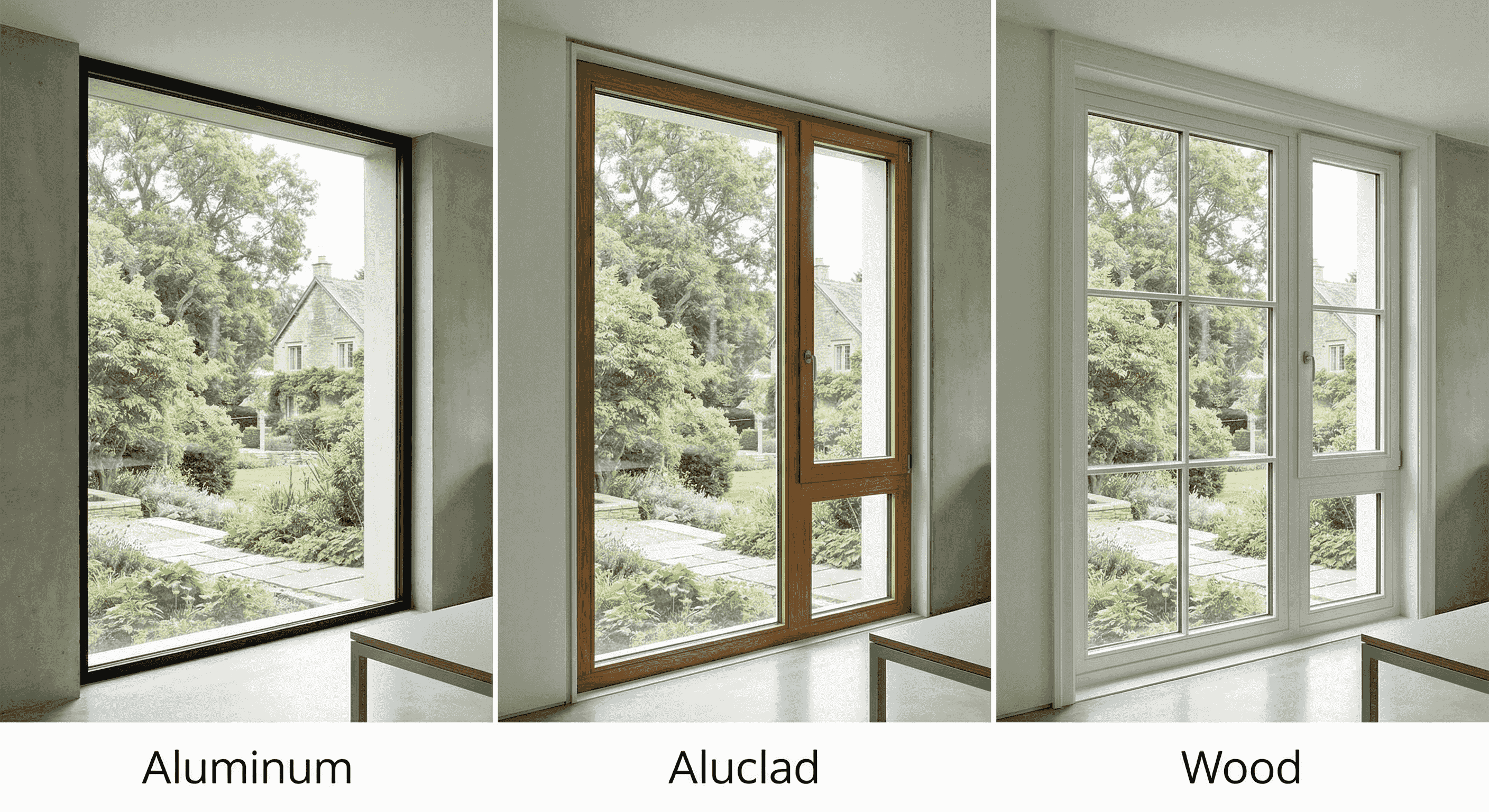
Why this changes the frame conversation
Double glazing, not triple, is usually the right call. In Zones 1-3, the building isn't fighting conductive heat loss the way a Minneapolis or Denver project is - see triple vs. double glazing by climate zone for the full breakdown. Triple glazing adds cost and, on large sliding panels, real weight that shows up in hardware and structural support. A well-specified double-glazed unit with the right low-E coating meets Texas code at a lower price point and lighter frame load.
The coating does the work, not the pane count. European IGU packages default to high-performance low-E coatings and warm-edge spacers as standard spec, not an upgrade line. That's what gets SHGC down to 0.20-0.25 on a clear-appearing glass without going dark or reflective - which matters on a modern build where the architect does not want mirrored glass on the street elevation.
Thermally broken aluminum still earns its place. Even though heat loss isn't the driver, a solid polyamide thermal break keeps the interior frame surface from radiating heat into the room on 100-plus-degree days and helps control condensation on the AC side of a humid Houston summer. See how thermal breaks actually work if you're speccing across material tiers.
Big glass is where Texas projects actually push
The demand I see out of Texas design-build firms isn't small punched openings - it's large sliding walls and pocketing doors on modern and transitional builds. Two things matter more here than in a typical spec:
SHGC scales with the opening. A 12- or 16-foot lift-slide wall is a much bigger share of total glazing than a standard window schedule. Get the SHGC wrong on that one big opening and the energy model for the whole house misses. For sizing and system options on wide openings, see the large-format lift-slide door guide.
Frame depth vs. glass area is a real trade-off at this scale. Narrow sightlines mean more glass, which means SHGC control matters even more. This is where the steel-look aluminum systems earn their premium - see the system provider comparison for how frame profiles stack up on thermal and structural performance at wide-panel sizes.
One thing I don't spec for the Gulf Coast: windstorm/impact-rated glazing. That's a different product category with its own testing and certification path, and it's outside what I source. If a project sits in a coastal wind zone, that's a conversation to have with your architect early, before the window package gets locked.
Where the numbers land
Every project is different, but for a typical North or Central Texas custom-home spec - Zone 2A/3A, double-glazed, low-E coated, standard aluminum or PVC frame - the project estimator will run your actual window schedule through current landed pricing. Duty and freight are material-dependent (aluminum runs a higher duty rate than PVC), so the estimator is a faster gut-check than trying to back into it from a per-square-foot rule of thumb.
FAQ
Does U-factor matter at all in Texas? Yes, but it's the easier number to hit. Most double-glazed European systems clear the 0.32-0.40 range without extra cost. SHGC is the one that needs deliberate glass selection.
Do I need triple glazing for a Texas project? Almost never on the cooling-load side. The exceptions are acoustic-sensitive sites (near a highway or flight path) or a specific Passive House target - see what actually qualifies as Passive House if that's the goal.
Will European frames work with Texas's humidity? Thermally broken aluminum and PVC both handle humid climates well - the thermal break is what prevents interior condensation on the frame during AC season, which is the actual failure mode to watch for, not moisture in the frame material itself.
What about hurricane or windstorm-rated glazing for Gulf Coast projects? That's outside what I spec. Impact-rated glazing is its own certification path and product category - worth flagging to your architect early if the site is in a coastal wind zone.
Bottom Line
Texas flips the usual energy-code conversation: SHGC leads, U-factor follows, and the frame choice is about slim sightlines for big glass rather than chasing extreme thermal numbers. Double-glazed European systems with the right low-E coating clear Zone 2A/3A code comfortably, and thermally broken aluminum keeps the big sliding walls performing without going to triple glazing weight or cost.
Send your window schedule and I'll have a budget number back to you the same or next working day, run against current landed pricing for the systems that actually fit a Texas spec.
Request a Quote | Schedule a Call
Kai, your window guy!