
The promise of modular and prefab construction is speed, quality control, and labor reduction. But the fenestration package is where many projects hit friction - tolerance mismatches, glazing sequencing confusion, and unclear responsibility for weather sealing between factory and field.
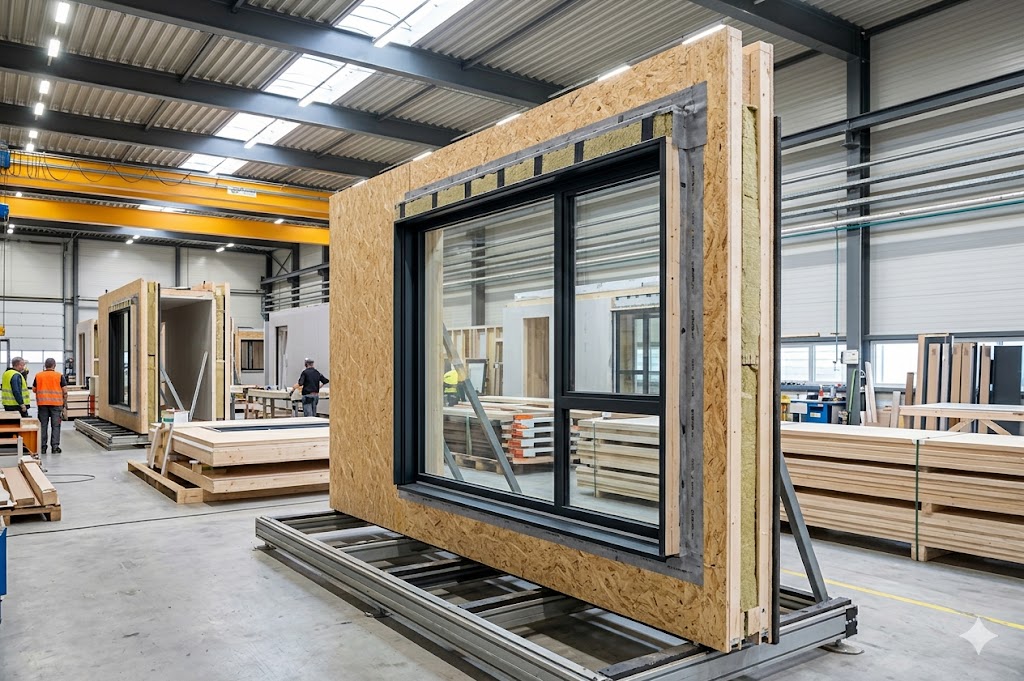
Prefab windows are complete window units - frame, insulated glass, hardware and seals - built, glazed and tested in a factory and delivered ready to set; in modular construction they are often installed into the module on the factory floor before it ships. European window systems suit that workflow because they are made to tight tolerances and arrive factory-glazed with the hardware already fitted.
Here's what design-build teams need to know: what prefab and modular windows actually are, how tolerances line up, and the practical differences between installing in the module factory and in the field. (For a renovation scope rather than new modular construction, the sequencing looks different - see retrofitting European windows into an existing home.)
What Are Prefab Windows?
"Prefab windows," "modular windows" and "pre-fabricated glazing" all describe the same idea from different angles: the window is finished in a controlled factory, not assembled on site. The glass is set and sealed at the factory, the tilt-turn or casement hardware is fitted and adjusted, and the unit leaves as one tested piece. In a modular or panelized build, that unit is then either set into the module at the module factory or installed after the modules are craned into place.
The opposite is a site-glazed system, where frames go in first and a glazier sets the glass and finishes the unit in the field - common on large curtain wall, rare on residential and multifamily windows today.
What Are Factory-Glazed Window Cassettes?
A cassette goes one step further than a factory-glazed window: it is a complete unit - aluminum frame, IGU, hardware, gaskets, and perimeter flashing or a sub-frame adapter - assembled and tested before shipping, ready to drop into a prepared opening in the module. The installer positions it in the rough opening, anchors it, shims it, and seals the perimeter. One trade, one step.
A cassette includes:
- Aluminum frame with thermal break
- Double or triple glazed IGU factory-set with proper pressure
- Multi-point locks and tilt-turn mechanisms pre-installed and tested
- Perimeter gaskets and compression seals at factory tolerances
- Flashing or sub-frame adapter ready for the wall assembly
Why European Windows Fit Modular Construction
Modular construction runs on tighter tolerances than site-built framing. A stick-framed rough opening may vary by plus or minus 1/4" to 3/8". A factory-built module typically holds plus or minus 1/8" to 3/16".
European window systems are manufactured to similarly tight tolerances - typically plus or minus 1/16" to 1/8" on frame dimensions. This precision makes them a natural match for modular assemblies. It's also why the rough opening has to be built off the millimeter shop drawing rather than a rounded inch conversion - see European window rough opening sizes for the sizing convention and the opening chart.
| Tolerance Zone | Typical Range | European Window Fit |
|---|---|---|
| Modular rough opening | plus or minus 1/8" to 3/16" | Direct fit with shimming |
| Panelized wall opening | plus or minus 3/16" to 1/4" | Direct fit with shimming |
| Stick-framed opening | plus or minus 1/4" to 3/8" | Fit with standard shimming |
Factory or Field: Two Ways to Install Prefab Windows
Option A: Pre-install in the module factory. Cassettes go in on the factory floor before the module ships. Fastest approach - modules arrive with windows set, sealed, and tested. It needs the windows at the module factory before the module ship date and transport bracing for large operable units.
Option B: Field install after module set. Modules ship with prepared rough openings. Windows install after module set. More flexible when window and module timelines don't align.
On modular projects I usually recommend Option A for standard fixed and tilt-turn units, and Option B for large-format lift-slide doors that are too heavy or wide to transport pre-installed.
Site-Glazed vs. Factory-Glazed vs. Cassette
| Factor | Site-Glazed | Factory-Glazed | Cassette |
|---|---|---|---|
| Where the glass is set | On site | Window factory | Window factory |
| Trades on site | Frame + glazier + hardware | Installer only | Installer only |
| Relative site labor per opening | Highest | Lower | Lowest |
| Weather dependence | High | Low | Low |
| Modular compatibility | Poor | Good | Best |
Where each fits:
- Site-glazed: Large custom curtain wall or renovation projects needing field measurement
- Factory-glazed: Standard for most residential, multifamily and commercial European window projects
- Cassette: Purpose-built for modular, panelized, and any pre-fabricated wall assembly
Key Coordination Points
Design phase: Confirm frame depth vs. wall assembly thickness (European window systems range roughly 2.75" to 4.5"). Choose the frame material - aluminum vs. uPVC, or aluminum-clad wood where the interior wants timber. Define thermal targets against energy code requirements. Identify operables vs. fixed - operables need clearance for hardware and may need transport bracing.
Procurement: Ask for a price hold that covers the module production window. Request DDP pricing so landed cost is a single number - see the DDP import guide. Confirm whether NFRC and NAFS documentation is needed for your jurisdiction.
Installation: Verify rough opening dimensions - measure, don't assume. Set cassettes with minimum 1/4" shim space per side. Anchor per the system provider's bracket mounting detail. Function-test all operables before the module ships (Option A) or before interior finishes (Option B).
For a budget on the window package before the module drawings are final, the estimator prices aluminum and uPVC schedules in landed US dollars.
FAQ
What are prefab windows? Prefab windows are complete window units - frame, insulated glass, hardware and seals - built, glazed and tested in a factory and delivered ready to install. In modular construction they are often set into the module at the module factory; in site-built or panelized work they install into a prepared rough opening with no on-site glazing step.
Are prefab windows the same as modular windows? Mostly, yes. "Modular windows" usually means factory-finished windows built for modular or panelized construction, sized and detailed to drop into a module's openings, while "prefab windows" is the broader term for any factory-glazed unit. A cassette is the most complete version, with flashing or a sub-frame adapter included.
Can European windows match modular construction tolerances? Yes. European aluminum window systems are typically made to plus or minus 1/16" to 1/8" on frame dimensions, which matches or beats the plus or minus 1/8" to 3/16" a factory-built module typically holds. The rough opening still has to be built from the millimeter shop drawing, not a rounded inch size.
Do factory-glazed windows cost more than site-glazed? The product price is similar; the difference shows up in site labor and schedule. A factory-glazed or cassette unit needs one installer instead of a frame crew, a glazier and hardware fitting, and it is far less exposed to weather on site. The savings depend on the opening count and the labor market, so price both on the same schedule.
How do you coordinate window delivery with a module factory? Lead times are confirmed per order, and I sequence production and delivery against the module factory's calendar so the windows are on the floor before the modules that need them. Delivery is DDP to the module factory's dock, with crates labeled by module or elevation so the line does not stop to sort them.
Ready to Build a Prefab-Ready Window Package?
Send me your module drawings, wall assembly sections, and performance targets. Budget estimate the same or next working day - full Spec-Locked package with cassette specs, delivery sequencing, and landed DDP pricing within 2-3 working days after review.
Request a Quote | Get in Touch
Kai, your window guy!