
Yes, you can paint aluminum clad windows, but you should not plan on it: the exterior color is a factory powder coat baked onto the aluminum shell, a field-applied paint will not match it in sheen, texture or durability, and repainting on your own can affect the written finish warranty. On my orders the standard powder coat is covered for 10 years and anodized or specialty finishes for 5, and that coverage is written around the factory finish, not a later coat. The right move is to choose the exterior RAL color once, at the order stage, with a physical sample in hand, and to treat repainting as a repair of last resort.
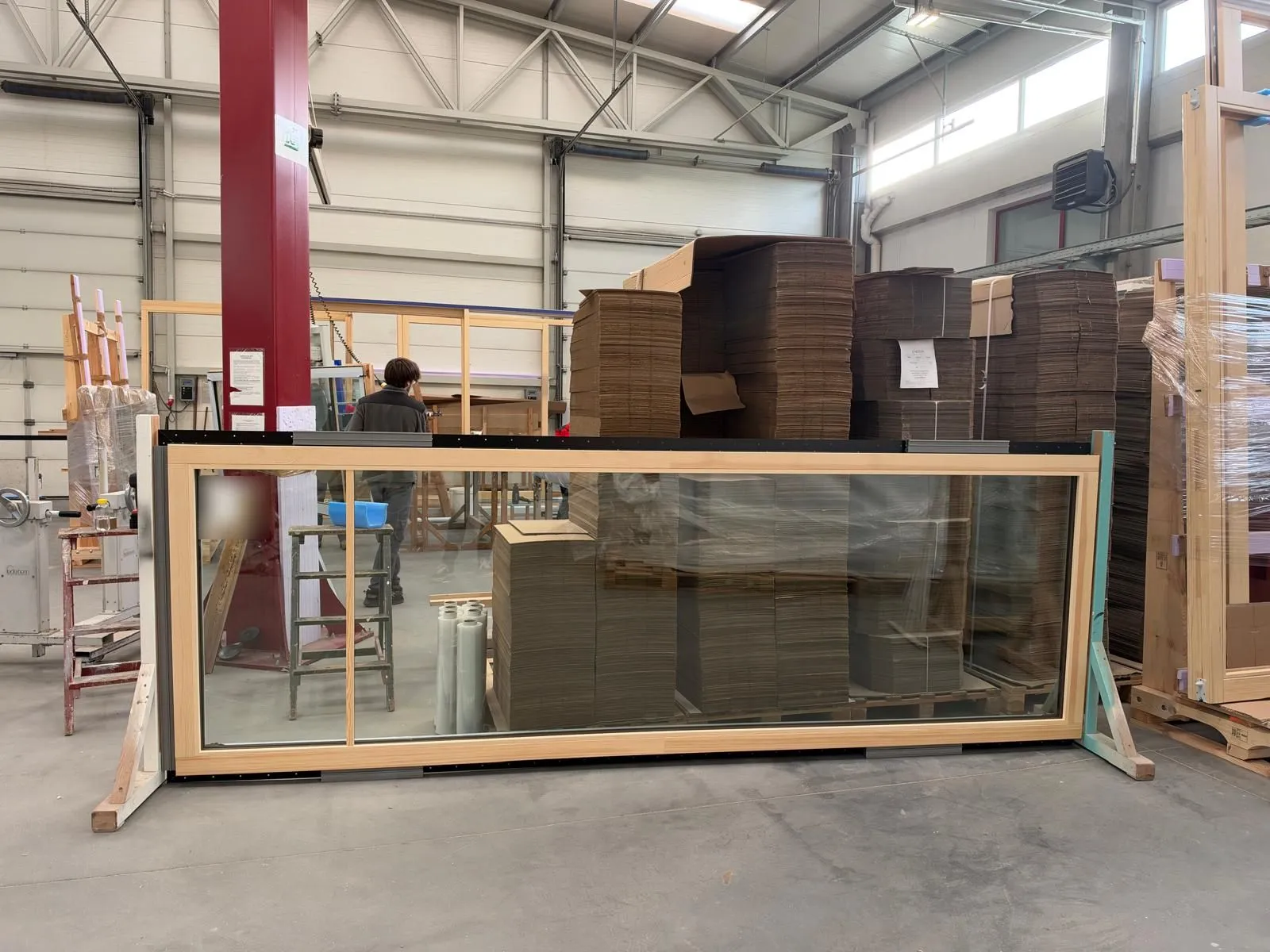
A Clad Hidden Sash unit in production: the aluminum shell arrives powder coated, clipped over the timber, before the window is packed.
The two questions I get after install are whether a dark exterior can be switched to a lighter color, and whether a scratched corner can be touched up with exterior paint. Both come down to the same thing, so here is the full answer: why the factory finish is hard to copy, how powder coat compares with paint, what the warranty says, and what to do in each situation.
Why is the factory powder coat hard to copy on site?
Because powder coating is a factory process: the color is sprayed on as a dry powder in a controlled booth and cured in an oven, which gives a hard, even layer that a brush, roller or spray can on an installed window cannot reproduce. On a clad window the exterior is an extruded aluminum shell clipped over the timber, and that shell is coated before it ever reaches the window, under a Qualicoat-certified process on the systems I quote.
A field coat starts from a different place: weather, dust, awkward reach, no oven, and a surface that was engineered to resist exactly the kind of adhesion a repaint needs. The typical results are visible brush or lap marks, a different sheen than the factory finish, and paint that lifts at edges and around hardware. None of that is a reason to panic about a small scratch; it is a reason not to treat repainting as a weekend job.
Powder coat vs paint on aluminum clad windows
Powder coat wins on durability, consistency and warranty; paint wins only on one point, which is that it can be applied after installation. The table compares the two as they apply to the clad lines I quote.
| Item | Factory powder coat | Field-applied paint |
|---|---|---|
| Where it is applied | Coating plant, on the bare aluminum shell before assembly | On the installed window, on top of the existing coating |
| How it cures | Oven-baked after electrostatic spraying | Air-dried, weather permitting |
| Surface | Even thickness, matte or textured, no brush marks | Brush, roller or spray texture; sheen rarely matches |
| Coating standard | Architectural powder coatings are commonly specified to AAMA 2604 or 2605; published summaries put 2604 at 3,000 hours of salt spray with at least 30% gloss retention and 2605 at 4,000 hours with at least 50% (AMICO Architectural, accessed October 2026) | No equivalent standard for a repaint; performance depends on preparation and the product used |
| Color choice | Any RAL Classic color, matte or textured, or a wood-grain decor; interior and exterior chosen separately | Whatever the paint supplier mixes; the match to the original RAL is approximate |
| Warranty on my orders | Standard powder-coated finishes 10 years, anodized and specialty finishes 5 years | Outside the written warranty; a repaint can affect coverage on the finish |
| Cost | Standard RAL colors are included in the system price I quote; dual color is a surcharge | A coating specialist's quote per window, plus access |
| Best use | The finish for the life of the window | A documented repair of a damaged area, done to the coating supplier's instructions |
I confirm the coating standard in the quote for your exact order rather than promising a coating lifespan, because the standard that applies depends on the coating plant and the color.
Will painting aluminum clad windows void the warranty?
It can. My written warranty covers standard powder-coated interior and exterior finishes for 10 years, anodized and specialty finishes for 5, and it lists modification and third-party additions among the exclusions, so a repaint done without checking the terms can leave the finish uncovered. The warranty also excludes normal discoloration or fading of finishes and corrosion caused by salt, sand, acid rain or other corrosive substances, which is why I document the finish condition with photos before anyone picks up a brush. The full coverage table is in my 10-year written warranty.
If you want a data point from the US market, Andersen's help center is direct about its own aluminum-clad products: it says to "do not attempt to paint or apply other finishes to the aluminum cladding," because it may affect the owner warranty (Andersen help center, accessed October 2026). That applies to Andersen's products, not to every window, but the logic carries over: a factory finish plus a factory warranty is a package, and a field coating sits outside it. The full side-by-side with that brand is in my Andersen clad vs European aluminum-clad wood comparison.
What do I specify instead of painting later?
I settle the exterior color before shop drawings, from a physical sample, and I order the interior wood finish separately, so neither face needs a field coat. On the European clad lines I quote (Clad Flush, Clad Hidden Sash and Clad Passive) the exterior is a powder-coated aluminum shell in any RAL color, matte or textured, or a wood-grain decor; the interior timber takes a transparent finish or an opaque RAL or NCS color. The process has four steps:
- Get the RAL number early. Architects usually have it on the drawing. I ask for it before shop drawings, not after, and I ask for the interior finish at the same time.
- Look at a physical sample. Screens lie, and dark colors look different in sun than on a monitor. My colors and finishes page shows the palette and the most requested codes, and the European window colors guide explains RAL, anodized and dual-color options.
- Confirm the coating standard in the quote. AAMA 2604 or 2605, matte or textured, per order.
- Keep the finish code in the order file. I keep every project's finish code for the life of the project, so a replacement part or a touch-up kit matches the original batch as closely as the coating plant can manage.
Which situation are you in?
Most "can I paint it" questions are one of five situations, and only one of them ends in paint. The table gives my answer for each.
| Situation | What I would do |
|---|---|
| Light scratch or chip on a frame | Clean it first. Ask for the coating supplier's touch-up guidance for your color; do not guess with hardware-store paint. |
| Color has faded or chalked unevenly | Document it with photos and check the warranty before anything else; normal fading is excluded, uneven failure may not be. |
| You want a different exterior color | Plan it as a project: a quote for replacement units, or a coating specialist working to the coating supplier's written preparation steps. |
| Interior wood needs refinishing | Normal. The timber finish is separate from the cladding and can be stained, oiled, lacquered or painted with compatible products. |
| Not installed yet | Best moment to change color. Tell me before production. |
How do I repaint aluminum clad windows if I decide to anyway?
Confirm the warranty implications in writing, get the coating supplier's preparation and repair instructions for your exact finish, do a test patch in a hidden spot, and accept that sheen and texture will differ from the factory surface. Do not paint over hinges, gaskets, drainage slots or glass seals, because a sealed drainage slot is how a clad window starts holding water. A coating specialist is a better bet than a DIY weekend on anything larger than a touch-up, and on a whole elevation the honest comparison is their quote against the price of replacement shells or units.
Is the interior wood different?
Yes. The interior timber is a wood finish like any other and can be refreshed when it needs it, with products compatible with the existing finish and the species. Most of what makes clad windows appealing is that wood inside, and the shell outside exists so that only one face needs that care. How the two faces age is covered in the three-way material comparison and how long wood windows last; where the shell earns its place is in wood windows in humid and coastal climates, and why the cladding material changes the color conversation is in vinyl-clad vs aluminum-clad wood windows.
FAQ
Can you paint aluminum clad windows? Physically yes, but the factory powder coat is the intended finish, and a field coat will differ in sheen and durability. Check the written warranty first and get the coating supplier's repair guidance for your finish before anyone paints.
Will painting aluminum clad windows void the warranty? It can. My written warranty covers standard powder-coated finishes for 10 years and anodized or specialty finishes for 5, and lists modification among the exclusions. Andersen, for its part, states that painting its aluminum cladding may affect its warranty. Ask me before any repaint so I can check the terms against your order file.
How do I fix a scratch on aluminum cladding? Clean the area, photograph it, and ask for touch-up guidance matched to your coating and color. Generic paint rarely matches a factory powder coat, and the finish code in your order file is the starting point for a matching kit.
Can I change the exterior color of clad windows later? It is possible as a project but not a small job: either replacement units, or a coating specialist working to the coating supplier's written preparation steps. Choose the color before production, from a physical sample.
Is powder coat better than paint on aluminum windows? For a factory finish, yes. Powder coat is oven-cured on the bare shell to a published architectural standard (commonly AAMA 2604 or 2605), gives an even matte or textured surface, and carries a 10-year term on my orders. Paint only wins on being applicable after installation.
Can I paint the inside of clad wood windows? Yes. The interior timber finish is separate from the cladding. Use products compatible with the existing finish and the wood species, and keep them off the gaskets and hardware.
Next step
If you have a clad project in the planning stage, send the schedule and your RAL choice through the quote form; wood and aluminum-clad wood are quoted from drawings, lead time is confirmed per order, and the color decision is the first thing I will ask about. For a budget range before the drawings are final, the estimator prices the timber tier as a range.