
Ask ten people for the best wood windows and you get ten brand names. That does not help when two quotes land on your desk and both say "wood, triple glazed, stained."
The better question is what to check. Premium wood windows are separated by a handful of things you can read off a quote or a section drawing: how the frame is built, how deep it is, how the weather side is protected, what the glass package really is and who backs it in writing. Below are the ten I check, in the order I check them.
The Short Version
A high-end wood window has a laminated, factory-finished frame, a depth that suits the glass it carries, a protected weather side, a glass package stated for your actual sizes, and a written warranty from someone you can reach. If a quote cannot answer those, the species name and the stain color are not enough to call it premium.
1. How Is the Frame Built?
Ask whether the frame is solid timber or laminated. The wood systems I quote are machined from laminated, finger-jointed scantlings: several glued layers with the grain alternating, impregnated against fungus before machining. That is what keeps a tall sash straight. The construction is walked through in wood window frames explained.
2. Which Species, and Where Does It Show?
Pine, meranti and oak are the standard interior species on the lines I quote, with mahogany at the top of the cost range and larch or spruce on request. Species changes the look, grain and weight more than it changes durability, because lamination does the stabilizing. The comparison is in pine, meranti, oak or larch. Pick it for the room, not for a brochure word.
3. How Deep Is the Frame, and How Many Seals?
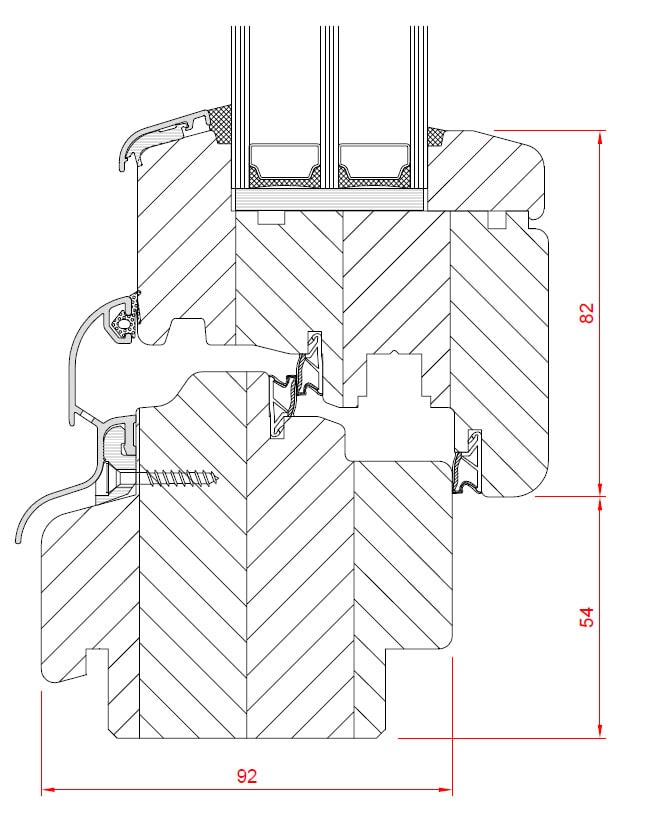
Depth sets how much timber sits between the room and the weather, and whether a thick glass unit sits in a frame built for it. Timber Classic runs 68 mm (2 11/16 in), or 78 mm (3 1/16 in) in the XL version, with two sealing lines. Timber Estate is 92 mm (3 5/8 in) with three. Aluminum-clad lines run from 81.5 to 123.5 mm (3 3/16 to 4 7/8 in). Deeper is not automatically better: it is heavier and reads bulky on a small window.
4. What Is the Glass Package, for Your Sizes?
"Triple glazed" is not a specification. Ask for the whole-window U-factor and SHGC for the sizes and glass in your quote, in US units. Frame or glass values taken alone are not an NFRC rating, and I do not claim NFRC ratings on a supplied unit unless that exact assembly has one. If your jurisdiction needs a rated number, say so before ordering. For context on the figures, see what a good U-factor looks like.
5. What Protects the Weather Side?
Exposed timber needs a recoat schedule: often in the 5-10 year range on sunny, exposed elevations, longer under overhangs. That is not a flaw, but it should be a decision. The honest options are open timber on covered elevations, or an aluminum shell on the exposed ones. A ventilated aluminum cladding keeps the timber out of rain and UV and keeps the wood inside. If you are weighing it, read aluclad vs aluminum vs wood windows and the aluminum-clad wood windows page. For the best wood clad windows, the real differences are the exterior profile and color range: Clad Flush gives a flush outer outline, and Clad Hidden Sash conceals the opening sash outside.
6. Where Is the Finish Applied?
A factory-applied finish, not one applied on the scaffold, is the baseline. Ask whether the quote is for a transparent or opaque finish: clear and lightly tinted systems let UV reach the wood and need renewing sooner than opaque colors. The upkeep details are in how long do wood windows last.
7. Where Does the Water Go?
Look at the sill detail on the drawing. You want a drip cap that throws water clear of the sash joint and drainage slots on the frame so water never sits on end grain. That detail decides how long the window lasts more than the species does. Also check where the glazing bead is. On the wood systems I quote it is on the interior, so a broken unit is replaced from inside the room.
8. What Does the Hardware Carry?
For tilt-and-turn or large sashes, ask what the hardware is rated for, not its brand. Clad Hidden Sash, for example, publishes concealed hardware with a sash capacity up to 331 lb (150 kg) and tilt-turn heights up to 9 ft 2 in (2,800 mm) in selected configurations. A heavy sash on light hardware is where problems start. For how the opening works, see tilt and turn windows.
9. What Does the Warranty Say?
Ask for it in writing, with who issues it, the term, and whether glass coverage has a size cap. A cap tends to land exactly on the large fixed lights that people buy European windows for. How I set mine up is in European window warranty and service.
10. Is the Quote Specific?
A good wood quote lists each opening with size, opening type, species, finish, glass and hardware, in US units. Lead time on wood and aluminum-clad wood is confirmed per order. I do not promise a number of weeks before drawings are approved, and I would be careful with anyone who does. Installation is by your local team. If the quote is hard to read, read a European window quote in US units helps.
Where This Checklist Points
- Timber is the design: open wood on covered elevations, Timber Estate or Timber Classic, with a recoat plan.
- Wood inside, little upkeep outside: aluminum-clad wood.
- Comparing brands you already know: Marvin and Andersen against European lines, on published facts.
Send me the elevations through request a quote and I will mark which line I would use on each opening, and why. Wood and aluminum-clad wood are quoted from drawings; the estimator gives a first idea for aluminum and uPVC.
FAQ
What are the best wood windows? There is no single winner, because the answer depends on exposure, style and budget. Look for laminated construction, a frame depth that suits the glass, a protected weather side, a stated whole-window U-factor and a written warranty.
What makes wood windows premium or high end? Construction and detailing, not the word on the quote: laminated frames, deep profiles with several seals, drainage and drip details, a factory finish and hardware rated for the sash weight. Large sizes and custom profiles are also part of the high-end category.
Are wood clad windows better than all-wood windows? They are lower maintenance outside, because an aluminum shell protects the timber from rain and UV. All-wood suits covered elevations where you want the timber visible. Many custom homes use both.
How often do wood windows need to be refinished? The weather-side coat is often renewed in the 5-10 year range on exposed elevations, longer under overhangs. The interior finish lasts much longer.
Can I buy European wood windows for a US home? Yes. I source European wood and aluminum-clad wood windows built around your drawings and coordinate the order. Confirm sizes, glass values, local code and permit requirements before ordering.