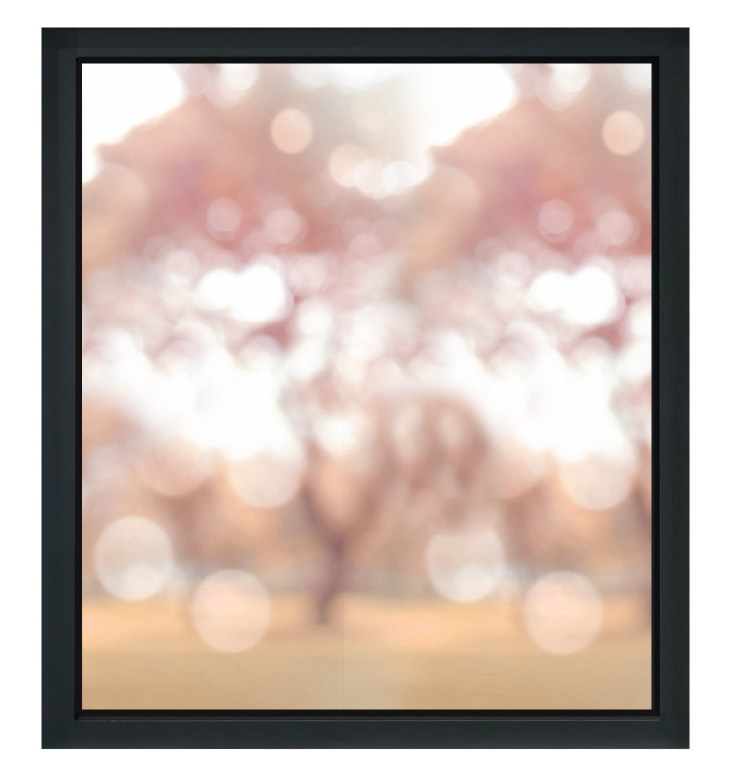
There is a moment on most minimal-interior projects where the drawings stop cooperating. The casings are flush. The reveal is deep and plastered square. The window is a black rectangle of glass sitting in a white wall, exactly as rendered. And then the hardware schedule arrives and there is a lever sticking six inches into the room.
I get asked about this more than almost anything else on the interior side, usually phrased as: can we get a window with no handle on it?
You can. It is a real product, not a workaround, and it is worth understanding what it actually is before you write it into a spec.
What a concealed handle is
A concealed handle is hardware that does not sit on the face of the sash. There are two ways to get there. The common one is a lever recessed into the sash face, sitting flush at rest like a cabinet pull cut into a drawer front - you hook a finger in, pull it out of the recess, turn it. The more thorough one is a handle built into the sash profile itself and operated from the side of the leaf, which is what Cortizo's Arch Invisible does. From the front there is nothing at all: no lever, no escutcheon, no shadow line where hardware meets aluminum.
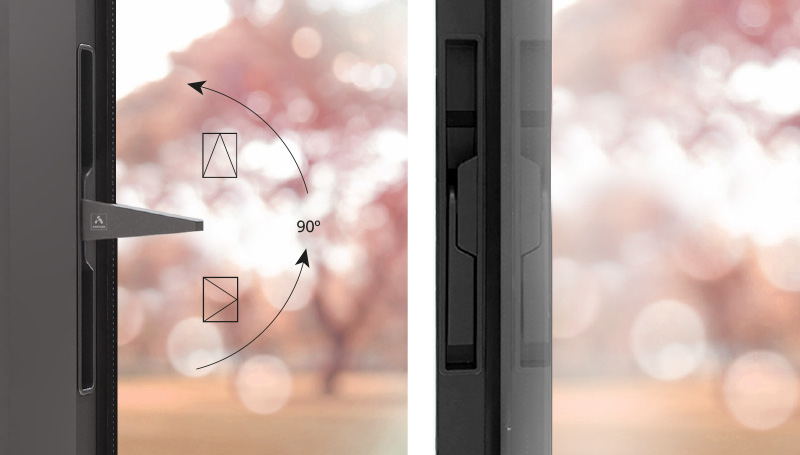
That is what the second image above shows: swung out on the left, turning through 90 degrees between the turn and tilt positions, and stowed on the right, sitting inside the profile where the frame meets the leaf.
The mechanism underneath is unchanged either way. It is the same multi-point espagnolette that runs the perimeter of a European sash, throwing four to eight locking points into the frame and compressing the gaskets. The handle is only the input. What changes is the geometry of the lever and the milling of the sash profile that receives it, which is why this is a system-level option and not something a fabricator improvises on a standard profile.
It is not the same thing as a hidden sash
This trips up more specs than any other detail in the category, so it is worth stating plainly: hidden sash and hidden handle are two separate options.
A hidden sash window hides the operable leaf behind the outer frame, so from outside the window looks identical to a fixed pane. That solves the elevation. It does nothing for the interior, where the handle still sits on the glass line as prominently as ever.
A concealed handle solves the interior. On some platforms you can have it without the hidden sash at all.
The combination of both is what most people are actually picturing when they describe the window they want, and it is available on fewer systems than you would expect. Several European system providers offer a hidden sash or hidden vent variant; a smaller number offer the recessed handle to go with it. If you ask a supplier for "hidden sash" and assume the handle comes along, you will get a quote back that is technically correct and not what you wanted.
Where it earns its place
The concealed handle is a detail with a narrow, real purpose. It pays for itself in a few specific situations:
Deep reveals and flush casings. When the wall detail has already removed every other line - no architrave, no stool, no apron - the handle becomes the only object in the composition. Removing it finishes the idea rather than adding a feature.
Windows over something. Kitchen windows above a counter run, window seats, built-in benches, banquettes. A protruding lever in those positions is not just visual; it collides with worktops, cushions, and elbows.
Window treatments that sit tight to the glass. Roman shades, tight roller cassettes, and shutters all need clearance that a standing handle eats. A recessed lever gives it back.
Elevations with a lot of fixed glass. If two out of nine windows on a wall open and seven do not, the two with hardware are the ones your eye finds first. Concealing both sash and handle makes the wall read as one system.
Where it does not
I would talk a client out of it in three situations.
Accessibility. A recessed lever needs a finger hook and a pull before it can be turned; a side-operated handle needs you to reach around the leaf and find it. Both are fine motions for most people and genuinely poor ones for anyone with limited grip strength or dexterity. On projects with aging-in-place requirements, or where a room is specifically planned for accessible use, a standard lever is the better decision and it is not close.
Windows you open constantly. The pull-turn-push sequence adds a step. Once a day, nobody notices. On a window that gets worked several times an hour - a kitchen window near a range, a bathroom vent - the step becomes a small daily irritation.
Anything above comfortable reach. High transom sashes and clerestory units are already awkward to operate. A recessed handle needs a more precise grip than a lever you can hook with a pole or a fingertip, so it makes an awkward window worse.
What it costs
Less than clients expect, for a simple reason: it lands only on operable units. A facade that is mostly fixed glass with a handful of vents for ventilation and egress carries the premium on that handful, not on the whole package. Fixed panes are untouched.
The premium itself sits in the range of a hardware upgrade rather than a system change - real money per operable unit, not a different order of magnitude. The bigger cost driver is usually the decision that comes with it, because the systems offering a concealed handle tend to be concealed-sash platforms, and that is the choice that moves the number. If you want to see it clearly, send me the schedule and I will price the same openings both ways.
Which systems offer it
The concealed handle sits at the top of the hardware option list on a small group of platforms. The Cortizo COR 70 Hidden Sash is the one I quote most for this, because Arch Invisible is designed into the platform rather than added to it. The handle lives inside the sash profile and is worked from the lateral side, so the interior face stays completely clear - and it pairs with concealed hinges and internal drainage on a 66 mm visible section, which means nothing shows inside or out. It works with side-hung, tilt & turn, and turn-tilt leaves.
Other providers get part of the way. The Reynaers MasterLine 8 hidden vent variant conceals the sash with conventional hardware. The Aliplast Genesis 75 SU variant does the same at a lower price point. Both are good windows; neither hides the lever.
How to spec it so the quote comes back right
Three lines in the request are usually enough:
- Name both options separately: hidden sash and the handle, by name. "Arch Invisible" gets you the right part; "concealed handle" gets you whatever that supplier happens to stock. Do not assume one implies the other.
- Flag the positions that are exempt - accessible rooms, high transoms, anything operated constantly - and let those take standard hardware. Mixing is normal and costs nothing extra.
- Ask for the handle detail photo before approving shop drawings. Recessed levers vary in depth and finish between systems, and it is a detail worth seeing at full size rather than in a catalog thumbnail.
If you are working on a project where the windows are supposed to disappear, the hidden sash guide covers the exterior half of the same problem - and send me your schedule if you want the two versions priced side by side.