
SDL stands for simulated divided lite: bars bonded to the outside and inside faces of one sealed insulated glass unit, with a matching spacer bar between the panes, so a large pane reads as several small ones. It is the middle option of three. True divided lite (TDL) uses a separate piece of glass for every lite, SDL keeps one sealed unit and applies the bars to its faces, and grilles between the glass (GBG) put a flat bar inside the air space. On the estimator model I publish, SDL adds about $129 to a uPVC window and about $233 to a slim aluminum window, whatever the size; bars between the glass are priced per lite instead.
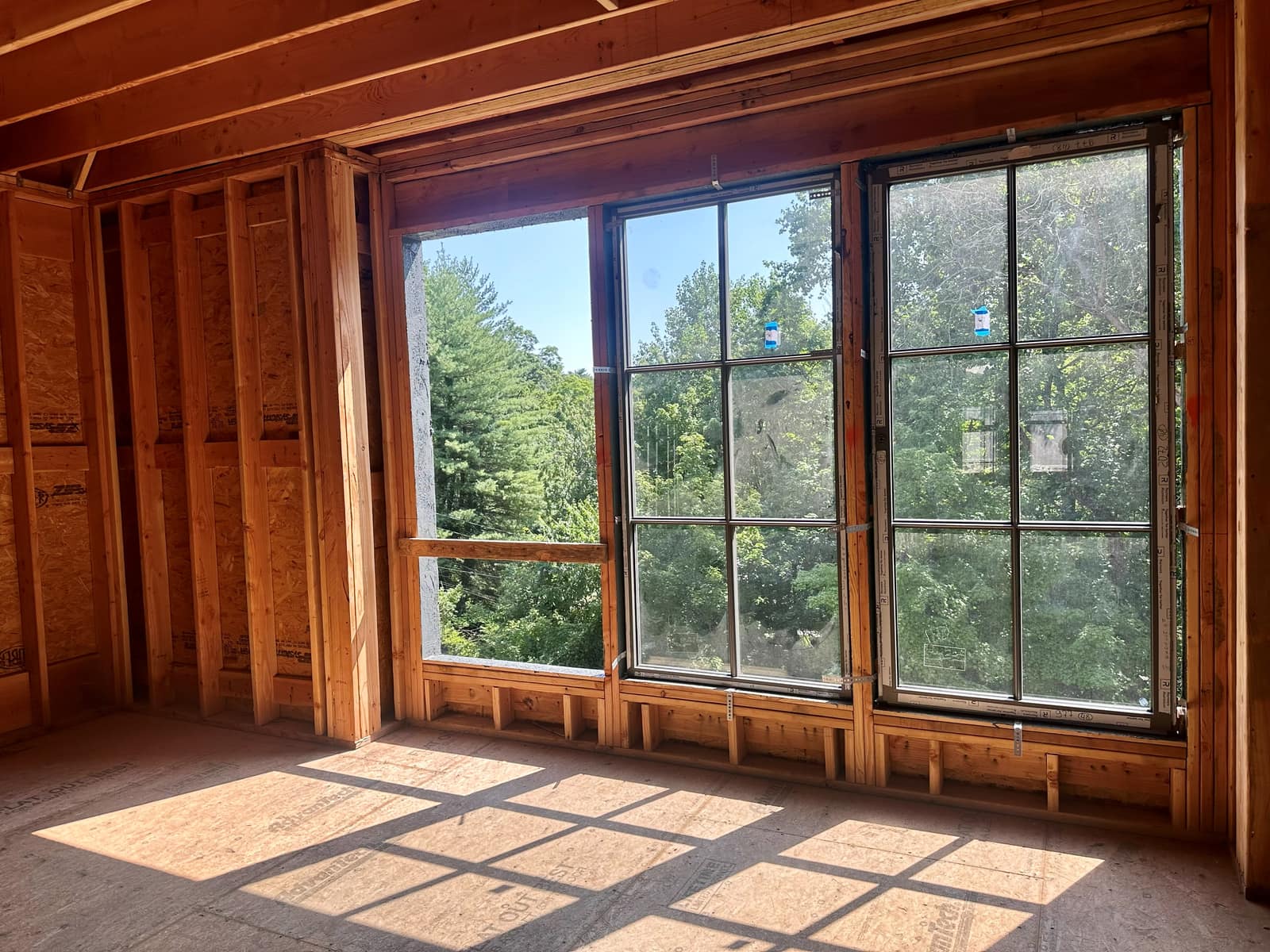
Hill Road, Greenwich, CT: SlimLine 38 Classic windows with simulated divided lites in RAL 7039 Quartz grey. Bars on both faces of the glass with a matching spacer in the cavity, photographed with the house still in framing.
Here is how the three builds differ, which one looks most like real muntins, what the bars cost on the systems I price, which European systems offer them and in what profiles, and what I need from you to quote a grid.
What is the difference between SDL, true divided lite and grilles between the glass?
True divided lite is the historical build with a separate pane in every opening, SDL is a bar applied to both faces of one sealed unit, and grilles between the glass sit inside the air space with nothing on the surface. The table shows the three side by side in plain terms.
| Item | True divided lite (TDL) | Simulated divided lite (SDL) | Grilles between the glass (GBG) |
|---|---|---|---|
| How it is built | Each lite is its own piece of glass held by real muntins | Bars bonded to the exterior and interior glass faces, with a spacer bar between the panes | Thin flat bars sealed inside the air space |
| Glass unit | Separate glass for every opening | One insulated unit stays intact | One insulated unit stays intact |
| What you see (my description, not a standard) | Real bars, each lite its own glass, shadow lines on both sides | Bars on both faces and a dark line in the cavity, which gives a muntin look | A bar behind the glass, flatter, no shadow on the surface |
| Cleaning | Every small pane cleaned separately | Around the bars on both faces | Flat glass, nothing to clean around |
| Where I quote it | Real steel (Jansen Arte 2.0 forms true divided lites with steel bars); other systems confirmed per project | Aluminum, uPVC, wood and aluminum-clad wood | Aluminum and uPVC, where the system offers it |
These are industry definitions, not a standard, and I do not claim a thermal difference between them on the systems I quote; if thermal performance matters for your window, I confirm it on the quoted assembly.
Which looks most like real divided lites?
True divided lite is the real thing, SDL comes closest, and grilles between the glass look the flattest. That ranking is my own judgment from looking at finished elevations, not a rule from any standard.
SDL puts bars on both the exterior and interior glass faces, with a spacer bar between the panes that hides the gap, which is what gives the muntin look from both sides. Grilles between the glass have no bars on the surface, so in my experience they read as a flat pattern printed behind the glass, especially at an angle. On Hill Road above, the whole point of the steel-look system was a grid that reads as steel from the street, and that is an SDL build over a dark spacer.
How much do SDL bars add to the price of a window?
On the estimator model (version 2026-10-29) SDL adds about $129 per window on the uPVC system and about $233 per window on the slim aluminum system, independent of size, while bars between the glass are priced per lite: about $134 per window plus $3 per lite on uPVC and about $32 per lite on aluminum. The table shows what that means on one 36 x 48 in tilt and turn window with a 2 x 3 grid, supplied, double glazed, before freight, duty and installation.
| 36 x 48 in tilt and turn, 6 lites (model 2026-10-29) | uPVC, Aluplast Ideal Neo | Aluminum, Aliplast Max Light Modern |
|---|---|---|
| Base window, no bars | $307 - $375 | $888 - $1,085 |
| Simulated divided lites (SDL), added | about $129 (+38% on the model midpoint) | about $233 (+24%) |
| Grilles between the glass, 6 lites, added | about $152 (+45%) | about $194 (+20%) |
The prices come from node scripts/estimator/price-list.mjs on the live model; the full per-size list for the base windows is in how much do European windows cost. Because SDL is a flat amount per window, it is a large share of a small uPVC window and a small share of a big aluminum one, which is why a grid on a whole elevation of large units costs less in percentage terms than a grid on a few small ones. Wood, aluminum-clad wood and steel-look aluminum with SDL are quoted per project from the drawing; the model carries no measured SDL rate for them and I do not publish one.
Which European systems offer divided lites, and in what profiles?
Wood and aluminum-clad wood have drawn bar profiles per line, aluminum and uPVC offer SDL with the pattern confirmed per project, and real steel forms true divided lites with steel bars. The table lists what I can show you on a drawing today.
| System family | Bar profiles | Bar width |
|---|---|---|
| Timber Classic (wood, 68 mm; 78 mm XL) | Edge Guard, Classic and Heritage bar | Drawn per profile on the product page; width confirmed on the shop drawing |
| Timber Estate (wood, 92 mm) | Estate bar and Estate Heritage bar | Drawn per profile; width confirmed on the shop drawing |
| Clad Flush, Clad Passive (aluminum-clad wood) | Clad Classic, Square, Square Grid and Square Heritage bar | Drawn per profile; width confirmed on the shop drawing |
| Clad Hidden Sash (aluminum-clad wood) | Hidden Sash bar; muntins listed among the options for review | Drawn per profile; width confirmed on the shop drawing |
| Reynaers SlimLine 38, Aliplast Max Light Steel (aluminum, steel-look) | SDL over a dark spacer, square putty-line stops | Confirmed per project; same width on every unit of the elevation |
| Aliplast Max Light Modern (aluminum) | SDL or bars between the glass; the priced SDL rate above | Confirmed per project |
| Aluplast Ideal Neo (uPVC) | SDL or bars between the glass | Confirmed per project |
| Jansen Janisol HI (real steel) | Applied muntins supplied loose and bonded on site | 1 in on the reference quote |
| Jansen Arte 2.0 (real steel) | True divided lites formed by steel bars | Per the section drawing |
The wood and clad profiles are covered in more depth in custom wood window grids and shapes; the solid-wood side is on my timber window range page and the aluminum-clad side on the clad window range with a wood interior, and the lines themselves are on the Timber Classic and Clad Hidden Sash product pages. For the steel-look aluminum case see steel-look windows, and for real steel the steel windows and doors page. I confirm whether a true divided lite build is possible for the specific system on your drawing; I do not assume it.
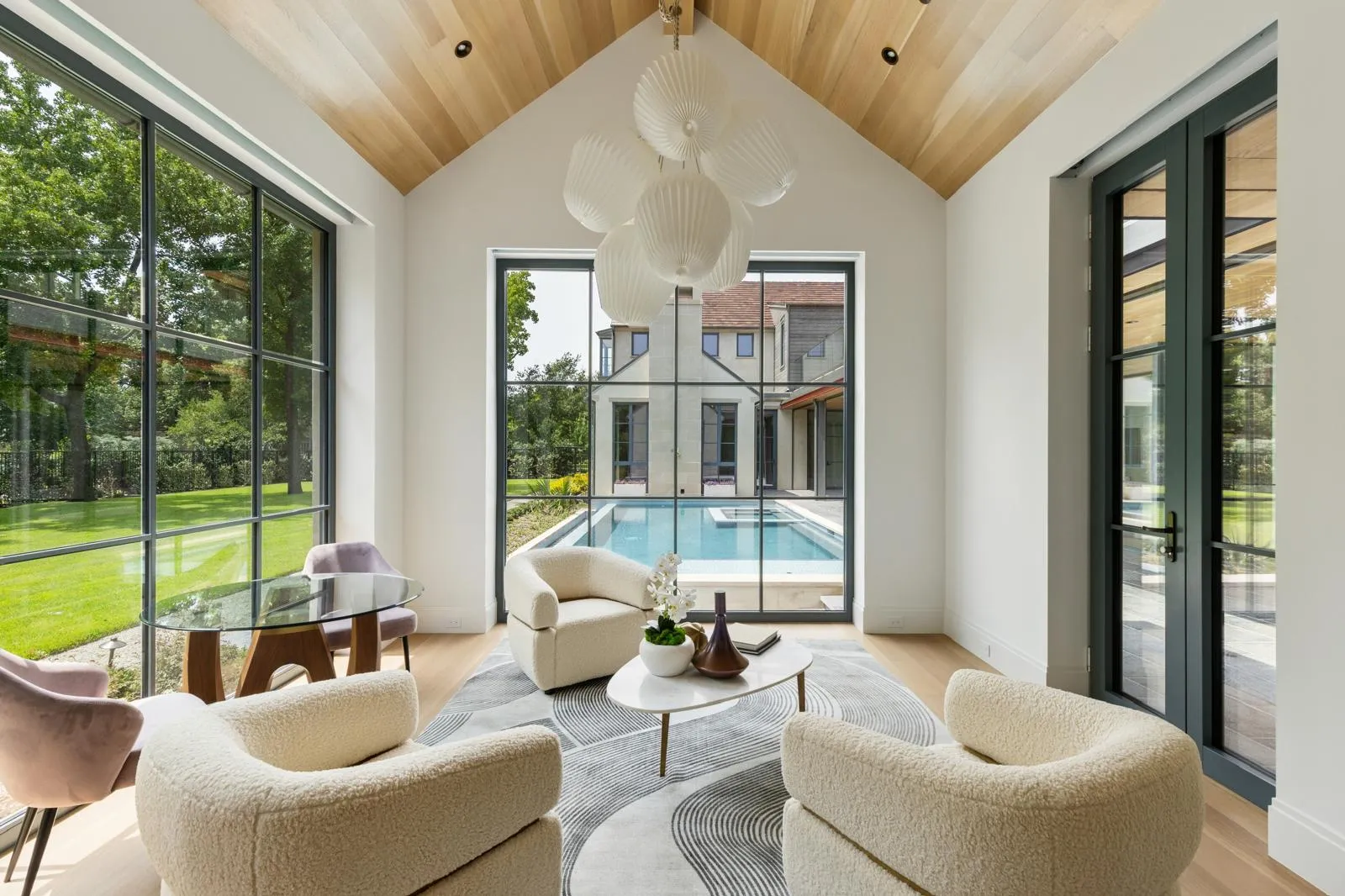
Clad Hidden Sash fixed glazing and French doors with a divided-lite grid. Manufacturer reference installation - not a Windows Guy project.
Do bar width and pattern need to line up across the elevation?
Yes. Mismatched bars are the first thing the eye catches, so one bar width on every window, grid lines that continue from one unit into the next, and a bar profile that matches the frame are the three rules I draw to. Spacing is a drawing decision, because the sight line of a bar changes how much glass you see at the sill, and a molded Heritage bar between flat, modern frames looks wrong. I confirm the layout on a shop drawing before anything goes into production.
What if the house is in a historic district?
Check the commission's rule first, because some require true divided lites or specific bar depths, and the system profile may or may not satisfy it. I do not promise acceptance of SDL. If you are matching an existing grid, bring photos and measurements of the existing bar widths so I can compare them to the available profiles; real steel with true divided lites is the fallback where a commission will not accept applied bars.
What do I send to get SDL quoted?
Send the elevation with the pattern drawn in, the bar width you want or photos of the bars you are matching, the material you have in mind, and the historic-district rule if there is one. A useful package has those four items on the window schedule, unit by unit. Use the quote form to send it, or the estimator for a budget range on aluminum and uPVC with bars included. For hidden-sash units, where the operable sash disappears behind the frame, see hidden sash windows.
FAQ
What does SDL stand for on a window? Simulated divided lite. The bars are bonded to the exterior and interior glass faces with a spacer bar between the panes, so one insulated unit looks like several small panes.
Do simulated divided lites keep the insulated glass unit intact? Yes. The insulated glass stays one unit and the bars are bonded to its faces. I do not quote a thermal comparison against true divided lite; that is confirmed per assembly.
How much do SDL bars cost on a window? On the estimator model, about $129 per window on the uPVC system and about $233 per window on the slim aluminum system, independent of size. Bars between the glass are about $134 per window plus $3 per lite on uPVC and about $32 per lite on aluminum. Wood, clad and steel-look SDL are quoted per project.
Can I get SDL on aluminum windows? Yes. SDL is available on the aluminum, uPVC, wood and aluminum-clad wood systems I source, with the pattern and bar width confirmed per project. On steel-look aluminum the bars sit over a dark spacer with square putty-line stops.
Will a historic commission accept SDL? It depends on the commission. Some require true divided lites or specific bar depths, so ask for the rule before choosing the build; real steel with true divided lites is the fallback.
Are grilles between the glass the same as SDL? No. Grilles between the glass sit inside the air space and are not applied to the glass faces, so they look flatter. That appearance call is mine, not a standard.
Next step
Send the elevation with the grid marked on each unit through request a quote and I will return the bar profile, the layout on a shop drawing and the price per window; for an aluminum or uPVC budget with the bars included, run the schedule through the estimator first.