
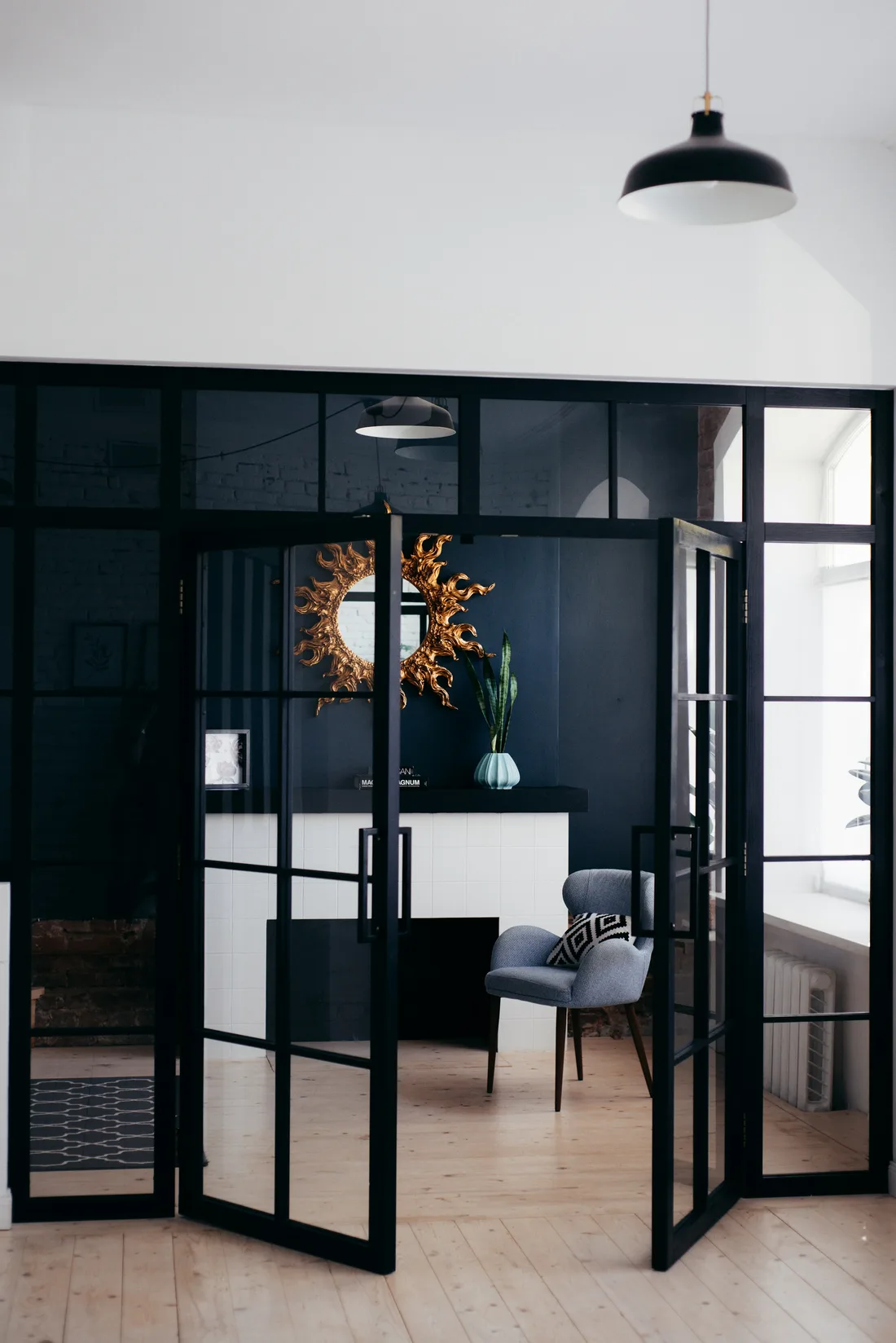
Illustrative photo of steel-framed glazing: not a Windows Guy project and not a Janisol product.
A steel French door is a hinged pair of glazed doors built from thermally broken steel profiles, and the double door I quoted at 72 x 96 in weighs about 552 lb. That weight, the glass build-up and the hardware are what separate it from an aluminum or wood pair, and they are the points to settle before drawings are approved.
This guide covers what the product is, how it is built, sizes, glass, the system choice, cold-climate and code questions, and a checklist for your architect. It is about real steel, the kind I quote from drawings through my steel windows and doors overview, not steel-look aluminum. Doors are one part of the wider doors and openings topic.
What Are Steel French Doors, and What Are They Not?
Steel French doors are a double door whose frame and leaves are steel profiles with a thermal break, glazed almost to the edge. The material is real steel: a steel frame, usually galvanized and powder coated, with insulating bars in the middle.
Three things are often confused with it:
- Steel-look aluminum. An aluminum frame drawn to resemble steel. It is a different product, covered on the steel-look aluminum windows page.
- Decorative iron doors. Ornamental entry doors sold as "iron" are a separate category. I do not cover them here.
- Insulated steel slab entry doors. A solid door with a small lite is not a glazed French pair.
How Is a Thermally Broken Steel French Door Built?
The inside and outside steel halves are joined by insulating bars, so heat does not run straight through the metal. Jansen, the Swiss system provider behind the Janisol line I quote, describes the bars in its door system as glass-fibre reinforced plastic. The principle is covered in the thermally broken steel definition.
Here is what the Janisol HI door system looks like in the double door I quoted:
- Depth. The door section is 3.15 in (80 mm) deep.
- Jambs. At the jambs it is a 1.77 in frame plus a 2.36 in leaf.
- Finish. Strip-galvanized steel with a powder coat.
- Layouts. Single or double leaf, with side lights and a transom, opening inward or outward.
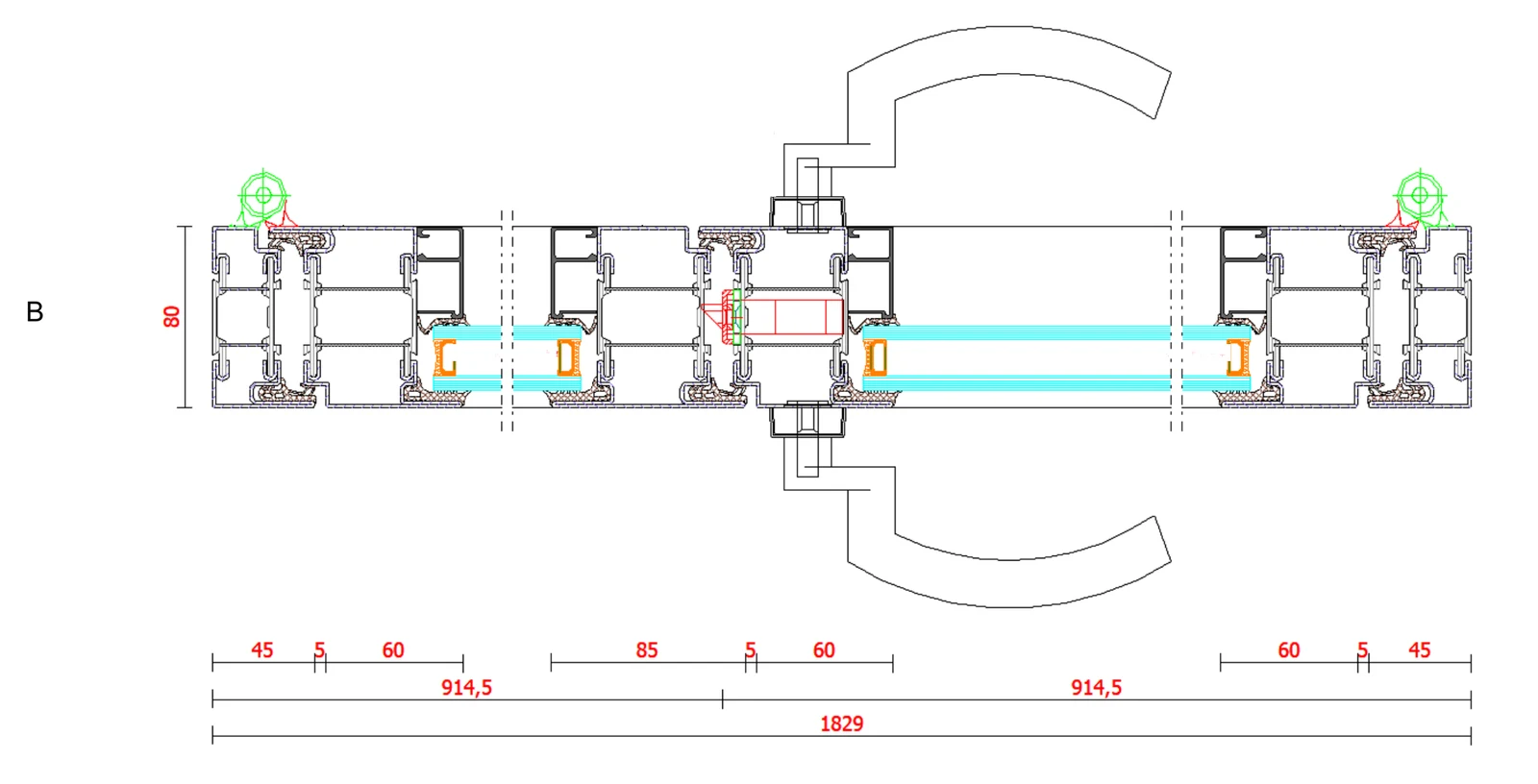
Horizontal section, 3.15 in deep. Redrawn from a quoted configuration. Profile geometry is Jansen's.
The Janisol HI page has the section and elevation drawings.
How Heavy Is a Steel French Door?
The 72 x 96 in Janisol HI double door I quoted weighs about 552 lb for the pair. Jansen documents a single door leaf of up to about 617 lb. For scale, the arched Janisol Arte 2.0 single door I quoted at 42 x 96 in is about 267 lb, and the 234 x 96 in Janisol lift-and-slide I quoted is about 1,955 lb.
Weight changes four things:
- Hinges. The reference build uses roller hinges.
- Jamb anchoring. The fixings have to carry the leaf, not just hold the frame.
- The header. It has to be sized for the load.
- Handling. Installation and lifting are the job of your local team. Large, heavy constructions may ship unglazed and disassembled.
What Sizes Can Steel French Doors Be?
Jansen documents single door leaves up to about 3.0 m (9 ft 10 in), and a published clear-opening range of 23.6 to 53.5 in wide and 74.8 to 117.8 in high for a single leaf, and 47.2 to 107.9 in wide for a double door. These are per Jansen documentation, not a promise for any particular size; I confirm each opening per project. My reference double door is 72 x 96 in (1829 x 2438 mm).
What Glass and Divided Lights Can I Have?
The Janisol HI door takes glass up to 2.24 in (57 mm), which is triple glazing. My reference quote uses double glazing instead. The options break down like this:
- Reference unit. 6 mm tempered, 16 mm argon, 6 mm tempered, a 1.1 in unit.
- Triple glazing. Possible within the depth and worth discussing for cold climates.
- Muntins on Janisol HI. 1 in applied muntins, three per leaf in the reference, supplied loose and bonded on site. They give the divided-light look and are not structural.
- True divided lights. If they matter to you, tell me early. I explain the options and what they do to the thermal result.
- Janisol Arte 2.0. Its steel bars form true divided lites.
Which Janisol System Fits a French Door?
Janisol HI is the default for a French door, and Arte 2.0 is the choice when the face must be as thin as possible. The lift-and-slide is a sliding door, not a French door.
| Item | Janisol HI | Janisol Arte 2.0 |
|---|---|---|
| Best for | Glazed double doors, windows to match | Slim faces, arches, small formats |
| Section depth | 3.15 in (80 mm) doors | 2.36 in (60 mm) |
| Glass thickness | Doors to 2.24 in | 0.8 to 1.85 in |
| Thermal | Better of the two | Higher frame values |
| Door leaf | Up to about 617 lb, up to 3.0 m (9 ft 10 in) | Modest sizes, confirmed per project |
The Janisol Arte 2.0 page covers the arched door. Janisol is the Jansen name for its steel line.
Do Steel French Doors Work as Exterior Doors in a Cold Climate or Under US Code?
They can, with caveats, and the architect owns the code path. Jansen documents a whole-door Ud of around 1.0 W/m2K (about 0.18 Btu/h-ft2-F) for the HI door with triple glazing. My reference quote is double glazing, so the whole-door result is higher. These are European test values, not an NFRC rating, so if your permit needs rated numbers, tell me at the start. The thermal side is explained in thermally broken steel windows and doors explained.
Two practical points apply to a cold-climate or code-reviewed door:
- Egress. A side-hinged door can serve as the egress door. A sliding door generally cannot. Confirm the clear opening with your architect.
- Safety glazing. The reference quote uses tempered glass. Requirements depend on your jurisdiction, so I confirm the glazing type on the shop drawings.
What About Hardware and Finish?
The hardware follows the European profile-cylinder pattern, and US locks and strikes are confirmed per project. In the quoted reference the setup is:
- Lock. A Jansen 3-point lock.
- Handles. Inox lever handles at 41.3 in (1,050 mm).
- Hinges. Roller hinges in RAL 9005.
- Threshold. Drop-down.
The finish is a powder coat in a RAL color, matte black in the reference. Steel needs the coating intact, so scratches should be touched up. Near salt air, coating and maintenance matter more.
What Should I Settle With the Architect Before Ordering?
Settle these eight points before drawings are approved:
- Opening size and header load for the weight.
- Which leaf is the egress door.
- Glass build-up: double or triple.
- Applied muntins or true divided lights.
- Hardware and cylinder pattern.
- Finish color and who handles touch-up.
- Handling and lifting by your local crew.
- Documents your permit needs, and what exists for the assembly.
The estimator does not price real steel; I quote it from drawings. Send me your drawings and I will come back with sections, weights and handling notes. For the wider range, see steel windows and doors for US projects.
FAQ
Can steel French doors be thermally broken? Yes. The Janisol HI door joins its steel halves with glass-fibre reinforced insulating bars, and the section is 3.15 in deep.
How heavy is a steel French door? The 72 x 96 in double door I quoted is about 552 lb for the pair. Jansen documents a leaf of up to about 617 lb.
Can a steel French door be my egress door? A side-hinged door can serve as the egress door. Your architect confirms the clear opening and the code path.
Are the glazing bars real divided lights? On Janisol HI they are applied muntins bonded to the glass. They are not structural. Arte 2.0 forms true divided lites with steel bars.
Do steel French doors need a lot of maintenance? The coating has to stay intact, so I recommend touching up scratches. Near salt air, inspect the coating more often.
Have a steel opening in mind? Send me the drawings.
Kai, your window guy!
Technical references: Jansen Janisol HI door.