
A Sierra Pacific aluminum clad wood window and a European aluminum-clad wood window share one idea - real wood inside, an extruded aluminum shell outside - and differ in three places that decide a schedule: the opening types (casement, awning and hung at Sierra Pacific; tilt and turn and concealed sash on the European side), the frame depth (4 9/16 in on Sierra Pacific's H3 line; 3.21 to 4.86 in across the three European clad lines), and what each side publishes about performance. If your architect wrote "Sierra Pacific or equal" next to a casement, a European clad window is often an honest equal. Next to a double hung, it is not.
I source the European clad timber lines compared here, so read this knowing which side I am on. This is a comparison on published facts, not a review: I have not installed Sierra Pacific windows, and everything I say about them comes from sierrapacificwindows.com, its H3 brochure and its wood/clad residential warranty document, all read on 2026-11-03. Where Sierra Pacific is the stronger choice, I say so - on species, hung and sliding windows, and the length of the finish warranty, it is.
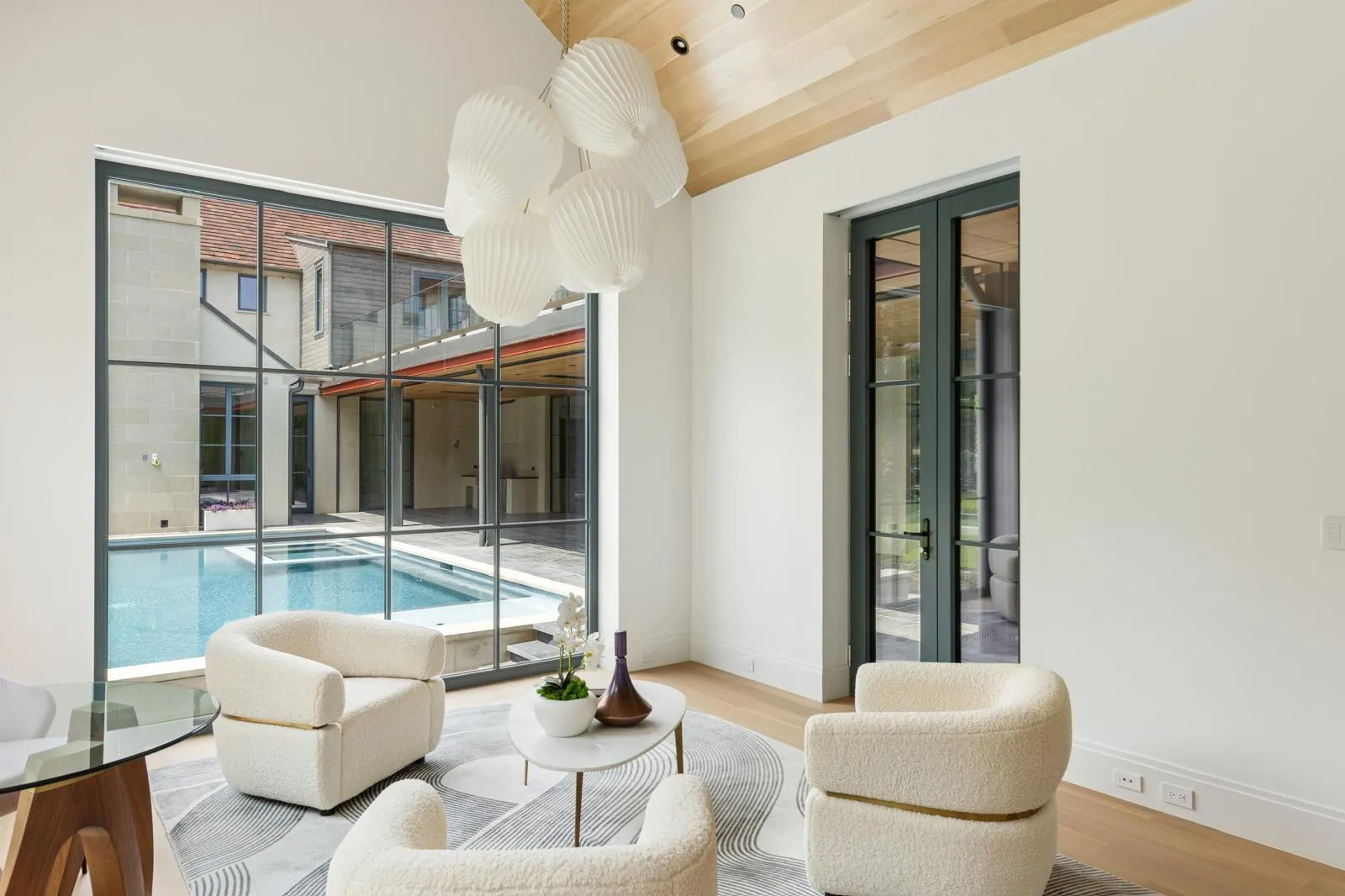
What does Sierra Pacific publish about its windows?
Sierra Pacific Windows publishes three wood-interior window lines - Aluminum Clad Wood, H3 and All-Wood - and the facts below are the ones its own pages and brochures state. The company is a division of Sierra Pacific Industries, a fourth-generation family-owned forest products company based in Red Bluff, California, which manages over 2.4 million acres of timberland in California, Oregon and Washington, runs 18 sawmills and builds the windows in 5 plants. It sells through more than 600 dealers, distributors and company stores, ships to 30 countries, and does not publish prices.
| Line | Interior | Exterior | Clad finish | Frame depth | Glazing | Published U-factor (NFRC) | Std colors | Tilt-turn |
|---|---|---|---|---|---|---|---|---|
| Aluminum Clad Wood | wood, 8 species | extruded aluminum clad | AAMA 2605 std; 2604 on textured | n/p | dual, triple | n/p | 50 | no |
| H3 | wood, 8 species | aluminum clad over vinyl base frame | AAMA 2605 std; 2604 on textured | 4 9/16" (116 mm) | dual, triple | n/p | 50 | no |
| All-Wood | wood, 8 species | wood | n/p | n/p | dual, triple | n/p | n/p | no |
Sierra Pacific published specifications, accessed 2026-11-03. n/p = not published on the pages read. A U-factor cell shows n/p where the brand publishes no NFRC values on its public product pages - ask its dealer for the label values of your sizes.
Three details behind the table matter for a comparison:
- Cladding. Sierra Pacific describes its clad exteriors as "fully encased in heavy-duty, extruded aluminum that is twice as thick as roll-form cladding". On the H3 it states the gauge: 0.055 in extruded aluminum. The finish is a powder coat - AAMA 2605 as standard on three of the four color collections (50 finishes in total, with custom color matching), AAMA 2604 on the Matte Textured & Blended collection.
- H3 is a hybrid, not a clad-wood window. Sierra Pacific calls it Fusion Technology: a 0.078 in vinyl base frame carries the wood interior and the aluminum cladding, with no vinyl visible when the window is closed. The H3 brochure gives a 4 9/16 in standard jamb depth for the casement and the double hung, select ponderosa pine as the standard interior with 7 other species, custom sizing in 1/8 in steps, and a DP +50/-60 rating for the H3 FeelSafe impact version. If a vinyl core in a wood window is a new idea, the vinyl-clad vs aluminum-clad guide covers what it does and does not change.
- Glass and performance. The site lists dual and triple pane glazing, double or triple low-E coatings and TrueWarm polymer foam spacers, but no whole-window U-factor on the product or performance pages I could read, so ask the dealer for the NFRC label values of your sizes. Tilt and turn is not listed among the window styles on any page I read.
How are European aluminum-clad wood windows built?
A European aluminum-clad wood window is a laminated, finger-jointed timber frame and sash with an extruded aluminum shell clipped to the outside over a ventilated gap - the shell is not glued to the wood, so moisture behind it can drain and dry. The three clad lines I quote share that construction and differ in depth and in what the exterior shows:
- Clad Flush - frame and sash sit flush outside. Published reference depth 3.54 in (90 mm), 3 sealing lines, pine, meranti or oak inside. Approx. U-factor 0.19-0.21, converted from the European value, not an NFRC rating.
- Clad Hidden Sash - the opening sash hides behind the frame outside, so operable and fixed units read the same on the elevation. 3.21 or 3.60 in (81.5 or 91.5 mm) deep, concealed hinges with a published sash capacity up to 331 lb (150 kg), tilt and turn heights up to 9 ft 2 in (2,800 mm) on selected configurations, pine, oak, meranti, larch or spruce. US catalogue reference from U-factor 0.16.
- Clad Passive - 4.86 in (123.5 mm) deep, foamed insulation in the frame, triple glass with a warm-edge spacer. From approx. U-factor 0.11, converted from the European reference Uw 0.61 W/m2K, again not a US rating for your sizes.
- Timber Lift & Slide - the matching patio door in timber or clad timber, 9.45 in (240 mm) system depth, narrow-profile sash up to 11 ft 10 in (3,600 mm) high and 661 lb (300 kg), US catalogue reference from U-factor 0.20.
The exterior is any RAL color, chosen independently of the interior, which can be a transparent finish showing the grain or an opaque RAL or NCS color - the colors page shows the range. Wood and aluminum-clad wood are quoted from drawings, and the lead time is confirmed per order.
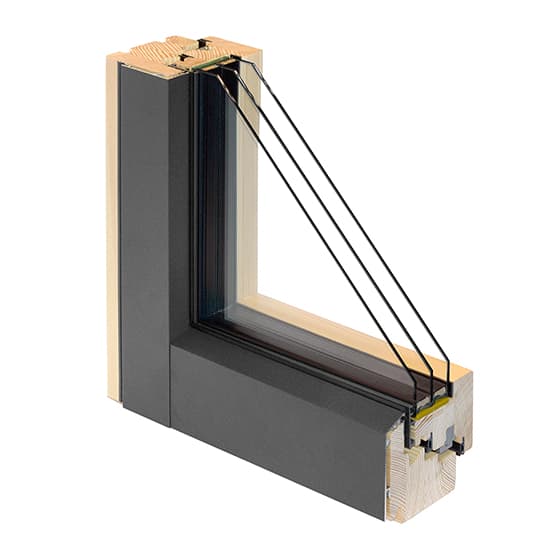
How do they compare side by side?
Side by side, the two products match on the exterior material and the interior wood and separate on opening types, depth range, seals and the shape of the warranty. The Sierra Pacific column is its Aluminum Clad Wood line, with the H3 noted where it publishes a number the clad-wood line does not.
| Item | Sierra Pacific Aluminum Clad Wood | European aluminum-clad (what I source) |
|---|---|---|
| Exterior shell | Extruded aluminum, powder coated (twice the thickness of roll-form, per Sierra Pacific) | Extruded aluminum, clipped over a ventilated gap |
| Exterior finish | AAMA 2605 standard on 3 of 4 collections; 2604 on textured | Powder coat in any RAL color; wood-effect finishes on Clad Flush |
| Exterior colors | 50 finishes, custom color matching | Any RAL color |
| Interior species | 8 listed (pine standard; casement page says up to 9) | Pine, meranti, oak; larch and spruce on Clad Hidden Sash |
| Window types | Casement, pushout casement, awning, single and double hung, direct set, bay and bow, bi-fold window | Tilt and turn, fixed, combined units, corner glazing |
| Patio doors | Bi-fold openings up to 23 ft wide; Multi-Slide Plus incl. 90-degree corners | Timber Lift & Slide, panels up to 11 ft 10 in high and 661 lb |
| Frame depth | Not stated for the clad-wood line; H3 4 9/16 in (116 mm) | 3.21-4.86 in (81.5-123.5 mm) by line |
| Seals | Not stated on the pages I read | 3 sealing lines |
| Concealed sash | Not listed | Clad Hidden Sash |
| Glass | Dual or triple pane, double or triple low-E, foam spacer | Double or triple pane, warm-edge spacer; XL glass up to 2.28 in (58 mm) on Clad Hidden Sash |
| Thermal data | None on the public pages I read; NFRC label values from the dealer | Published references; confirmed for your sizes in the quote |
| Warranty | 30 yrs AAMA 2605 coating; 20 yrs dual insulated glass, 10 yrs triple; 10 yrs parts; 2 yrs labor; transferable | 10 yrs on frames, glass seal at any size, hardware and standard finishes |
| Sold through | 600+ dealers, distributors and company stores | Me, quoted DDP to the job site |
The warranty row deserves a second look. Sierra Pacific's wood/clad residential warranty (effective May 1, 2017) covers the AAMA 2605 finish for 30 years against cracking and checking, the seal on dual insulated glass for 20 years but on triple insulated glass for 10 years, parts for 10 years and labor for 2 years. My 10-year warranty is shorter on the finish and the same on triple glass, with one difference that matters on big units: the seal coverage has no square-footage cap.
Where does Sierra Pacific win?
Sierra Pacific wins on species choice, on hung and sliding windows, on the length of its finish warranty and on service distance.
Species range. Maple, alder, cherry, black walnut and Douglas fir are on Sierra Pacific's list and not on my clad lines. If the interior millwork is designed around one of them, Sierra Pacific matches it from stock.
Hung and sliding windows. The Aluminum Clad Wood line includes single and double hung windows, and the H3 adds a horizontal slider. European aluminum-clad systems are casement and tilt and turn by design. On a traditional elevation, or where a review board wants a meeting rail, that decides it.
Finish warranty and a published depth. 30 years on an AAMA 2605 powder coat is 3 times my frame term, and the H3 publishes its jamb depth (4 9/16 in), which makes a US trim detail easy to draw. The All-Wood and Aluminum Clad Wood lines do not state a depth on the pages I read.
A dealer nearby and its own forests. More than 600 dealers, distributors and company stores, 5 plants, 18 sawmills and a parent that describes the chain as "from planted seed to delivered window" (Sierra Pacific says its pine and Douglas fir come from its own California forests or from ownerships certified to SFI or FSC standards). I coordinate warranty service myself, but parts travel from Europe.
Where is the European clad window different?
The European clad window is different in how it opens, how deep it can be, how it seals and how it is bought.
Tilt and turn and the concealed sash. One handle tilts the sash in at the head for ventilation or swings it fully into the room for cleaning. None of Sierra Pacific's listed window styles do that - the tilt and turn owner page explains the operation. Clad Hidden Sash adds a quiet exterior where the operable sash disappears behind the frame, so a run of fixed and opening units reads as one grid.
Depth as a choice. The three clad lines run from 3.21 to 4.86 in deep, so the same look can be specified for a mild climate or for an energy consultant chasing a very low U-factor with Clad Passive. Sierra Pacific offers one clad-wood construction and one hybrid.
Three sealing lines and a ventilated shell. The clad lines carry 3 sealing lines between sash and frame, and the aluminum is clipped on rather than fixed to the timber, so moisture behind the shell can drain and dry. Sierra Pacific does not state its seal count on the public pages, so I cannot score that row either way.
Glass seal at any size. My warranty covers the insulating glass unit for 10 years with no square-footage cap, which matters on large fixed lights and lift-and-slide panels - a 130 sq ft panel carries the same coverage as a small fixed light.
Several materials, one order. The same schedule can carry aluminum-clad wood in the living spaces, aluminum on a big glass wall and uPVC in the basement, with one set of shop drawings and one delivery. I work across five material families in total; real steel is quoted from drawings - see the real steel page.
Sierra Pacific vs Marvin or Pella - which comparison do you need?
If the shortlist is Sierra Pacific against Marvin or Pella, the comparison you need is between US clad-wood lines, and I keep that one separate from the European question. Pella vs Marvin vs Andersen line by line holds the published depth, size, U-factor and warranty figures for Pella Reserve, Marvin Ultimate and Andersen E-Series; Sierra Pacific's clad-wood line publishes fewer numbers than those three, so its published advantages are the 30-year finish term, the 8 species and the own-forest supply chain, and its gaps are the unpublished depth, sizes and U-factors. Against a European line, the Marvin wood windows comparison and the Andersen clad windows comparison follow the same logic as this post. If the shortlist includes Kolbe, Kolbe windows vs European tilt and turn windows covers the one US line in my comparison data recorded with a tilt-turn.
What would I specify?
On a contemporary custom home with a warm wood interior and a dark, crisp exterior, I would quote Clad Hidden Sash in oak or meranti, tilt and turn on the operable units and Timber Lift & Slide on the main opening; if the energy brief is aggressive, Clad Passive. If the drawings call for double hung windows, a walnut, cherry or alder interior, or a 30-year finish warranty in writing, I would tell the client the Sierra Pacific Aluminum Clad Wood line is the better fit - that is not a gap I can close honestly. On a casement-and-fixed elevation, either side works, and the decision usually comes down to the opening action, the sightlines and the quote for the actual sizes.
FAQ
Are Sierra Pacific windows aluminum clad? The Aluminum Clad Wood and H3 lines are. Sierra Pacific describes the exteriors as fully encased in heavy-duty extruded aluminum, twice the thickness of roll-form cladding, with a powder-coat finish in 50 colors plus custom matches. The All-Wood line has no cladding.
Who owns Sierra Pacific Windows? Sierra Pacific Windows is a division of Sierra Pacific Industries, a fourth-generation family-owned forest products company based in Red Bluff, California, which manages over 2.4 million acres of timberland and runs 18 sawmills.
Does Sierra Pacific make a tilt and turn window? Tilt and turn is not among the window styles Sierra Pacific lists online: casement, pushout casement, awning, single and double hung, horizontal slider, direct set, bay and bow, bi-fold and Multi-Slide Plus. European aluminum-clad timber systems use tilt and turn as the standard opening.
What is the Sierra Pacific H3 window made of? Per Sierra Pacific, the H3 fuses three materials: a 0.078 in vinyl base frame, a wood interior (select ponderosa pine as standard) and 0.055 in extruded aluminum cladding, with no vinyl visible when the window is closed and a 4 9/16 in standard jamb depth.
Is a European aluminum-clad window an "or equal" for Sierra Pacific? On casement and fixed units, often yes - compare depth, glass, finish and the performance values for the actual sizes. On double hung or sliding windows, no, because the European clad lines are casement and tilt and turn systems.
How long is the Sierra Pacific clad finish warranty? Sierra Pacific's wood/clad residential warranty states 30 years on AAMA 2605 powder-coated finishes against cracking and checking (10 years on AAMA 2604 finishes), 20 years on dual insulated glass, 10 years on triple insulated glass and 10 years on parts, fully transferable.
Next Step
If your schedule says "Sierra Pacific or equal", send it through the quote form with the sizes and the jobsite location, and I will price the European aluminum-clad equivalent for each opening and tell you where there is no honest equivalent. Wood and clad windows are quoted from drawings; to explore frames, glass and openings first, try the Studio.