
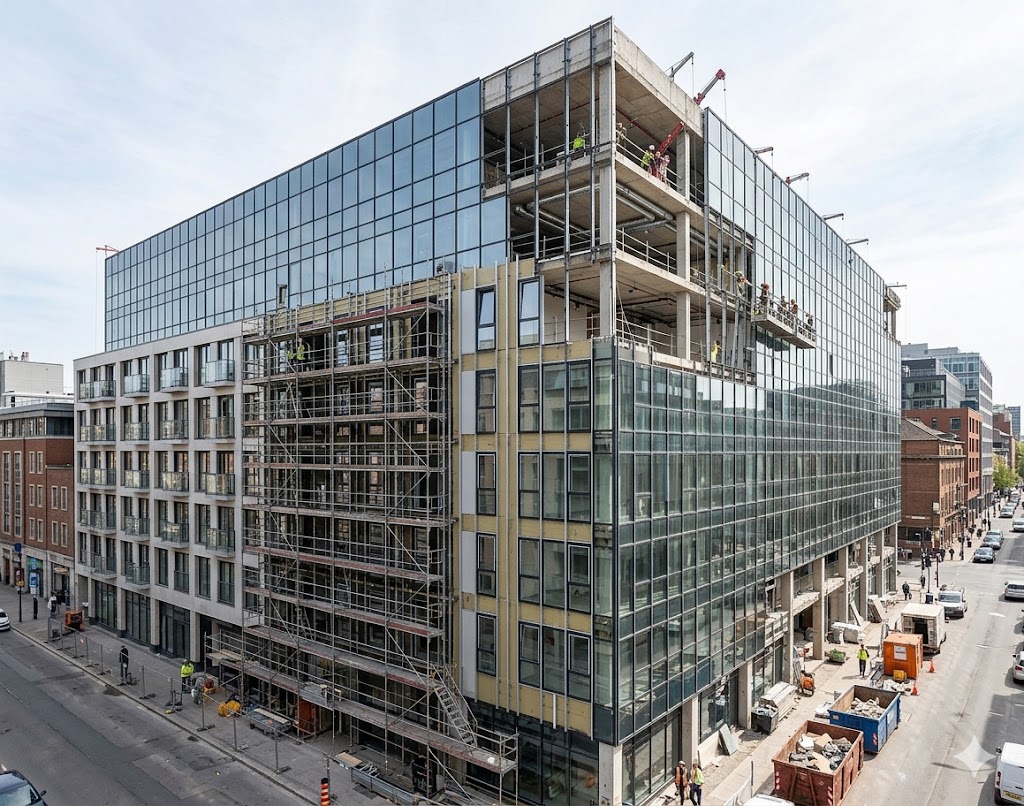
Office-to-residential conversions have moved from one-off projects to a pipeline in several US cities, and if your team is scoping a 2026 delivery, the window package will make or break the pro forma.
The window package that works for most office-to-residential conversions is slim-frame thermally broken aluminum - often in a steel-look profile - with operable tilt-turn or casement units for ventilation and egress, laminated glass on street-side facades for acoustics, and a landed DDP price batched by floor or stack. Here's how each part of that holds up on a real conversion: the kit, the acoustic targets, the cost logic and the logistics of an occupied building.
What Windows Work for Office-to-Residential Conversions?
Your target renter wants loft-style daylight and clean lines. Your lender wants predictable cost. Slim-frame aluminum with steel-look options balances both.
What's in the kit:
- Slim-frame fixed and operables (tilt-turn, casement, awning) - narrow sightlines that mimic steel
- Steel-look terrace and French doors with simulated divided lights for that warehouse-to-res aesthetic
- Acoustic IGU options - laminated outer lite for low-frequency city noise
- Egress-compliant hardware, with opening control devices only where the code allows them on egress openings
- Durable powder coats (AAMA 2604/2605 equivalents) in black/bronze palettes that lease well
Why aluminum over true steel? Lighter units, easier installation in occupied retrofits, a thermal break as standard and usually a lower price than a matched steel quote - while keeping the steel-look aesthetic. For a deeper look at how design-build teams leverage slim-frame and steel-look windows to win RFPs, see the dedicated guide.
I can provide NAFS performance documentation and thermal data for energy modeling if your project calls for it. If your AHJ asks for NFRC labeling specifically, I'll flag it early and propose a compliant path. See the NFRC and NAFS guide for the full breakdown.
What Acoustic Rating Do Conversion Windows Need?
Urban conversions live or die by sleep quality. Two metrics matter:
- OITC (Outdoor-Indoor Transmission Class): Low-frequency noise - traffic, construction, HVAC. This is what dominates street-side facades.
- STC (Sound Transmission Class): Mid-to-high frequencies. Useful but less predictive for exterior urban noise.
Typical targets for Class-A urban multifamily:
- Primary street facades: OITC mid-30s to low-40s; STC high-30s to low-40s with laminated glass and airtight frames
- Courtyard or secondary streets: OITC low-30s+, STC mid-30s may suffice
Actual ratings depend on frame air leakage, gasketing, glass build, and installation quality - not just IGU thickness.
Conversions often replace sealed curtain wall with operables for egress and ventilation. It's worth confirming your submittal covers clear-opening dimensions, any applicable NAFS class ratings for the floor zone, and air-infiltration performance to protect acoustic intent.
What Does a Conversion Window Package Cost?
Premium thermally broken European aluminum runs about $45 to $95 per square foot supplied, before installation - large fixed lights at the low end, small operable sashes at the top, and steel-look profiles higher still. On a conversion, the total moves with four things: bay size and repetition, the share of operable units, the glass build-up the acoustic targets call for, and the finish.
I won't promise the lowest line item on every bid - but I'll show you how each spec choice affects cost, schedule, and leasing aesthetics so you can make a confident trade-off. The same schedule is often priced on 2-3 systems, and the estimator gives a landed range for an aluminum or uPVC schedule in minutes. The aluminum windows cost guide breaks the per-square-foot numbers down further.
Logistics for Occupied and Fast-Track Projects
Many conversions stage around active cores or partial occupancies. Here's how I handle it:
- Landed pricing (DDP): Duties, tariffs, freight, crating, insurance - one number your GMP carries. See the DDP import guide.
- Batching by grid/stack: Production and shipping sequenced to your install plan, crates labeled by zone/elevation.
- Tight site strategies: Knock-down frames or panelized units for small hoists and narrow alleys.
- Pilot bay mockup: On the noisiest facade - verify acoustic performance and install productivity before full release.
For related installation details on bracket-mounted aluminum windows, see the technical guide.
Quick Reference: Conversion Window Kit
| Element | Spec guidance |
|---|---|
| Frame type | Slim-frame thermally broken aluminum |
| Aesthetics | Steel-look sash, black/bronze palette |
| Operables | Tilt-turn or casement for egress + ventilation |
| Acoustic target (primary facade) | OITC mid-30s to low-40s |
| Glass | Laminated outer lite for OITC; low-E IGU for energy |
| Logistics | DDP landed; batched by stack |
FAQ
Are these systems compliant for U.S. projects? They can be, when the documentation matches the installed units. I can provide NAFS performance documentation and thermal data for energy modeling and local compliance if needed. If your AHJ asks for NFRC-labeled fenestration specifically, tell me early and I'll propose a compliant approach.
What do office-to-residential conversion windows cost? Thermally broken European aluminum for a conversion runs about $45 to $95 per square foot supplied, before installation, with steel-look profiles higher still. The package total depends on bay size and repetition, the share of operable units, the acoustic glass build-up and the finish, so price the same schedule on two or three systems before locking the GMP.
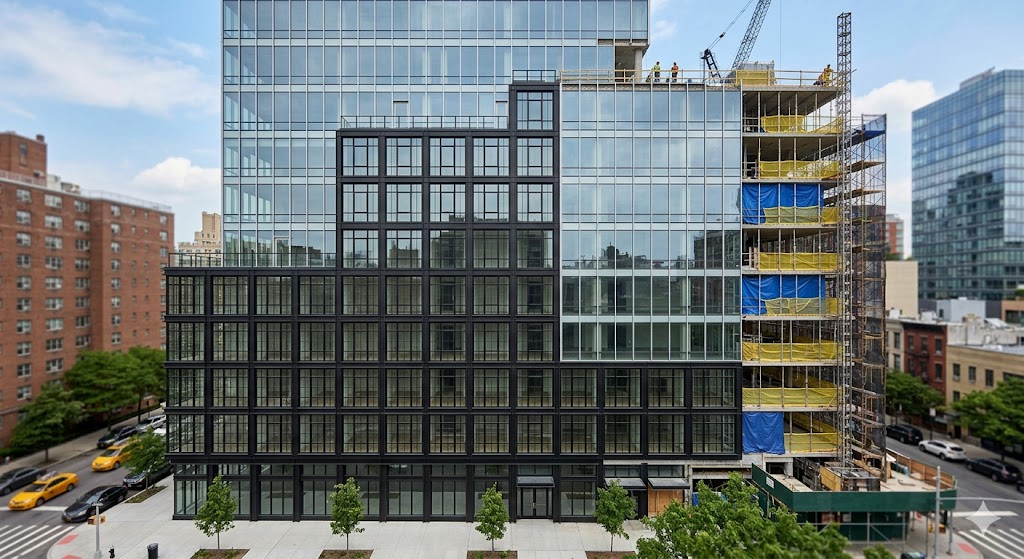
Can we replace parts of curtain wall with operables? Yes - with the right retrofit receivers, drainage management, and reinforcement. Retrofit frames clipped to the existing mullions can accept operable inserts, with drainage and anchorage detailed bay by bay and checked on a pilot mockup before full release.
Should conversion windows be steel-look or standard slim-frame aluminum? Steel-look aluminum suits conversions where the loft or heritage look is part of the leasing story; standard slim-frame aluminum costs less and still gives narrow sightlines. Both use thermally broken frames and the same glass options. My design-build guide to steel-look windows covers how to spec either one.
Get a Conversion-Ready Window Set
Send me your existing drawings, typical bay dimensions, target OITC/STC by facade, and desired finish palette. Budget estimate the same or next working day - full package with submittal-grade details, landed DDP pricing, and a phasing plan within 2-3 working days after review.
Request a Quote | Schedule a Call
Kai, your window guy!