
If you're comparing Marvin vs Pella, you're probably already past the commodity tier - you want a premium window rather than a builder-grade unit. That's a good starting point.
Marvin vs Pella: Marvin is the more premium of the two - pultruded Ultrex fiberglass and extruded-aluminum-clad wood at a higher installed price - while Pella covers a wider range, from vinyl to architect-grade wood, through more sales channels. European windows are the third option when the project needs tilt-and-turn operation, slim aluminum frames or whole-window U-factors around 0.20 and below.
The Marvin vs Pella debate tends to stay in a narrow lane: US domestic brands, US dealer channels, US warranty systems. For custom homes, large openings, and performance-driven builds, the third option changes the math. Here's an honest look at all three.
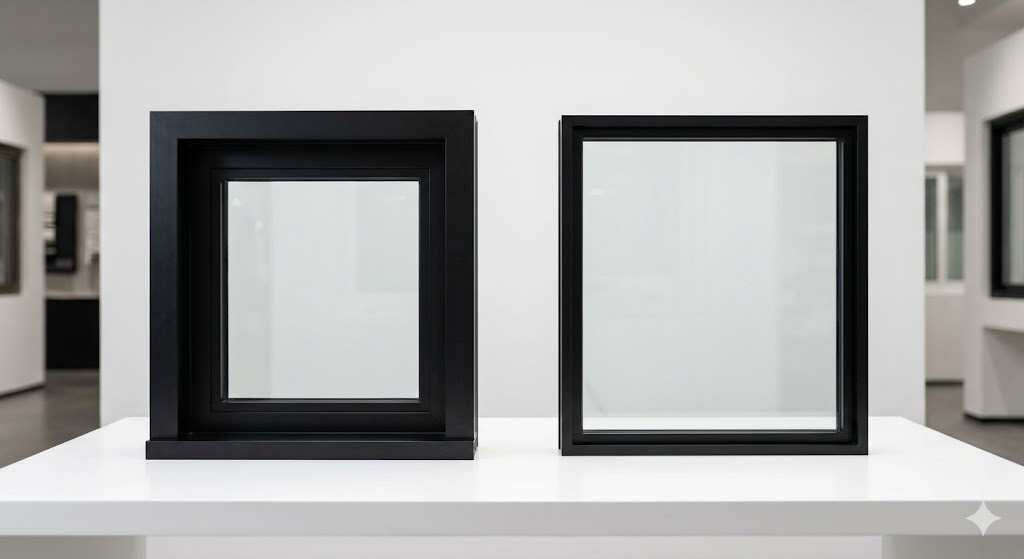
Marvin vs Pella: The Quick Version
Both are legitimate premium-tier US brands. The short version:
Marvin positions at the top end of US domestic production. Its core differentiator is pultruded fiberglass (Ultrex) - a material that expands less than standard vinyl and holds paint well. The wood-core lines (Ultimate series) use extruded aluminum cladding on the exterior, thicker than what Pella uses. Installed cost is commonly quoted at $800-$1,800+ per window depending on size and series. Warranty: 20 years on glass, 10 years on non-glass components.
Pella covers a wider price range - from mid-range vinyl up to their architect-grade lines. They're more accessible through big-box channels. The wood lines are well-regarded; their integrated between-the-glass blinds are a convenience feature Marvin doesn't match. Installed cost is commonly quoted at $450-$1,500 per window. Warranty: limited lifetime on most products, with shorter coverage for later owners if the home is sold.
The Marvin vs Pella debate tends to center on fiberglass vs wood-core, frame thickness, and long-term seal performance. Marvin generally wins on raw material durability; Pella wins on price accessibility and the mid-range product lineup.
Where both are strong: traditional US residential construction, single-hung and double-hung configurations, standard rough opening sizes, contractor-friendly ordering systems. Andersen sits in the same lane - I put its series next to European tilt and turn on published specs, for a Texas build, in Andersen vs European tilt and turn windows.
Where both show their limits: slim-frame large-span applications, thermal performance at or below 0.20 U-factor, full custom RAL color across an entire facade, and operability configurations like tilt-turn that aren't standard in the US market.
That's where the third option enters.
Where European Windows Enter the Picture
European aluminum windows are a different product category - not a direct Marvin or Pella replacement for a standard replacement job, but the right spec for a custom build where the frame matters architecturally and the performance targets are strict.
The structural difference is the thermal break: a polyamide strip that physically separates the exterior aluminum from the interior aluminum, cutting conductive heat loss through the frame. US premium brands have thermal-break options; European systems have been engineering around this for decades, and the profile geometry shows it. On slim European systems, visible sightlines run about 1.5-2.5 inches.
The other differentiator is the hardware system: European windows use multi-point espagnolette locking across the full perimeter. Tilt-turn operation - a single handle that lets the sash tilt in from the top for ventilation, or swing fully open inward like a casement - is standard rather than an option.
For architects specifying curtain-wall-adjacent facades, steel-look elevations, or large-span lift-and-slide openings, European aluminum is the realistic path - large lift-and-slide doors with slim sightlines are standard system products, not specials. Tilt and turn is the one exception worth knowing about: Colorado-based Alpen builds a fiberglass-reinforced uPVC tilt and turn window, and I compare it on its published specs in Alpen vs European tilt and turn windows.
Aluminum is the main comparison on this page, but the same import route covers uPVC, wood and aluminum-clad wood. If the reason you were looking at Marvin is its clad-wood window, the closest European equivalents are my aluminum-clad wood lines - Clad Flush, Clad Hidden Sash and Clad Passive - and Timber Classic and Timber Estate in solid wood.
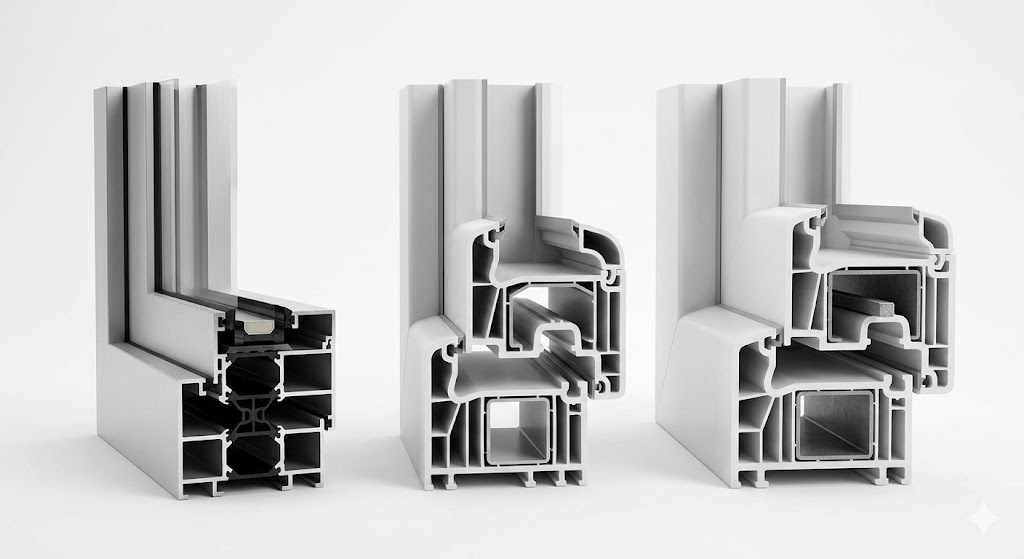
European Brands vs Marvin: How to Compare
Several companies sell European windows in the US, so "European brand vs Marvin" is really the European vs American question this page answers - inward tilt-and-turn operation, multi-point locking and triple glazing on one side, US dealer supply, double-hung and casement operation and shorter lead times on the other. Whichever European brand you are weighing against Marvin, compare on the same four points: landed and installed price for identical openings, published U-factor for the same glazing, lead time from approved shop drawings, and who stands behind the warranty in the US.
I work differently from a single brand: as an independent agent, I price the same schedule on several European systems, across aluminum, uPVC, wood and aluminum-clad wood, and the warranty is a 10-year written warranty from Windows Guy sp. z o.o.
Performance: Where the Gap Gets Real
Here's where the comparison gets concrete. Typical whole-window U-factor ranges (the lower, the better):
| Configuration | Typical U-factor |
|---|---|
| Marvin Infinity (fiberglass, double-glaze) | 0.28-0.32 |
| Pella Impervia (fiberglass, double-glaze) | 0.27-0.32 |
| European aluminum (double-glaze, thermally broken) | 0.22-0.26 |
| European aluminum (triple-glaze) | 0.15-0.18 |
| European uPVC (triple-glaze, Aluplast Ideal Neo) | 0.13 |
| Passive-grade European aluminum (triple-glaze) | 0.11-0.14 |
European values are published whole-window figures for the systems I quote, converted from Uw. US values are typical double-glazed ranges; check the NFRC directory for the exact unit and glass.
The European advantage on triple glazing is significant for passive-house builds or cold-climate projects. When the envelope target is around U-0.20 or lower - typical of passive-house and high-performance specs - triple-glazed European aluminum or uPVC is usually the direct path. US fiberglass at that threshold requires specialty glazing configurations that push cost up anyway.
For a deeper look at how the thermal break contributes to that performance, the thermally broken aluminum explainer has the cross-section detail.
NFRC certification note: NFRC-rated units are available on selected European systems where the permit needs them, and certification is configuration-specific. If your jurisdiction requires NFRC labels on individual units, confirm before ordering - I cover the routes in NFRC and NAFS certified European windows.
Cost: Apples-to-Apples (Supplied vs Landed vs Installed)
This is where the comparison gets tricky, because Marvin and Pella prices are usually quoted installed, while European pricing comes in layers: the supplied window, then freight, customs and duty to land it, then installation.
Marvin (installed): commonly $800-$1,800 per window. For a 20-window home, that's about $16,000-$36,000 before your contractor's markup.
Pella (installed): commonly $450-$1,500 per window - about $9,000-$30,000 for 20 windows.
European windows for the same 20 windows at an average 15 sq ft (300 sq ft):
| Layer | European uPVC | European aluminum |
|---|---|---|
| Supplied window | $15-25/sq ft - about $4,500-$7,500 | $45-95/sq ft - about $13,500-$28,500 |
| Landed (DDP) | + ocean freight, customs clearance and duty | + ocean freight, customs clearance and the applicable duty |
| Installed | + local installation | + local installation, typically $15-30/sq ft for custom aluminum |
Two things decide where the European number lands against Marvin or Pella. Freight is allocated per container, so on a 20-window order each window carries a large share of it, and on a whole-house or multi-unit package the share drops. And European systems tend to compete best on triple-glazed, large-format and custom-color work, where those features are standard rather than upgrades. Compare matched, dated quotes including installation and site work before stating a saving.
So compare the European landed-plus-installed number against the Marvin or Pella installed quote, for the same sizes, glazing and operation. The estimator gives the landed figure for your schedule, and the full breakdown is in how much European windows cost.
Lead Times and the Custom-Order Reality
Marvin and Pella ship through dealer networks. Standard configurations often come faster than a custom import; your dealer quotes the lead time, and custom sizes and finishes take longer.
European windows are custom-manufactured to your specific opening schedule. Plan on roughly 9-16 weeks from approved shop drawings to delivery on site, depending on material and coast and confirmed per order. The phase-by-phase detail is in European window lead times. For a project in design development now, ordering at permit-ready stage works. For a project starting to rough in next month, it's tight.
This is the main practical constraint. If the framing goes up in eight weeks and windows aren't ordered yet, European windows aren't the answer for that job. If the schedule has margin - as most custom homes do - it's entirely manageable.
The other lead-time reality: changes after order are expensive or impossible. The schedule has to be finalized before production. That discipline is actually a feature for architects who want the facade built to their drawings, not adjusted in the field.
Which One Is Right for Your Project?
Choose Marvin or Pella if:
- You're doing a replacement project or renovation on standard US-sized openings
- Your contractor has dealer relationships and prefers domestic supply chain
- Budget is the primary driver and you need installed pricing with one vendor
- Timeline is 8 weeks or less from order to install
- The project is a production home or standard residential build
Choose European windows if:
- You're specifying a custom home with a designed facade where frame proportions matter
- You need large-span operability: lift-and-slide, tilt-turn, multi-panel bifold
- Thermal performance targets are at or below 0.20 U-factor (passive house, cold climate zones)
- The architect or owner has specified slim sightlines, steel-look profiles, or dual-color RAL finishes
- The project timeline allows 9-16 weeks from approved shop drawings to delivery
- You want a single source coordinating spec, logistics, and technical documentation for the entire package
For projects where the answer isn't obvious, the choosing windows guide covers the full decision framework across materials and opening types, and the European windows buyer's guide explains how buying them in the US works.
The American vs European aluminum benchmarks post has the technical comparison in more detail - sightlines, NAFS ratings, and cost side-by-side.
FAQ
Who is Pella's biggest competitor? Marvin is Pella's most direct competitor in the US premium wood and fiberglass market, with Andersen in the same lane. For architects specifying slim-frame aluminum, tilt-and-turn operation or high-performance triple glazing, European window systems are the real alternative - they serve an application set that neither Pella nor Marvin covers well.
Are Marvin windows worth the premium over Pella? For wood and fiberglass configurations, Marvin's extruded aluminum cladding and Ultrex fiberglass are generally a step up from Pella's equivalent lines, so the premium is real, not just brand positioning. If the budget is tighter, Pella's architect-grade lines are a solid product. Neither offers tilt-and-turn or slim European aluminum as a standard line.
European windows vs Marvin: which is better? They answer different briefs. European systems bring tilt-turn operation, multi-point locking and triple glazing as standard; Marvin is a US manufacturer of fiberglass and clad-wood windows sold through dealers, with US operation types and shorter lead times. Compare landed, installed prices on identical openings.
Can European windows meet US building codes? Yes, when the specification is done upfront. Many European systems carry NAFS test documentation for structural, air and water performance, and NFRC-rated units are available on selected systems where the permit needs them - labeling is configuration-specific, so confirm per project. Egress and energy compliance are checked against the actual units during specification.
What's the import duty on European windows? The actual products, origin and entry date determine customs treatment. Confirm it through the responsible importer and customs broker in a dated project-specific DDP quote. See European window cost layers.
How do I get pricing for a European window package? The estimator turns your window schedule into a landed range for uPVC and aluminum in a couple of minutes. For a formal quote tied to your drawings - including wood and aluminum-clad wood - use the quote form. I work through the spec with the architect or GC and return a line-by-line DDP offer against the opening schedule.